Marian
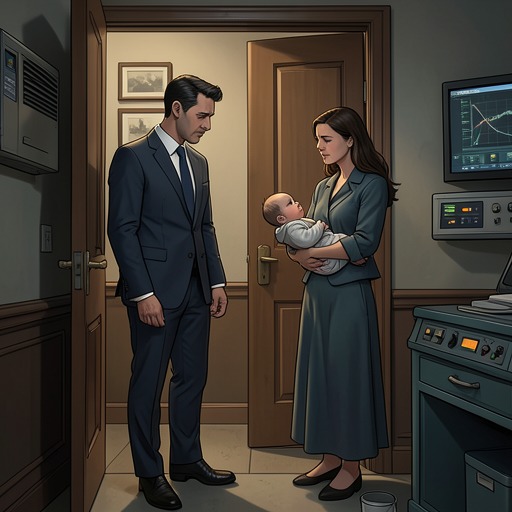
TrespassesMarian is presented through the overlapping demands of family life, childcare, and domestic work. She is the mother of Emma and Nicola and is expecting a third child with Eamonn Lavery. Her scenes show her making those responsibilities visible, first in a tense family lunch where she asks for more help and later in the pub, where the arrangement for cleaning Gina’s home has become part of the family’s daily routine. A small, affectionate exchange with Cushla offers a contrasting glimpse of ease between them.
Identity and Family
At Easter lunch, Marian arrives with Eamonn Lavery and their daughters, Emma and Nicola. The girls ignore Gina’s outstretched arms and press close to Marian instead. Gina gives them eggs, and they begin eating before Marian has prompted them to thank her; after repeating the request three times, Marian gives up and takes a seat. The scene establishes her as the girls’ immediate point of security while placing her between their needs and Gina’s attempts to welcome them.
The meal is strained by the effort to bring the households together. Eamonn Lavery arrives half an hour late carrying two bottles of wine, and the adults negotiate civility around the table. Marian’s attention to the girls is practical rather than ceremonial: when they leave food untouched, Eamonn Lavery transfers it to his own plate. The small actions around the meal suggest how care is distributed in this family, while the conversation soon makes its pressures explicit.
Work, Childcare, and a Growing Family
Marian tells the family that she and Eamonn Lavery were hoping Gina could help more because they rarely see him. As she speaks, the girls climb onto their father’s lap, making the question of his availability visible in the room rather than leaving it as an abstract complaint. Cushla offers to work more during the summer, but Marian clarifies that she has already been doing Gina’s cleaning. It is difficult while the girls have not yet started school, she says, and she expects the difficulty to increase rather than ease.
When Gina asks what she means, Marian’s hand moves to her middle. She turns the announcement over to Eamonn Lavery, who tells the family that they are expecting their third child. The disclosure gives concrete weight to Marian’s earlier request: the family is already negotiating limited time and childcare, and another baby is on the way. The scene does not resolve how the family will meet those demands; it leaves the practical question hanging alongside the news.
Later, before five, Marian is sitting at the pub with Emma and Nicola while Eamonn Lavery’s white Capri is the only car outside. The girls drink lemonade from Babycham glasses and have crisps in front of them. The account connects Marian’s presence there with her cleaning work for Gina: the room bears the signs of recent cleaning, and Cushla recognizes the setting as one she used to occupy. This return to the pub makes Marian’s work more than a brief request at lunch; it is part of a repeated arrangement that brings her and the girls into Gina’s working environment.
Connection with Cushla
Marian’s relationship with Cushla is not defined only by family negotiations. At the pub, after Eamonn Lavery asks for a change of subject, Marian makes a face at him, searches her bag, and produces perfume. She sprays Cushla and then the girls, who hold out their wrists. Cushla smiles at the gesture, which the narration presents as sisterly. In a scene where conversation has been difficult and the family’s practical burdens are close to the surface, Marian offers a friendly contact that requires no explanation.
That gesture also places Marian in a different relation to Cushla from the one seen at lunch. There, Cushla offers to take on more work while Marian explains why the household already needs help; here, the two share a moment of uncomplicated warmth. Marian’s care extends naturally to the children as well: after she sprays Cushla, she includes Emma and Nicola. The brief exchange does not erase the strains between the families, but it establishes affection and familiarity within them.
Narrative Role
Marian’s importance in these scenes lies in how her circumstances make domestic labor and family responsibility legible. She does not simply announce a pregnancy: she first describes the work she is already doing, the difficulty of managing it with two young children, and the prospect that circumstances will become harder. The sequence gives the announcement its practical context and makes the family’s need for support part of the same conversation as its expanding household.
Her presence also links separate domestic spaces. At lunch she is with Eamonn Lavery and the girls in Gina’s home; later she is at the pub, where she has been cleaning and where Cushla recognizes the girls’ familiar routine. Across these scenes, Marian is shown attending to her daughters, negotiating the demands around her, and maintaining a warm connection with Cushla. The evidence leaves her longer-term circumstances open, but it establishes the immediate balance she is trying to manage: childcare, cleaning, a partner whose availability is questioned, and a third child expected.