Victor
TrespassesVictor is a reporter whose public profile and political arguments bring the conflict surrounding Michael into the intimate rooms of Cushla’s life. At a dinner with Cushla, Michael, Jane, Penny, and Jim, he mocks the claim that Republican prisoners are treated unfairly; later, amid the damage of an explosion, he speaks of having tried to warn Michael about pressure on a police-brutality case. After Michael’s death, Victor also tells Cushla that Michael had been happy in his last months and that she had made him so. He is neither simply an antagonist nor a detached observer: his reporting places him near the violence, while his knowledge makes him a reluctant witness to private grief.
Identity and Public Presence
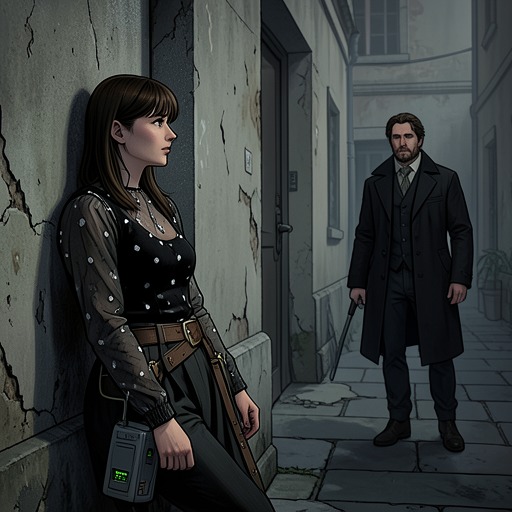
Cushla recognizes Victor from current-affairs programmes on television. He is described as short and wiry, in a sleeveless khaki jacket with pens protruding from its breast pocket, and slightly out of breath; to Cushla, he seems almost to have been running around Saigon. The impression mixes a familiar public image with an energetic, restless physical presence. Jane accompanies him and says hello quietly. Victor’s television visibility distinguishes him from the other guests before he has said anything, making his arrival feel like the entrance of someone accustomed to observing and interpreting events in public.
His later appearance at a bomb-damaged site sharpens that association. Wearing a pocketed war-reporter’s jerkin, he looks more appropriately dressed there than he had in Penny’s kitchen. The change in setting makes the outfit’s earlier incongruity legible: what seemed theatrical among dinner guests becomes practical shorthand for the work he does. He surveys the damage and remarks on how much there is despite the small quantity of explosives. When Cushla asks whether he is after the inside story, he answers that there has been no death or mutilation and so little of a scoop. His eye for news is immediate, but the exchange also shows that he is speaking with people personally affected by what he records.
Political Conflict with Michael
Victor’s clearest early position emerges over dinner, when the conversation turns to Republican prisoners refusing to recognize the court. Michael argues that the justice system treats them unfairly and that such treatment would not be accepted elsewhere in the United Kingdom or in another civilized country. Victor answers with scorn, framing the prisoners as gunmen and bombers who imagine themselves unfairly treated. His response makes the disagreement more than a difference of tone: Michael sees state injustice and political conditions, while Victor dismisses the prisoners’ claim to political status.
Michael bristles but initially drinks rather than answering. Around them, Jim and Jane look down at the table, and Penny gets up to put utensils in the sink. The dispute interrupts the ordinary rituals of the meal, where wine, food, and politeness had briefly held the guests together. Michael then argues that many of the young people would not be in trouble without the political situation, and that unemployment, harassment, and police or army mistakes help recruit for the Irish Republican Army. Victor’s earlier mockery therefore stands in direct opposition to Michael’s account of how state conduct and social conditions feed the conflict. The dinner leaves Victor’s political certainty conspicuous, but it also shows the cost of voicing it: conversation tightens, and the people around the table retreat into silence.
Victor’s manner is not uniformly combative. Later, when he senses or notices his own surly mood, Michael asks softly whether he is all right, though Cushla can feel the tension in Michael’s body. That question does not erase the antagonism between the men; instead, it places their argument within a relationship in which one can challenge the other and still attend to his condition. Victor’s presence thus complicates the boundary between political opponent and personal acquaintance.
Jane and the Social Setting
At another gathering, Victor arrives with Jane, whose painted pink cheeks and layered mascara strike Cushla as Pierrot-like. The details of her appearance register through Cushla’s uneasy attention, but the conversation also gives Jane a life beyond that impression. Victor has been commissioned to write a book about the Ulster Workers’ Council strike. Jane tells the group that she has translated a short letter from Brazil for an engineering firm; the Portuguese was so poor that the task took two days. As she describes the work, she becomes animated. Michael, aware of Victor’s bad mood, asks Jane how she is and helps draw her into the conversation.
This moment places Victor’s professional commission alongside Jane’s less celebrated paid work, and shows Michael trying to ease a strained social encounter without openly confronting Victor. Cushla suspects Victor is looking at her as he mentions his book, but the evidence leaves the meaning of that look uncertain. At the dinner table, Jane’s commentary on the food receives little attention, and Cushla wonders whether it is a way of asserting her right to be there. Victor’s company is therefore part of a social world marked by uneven attention and discomfort, not merely a backdrop for political debate.
Warning, Loss, and What Victor Knows
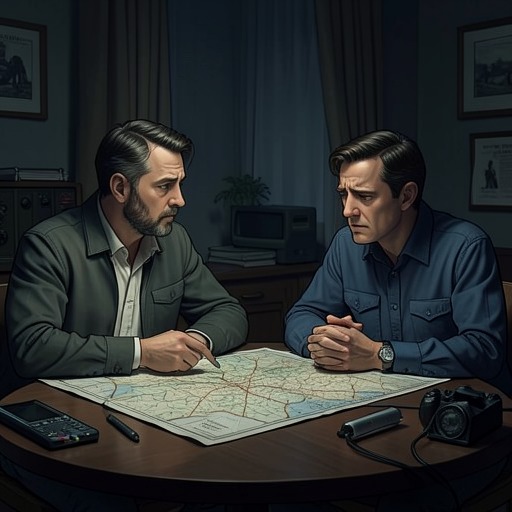
At the damaged site, Victor tells Cushla that people had been leaning on Michael to drop a police-brutality case. He says he tried to warn Michael. This disclosure adds a concrete dimension to Victor’s proximity to Michael’s work: he knew about the pressure surrounding the case and attempted, at least, to alert him. The account does not establish what Victor could have done beyond warning him, but it shows that his knowledge was not confined to public events or the arguments heard over dinner.
Cushla responds that Michael could have done without her amid everything that was happening. Victor does not affirm that judgment. He says he thought so too, then adds that Michael had been happy in the last few months and that Cushla had made him happy. The statement shifts the exchange from political danger to the private meaning of the relationship. Victor does not turn Cushla’s grief into a scoop; he offers her information about Michael’s last months that she may not have been able to tell herself. His reassurance is limited but precise: it concerns Michael’s happiness and Cushla’s part in it, not an explanation for the death or a way to undo it.
When Cushla says she loved Michael but could not tell him, Victor replies that Michael probably had a fair idea. His answer suggests that, in Victor’s view, the feeling was not wholly hidden from Michael, though the conversation cannot establish exactly what Michael understood. Asked about Jane, Victor says she is pregnant, in the early stages. Cushla hopes it works out. The exchange returns him from the role of witness to Michael’s story to a person with a vulnerable future of his own.
Narrative Role
Victor’s appearances form a progression from recognizable public figure, to combative guest, to informed witness at a scene of destruction. The recurring contrast between his reporter’s equipment and the private rooms he enters gives his character a particular tension: he is trained to look for the story, yet his most consequential contribution to Cushla is intimate knowledge that cannot be reduced to a headline. His political dismissal of Republican prisoners remains sharply at odds with Michael’s defense of them, while his attempt to warn Michael and his account of Michael’s happiness complicate any simple division between adversaries.
The narrative keeps Victor’s knowledge partial. He can report that pressure was being applied to Michael, recall having tried to warn him, and offer Cushla his reading of Michael’s last months; he cannot make the loss intelligible or reverse it. Jane’s early pregnancy, disclosed in the same conversation, places another uncertain beginning beside Cushla’s bereavement. Victor’s significance lies in that double position: he carries the habits of public observation into private grief, but what matters most in the end is not the scoop he might have pursued. It is what he knows about Michael, and what he chooses to tell Cushla.