Tommy McGeown
TrespassesTommy McGeown is the elder son of Seamie and Betty McGeown, Davy’s older brother, and a gifted student whose education is cut short. His character emerges through contrasts: polished shoes and literary ambition alongside a readiness for confrontation; teasing intimacy with Davy alongside protective action when his brother is mistreated. The harm done to Seamie sharpens that tension, making Tommy’s anger not an abstraction but a response to the damaged life of his father and the vulnerability of his family.
Identity and First Appearance
Tommy first appears on the road near the estate where Davy lives, walking in the black blazer of a Catholic grammar school on the outskirts of Belfast. He is neat, with brushed hair and polished shoes, set apart from the teenagers in high-school uniform gathered at the estate entrance. Davy recognizes him as his brother just as the other boys begin closing in. One pushes Tommy off the pavement and into the road. Cushla turns the corner, slows beside him, and offers him a lift; his face is flushed, which she initially reads as shame, but his refusal and glower make clear that rage is closer to the truth. His entrance places him at once in a scene of public humiliation and threatened dignity, while his school uniform marks a path that he has not yet abandoned.
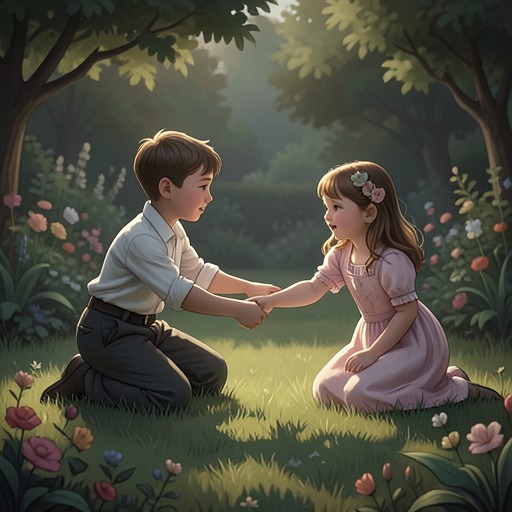
Tommy’s relation to violence is also present in the domestic teasing he directs at Davy. He grabs his younger brother and jabs his fingers between Davy’s ribs, asking after the small boy with a taunting nickname. When Davy mentions Father Slattery, Tommy twists the priest’s name into a mockery. The exchange shows familiarity and rough play, but it also establishes Tommy’s irreverence toward religious authority, a stance that later becomes consequential when he sees Davy treated unjustly.
Education and the Break with School
Tommy’s academic life is more than a passing detail. When Cushla asks what he is studying for his A levels, he names A Passage to India, The Woodlanders, Persuasion, and poetry by Hopkins and Browning; his Shakespeare texts are Hamlet and The Winter’s Tale. The list conveys the breadth of his studies and gives Cushla a point of connection with him: she says that she studied English too. His literary interest persists after he stops attending school. Cushla finds him at home in his own clothes rather than his uniform, and later he returns the copy of Jude the Obscure she lent him, calling it the best book he has read and asking her to keep lending him more. His response is specific: he admires the book’s darkness as well as its force. The pleasure is genuine, but the exchange is unsettled by his insistence that Cushla’s mother is demented about him. When she reminds him that he is a schoolboy, the smile disappears. The education he values is now in conflict with the status and limits imposed on him by his age and circumstances.
His departure from school is registered through Cushla’s direct observation rather than an explanation of how or when he made the decision. When she sees him again, she tells him he did not go back. Later, as she is leaving the house, she sees Mandy light the cigarette held between Seamie’s lips while Davy watches. Tommy comes downstairs holding Jude the Obscure, physically interrupting Cushla’s departure to return the book and discuss it. These details place his reading within a household shaped by Seamie’s needs, while keeping Tommy’s own motives for leaving school unstated. The text shows what he has given up and what remains important to him without reducing the decision to a single cause.
Family Loyalty and Anger
Tommy’s concern for Seamie surfaces sharply in his argument with Cushla. When she tells him that his mother is demented about him, he asks whether she saw what was done to his father. He describes the consequences: Seamie has seizures after having his head kicked in, cannot concentrate long enough to read a newspaper headline, and has a bag for his urine strapped to his leg. Tommy’s blunt, profane account refuses the distance of polite conversation. The injured body and the loss of ordinary abilities are the grounds of his anger. His earlier appearance, neat and controlled before the boys who pushed him, now sits beside a fury tied to what has happened to his father; the account does not state that the two injuries have the same perpetrators or cause.
Tommy’s attitude toward Cushla is similarly difficult to settle into one register. When they reach the house, he thanks Miss Lavery for looking after Davy, but she hears either a smirk or derision in his voice. She corrects him: he should call her Cushla, and she has done nothing extraordinary. She asks about Seamie, and Tommy answers by challenging whether she really wants to know. The exchange joins acknowledgment, suspicion, and an invitation to face the family’s situation directly. His later literary conversation with her shows that the connection is not merely one of practical help, even as his defensiveness and the differences in their positions remain evident.
Protecting Davy
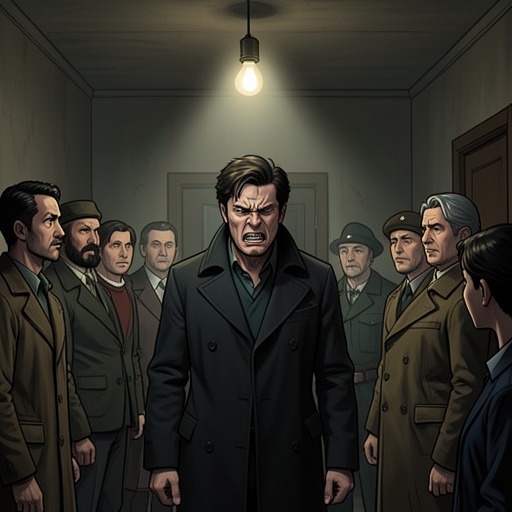
Tommy’s clearest act of protection comes after Davy’s first confession. Father Slattery gives Davy an interminable penance, leaving him kneeling in a pew while the other children come and go. Cushla considers appealing to Bradley, but remembers the retaliation Bradley has already taken against the McGeowns for her insolence and says nothing. Tommy instead strides up the aisle, pulls Davy to his feet, and takes him toward the door with a hand between his shoulder blades. Faced by Father Slattery and Bradley, he stops and objects that whatever point they are trying to make is not right. He then leaves with Davy, lighting a cigarette at the bottom of the steps as his brother walks beside him.
The scene gives Tommy’s defiance a practical purpose. He does not merely mock the priest’s authority, as he did in his banter with Davy; he interrupts its exercise when he sees it hurting his brother. Cushla runs after them, and Davy turns toward her, saying that he did not do anything really bad. That response underscores the unequal burden of the encounter: Davy is left trying to explain himself, while Tommy has already acted to remove him from the punishment. Tommy’s protection does not erase the danger of challenging the adults in authority, but it makes his loyalty visible through what he does rather than through a declaration of feeling.
Change and Narrative Significance
Tommy’s plot trajectory moves from a schoolboy publicly pushed into the road to a young man who has stopped attending school, remains attached to books, and intervenes directly on behalf of his family. The evidence does not supply a full account of the transition or resolve what he will do next. Instead, it places his unrealized academic promise beside the consequences of Seamie’s severe injuries and the pressure on the family, allowing his interrupted education to register without claiming one simple explanation for it.
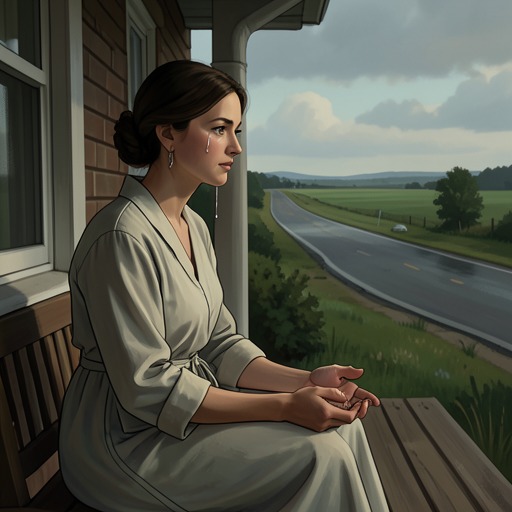
The final glimpse of Tommy is markedly different from his earlier encounters with Cushla. In the aftermath of the scene at Michael Agnew’s flat, she drives past him walking alone along the footpath, a sausage bag over his shoulder. His gait seems too purposeful for a young lad. She raises a hand; he looks at her as if he does not know her and continues walking. The encounter offers no explanation for the distance between them and no account of where he is going. Its restraint matters: the boy who once answered Cushla’s offer with anger, exchanged books with her, and stood up to religious authority for Davy is now seen only in passing, withholding recognition as he moves on. Tommy’s place in the novel is therefore not simply that of a troubled pupil or a protective brother. Through him, the costs borne by the McGeown family appear in educational promise, bodily injury, domestic strain, and the fragile ties that persist without guaranteeing closeness.