Thomas Ronald McGeown
TrespassesThomas Ronald McGeown, known as Tommy McGeown, is an eighteen-year-old from Hollyburn Estate who is convicted of murdering Belfast barrister Michael Agnew and sentenced to life imprisonment. His story turns on a reversal: after Cushla Lavery hears that he has been accused, she cannot see how he could have known Agnew; the trial account reveals that Agnew had invited Tommy into his home for tea. The brief meeting makes the accusation less inexplicable, but does not settle what Tommy thought or why he later killed him.
Identity and Early Glimpses
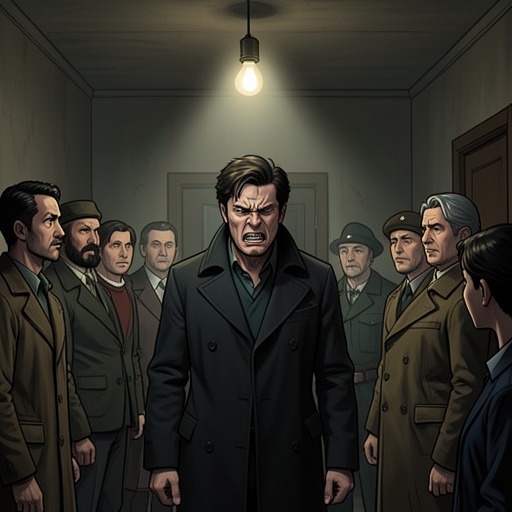
Tommy belongs to the McGeown family, whose household is already under strain when he is arrested. After an incendiary attack on the family home, Cushla arrives to find Gina Lavery preparing sandwiches and tea, Mandy and Davy at the kitchen table, and Seamie McGeown sitting with his palms raised. Betty McGeown recounts how the fire spread across the sitting-room carpet and set the side of the settee alight, where the children had been sitting. She also reports that police came for Tommy at teatime.
The first explanation Cushla hears is that Tommy has been taken because authorities say he shot Agnew. She is shocked: she believes Tommy could not even have known him. Her certainty depends on distance—on the assumption that a schoolboy and a prominent barrister had no connection—and the trial later supplies the small, ordinary encounter she had not known about.
Tommy and Cushla Lavery
A book containing Tommy’s written entries offers an earlier glimpse of how he sees himself and Cushla. One Easter Sunday entry recounts a phone call in which a woman calls him Michael, prompting his written question about who Michael is. Another entry, made after an encounter on a doorstep, says that Cushla sees only a teenager and does not know everything about him. These remarks suggest that Tommy is preoccupied with how Cushla regards him and wants to be seen as more than a boy; they do not establish what she meant to him beyond that.
Cushla had wondered whether Tommy was infatuated with her but had not attached much importance to the possibility. She remembers her own adolescent crushes as brief and extravagant, involving boys she scarcely dared speak to. The difference between her casual interpretation and Tommy’s recorded self-consciousness gives his interest an asymmetry: what she barely considered appears to have mattered to him, though the evidence does not make that interest an explanation for the murder.
The Encounter with Michael Agnew
At trial, the account of Tommy’s work provides the connection Cushla thought was impossible. He had been repairing a path at a house opposite Agnew’s. When rain began, Agnew knew that his family was out and invited the boy inside for a cup of tea. Cushla imagines Agnew moving between kettle and sink, finding cups and biscuits, and trying to put an awkward teenager at ease. The invitation is an act of ordinary hospitality; in retrospect, it becomes the point at which Tommy and Agnew’s lives crossed.
Cushla wonders whether Agnew asked Tommy about school or mentioned having a son his age. She also imagines Tommy noticing a photograph of Agnew in wig and gown on the dresser and mistakenly deciding that his host was a judge. These are Cushla’s questions, not established facts. The account confirms the work, the rain, the invitation, and the tea, but leaves the conversation—and Tommy’s understanding of the man who welcomed him—unresolved.
Arrest, Trial, and Sentence
The accusation reaches Cushla while the McGeown family is dealing with the attack on their home. Gina asks why anyone would think Tommy had anything to do with Agnew’s killing; Cushla, unable to reconcile the two men, cuts sandwiches into uneven triangles and takes a cigarette. The scene places a family’s immediate need for shelter and care beside the abrupt arrival of a murder allegation, without giving them a clear account of what happened.
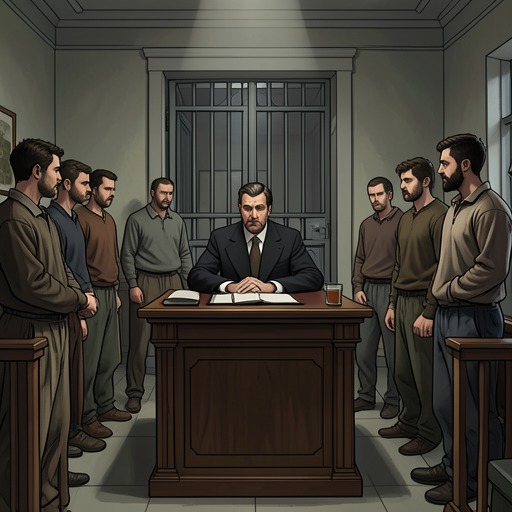
Later, Cushla reads the newspaper’s feature on Tommy’s trial. His image is a mugshot, almost pixellated, and she recognizes the bold, lean appearance he had the last time she saw him; in the photograph, his eyes seem frightened to her. The report says Tommy refused to recognize the court, offered no defence, and answered no questions. He was convicted on evidence described in the article as forensic, circumstantial, and damning.
A separate report identifies the sentenced prisoner by his full name: Thomas Ronald McGeown, aged eighteen, of Hollyburn Estate. It states that he was sentenced to life for the murder of Michael Agnew, the prominent Belfast barrister, and showed no reaction as he was led away from the dock. The public account fixes the legal outcome; it does not provide Tommy’s response beyond that observed silence.
Ambiguity and Narrative Significance
Cushla tries to make the crime intelligible by imagining what might have followed the cup of tea. She wonders whether Tommy saw Agnew’s photograph, whether the mistaken idea that he was a judge arose then or later, and whether Tommy’s rage and desire to belong made him susceptible when he was given a gun. These possibilities belong to her reconstruction, not to a confirmed account of Tommy’s motive. The trial establishes a connection between the two men and a conviction, while leaving the decisive inner steps out of reach.
That gap shapes Tommy’s place in the story. At first, Cushla’s image of him as a teenager makes his alleged involvement seem impossible; the work at Agnew’s house and the unexpected invitation bring him close enough for the killing to be imaginable, but not fully explained. His refusal to answer questions at trial and his lack of visible reaction at sentencing leave the reader with the public facts of the case and the unresolved distance between an awkward boy welcomed in for tea and a convicted murderer.