Michiel’s substance-use problem
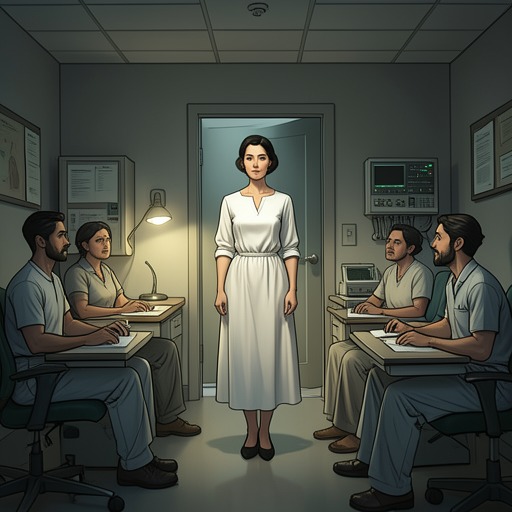
UpMichiel’s substance-use problem is presented not as a settled diagnosis but as a conflict over what his drug use means. In a conversation with Emma inside the PAAZ, he acknowledges a difficult period and a connection between drugs and his admission, while resisting the idea that he is addicted or has lost control. His effort to define himself as a user who can manage his choices is tested by the very behavior he describes: from the ward, he is still directing people toward a drug supplier and receiving money for it.
Drug referrals from the ward
Michiel tells Emma that several friends have texted him to ask where they can get good drugs while he is in hospital. He has referred them to an acquaintance, who has now messaged to say Michiel will receive three hundred euros in commission. The arrangement is indirect: Michiel emphasizes that he has not sold the drugs himself, but has connected people who already use them with someone who can supply what they want. That distinction matters to his account of his conduct, though it does not erase the fact that drug dealing remains part of his social and financial activity during treatment.
Emma’s first reaction is to identify the arrangement as dealing. Michiel objects to that description and draws a boundary around the people he says he serves. He claims they are not addicted, are not new customers, and want something beyond an ordinary drink for relaxation or a more intense experience. He says he would not sell to Emma, and later insists that he would never sell to anyone in the ward. In his framing, he is not recruiting vulnerable people or profiting from their suffering; he is making referrals for existing users who want quality and safety. The repeated qualifications reveal how much work his distinction requires: he acknowledges the commission and the drug connection, but defines the transaction so that it will not count, in his own terms, as exploiting patients or enabling addiction.
Control, reduction, and self-medication
Emma points to the apparent contradiction between Michiel’s presence in the PAAZ and his continued involvement with drugs. He answers that he wants to cut down, not stop. He accepts that using too much too quickly can be dangerous, comparing excess drug use to drinking ten litres of water, but says that he had been through a difficult period and otherwise had matters under control. He therefore presents treatment as a response to a temporary difficulty rather than evidence that he must renounce drugs altogether.
His language also protects a distinction between pathology and personal choice. When Emma calls the issue drugs, Michiel describes it instead as a lifestyle problem and says he prefers the term self-medication. The alternative vocabulary shifts emphasis: rather than accepting addiction as the defining account of his behavior, he represents substance use as a way of managing his life, one he believes he can regulate. The book does not confirm that his self-assessment is accurate. Instead, it places his confidence beside the circumstances Emma can see: he is hospitalized, has had a difficult period, and is earning commission by directing friends to a supplier.
The argument over who is at risk
Michiel’s account depends on separating himself and his customers from people he considers genuinely addicted. He describes his customers as clean and says he sells neither to addicts nor to other people he dismisses as helpless cases. When Emma hesitates, he becomes more guarded and asks whether she understands what his presence in the ward means. He then turns the implication around, saying that while he is there, dozens of patients are temporarily without a problem. The remark presents his hospitalization as a protective absence from the drug scene, even as the referrals he has just described show that his connection to it has not stopped.
That gap is central to the portrayal. Michiel does not deny that he uses drugs, nor that he has been in a difficult period; he disputes what those facts should make him. His insistence that he is clean and that his customers are not addicted is not independently verified in the conversation. Emma’s questions bring out the tension without resolving it: a person can claim to seek moderation, describe himself as in control, and still remain involved in the circulation of drugs while hospitalized. The scene preserves both his reasoning and the evidence that complicates it.
Emma as listener and counterpoint
The exchange also turns on the difference between their respective experiences of mental health and certainty. Michiel asks Emma whether she thought she could fly. She explains that she did not merely entertain the idea: she believed it, and experienced the belief as entirely real. She describes a delusion as something that can feel normal and self-confirming, rather than as an obviously strange thought that a person can simply dismiss. Michiel responds with a question about whether a person thinks a thought or is thought by it. Their conversation gives him a role beyond that of the person being challenged: he listens to Emma’s account and helps articulate how conviction can shape someone’s sense of reality.
That moment does not settle the disagreement about drugs. Instead, it makes the conversation reciprocal. Emma presses Michiel to examine the gap between his claimed control and his actions; Michiel offers a question that helps her describe an experience she finds difficult to explain. His characterization therefore rests on two contrasts at once: between his self-description and his conduct, and between his own account of control and Emma’s description of a belief that can feel more certain than ordinary reality. The narrative leaves the substance-use question open, showing neither a completed recovery nor an accepted decision to quit, but a man in treatment who continues to argue for moderation on his own terms.