Haru no Depaato
VinelandHaru no Depaato is a Tokyo department store whose role in the novel is far from ordinary retail: it houses DL’s cover employment, provides the setting for a planned assassination, and stages the disguise meant to fool Brock Vond. Its significance lies in how thoroughly it converts ordinary arrangements—rooms, clients, a beauty salon, a schedule—into parts of an operation. Yet the plan’s decisive encounter occurs through misrecognition: DL mistakes Takeshi Fumimota for Brock, and the carefully prepared disguise cannot prevent the consequences of that error.
A Cover Employment and a Private Room
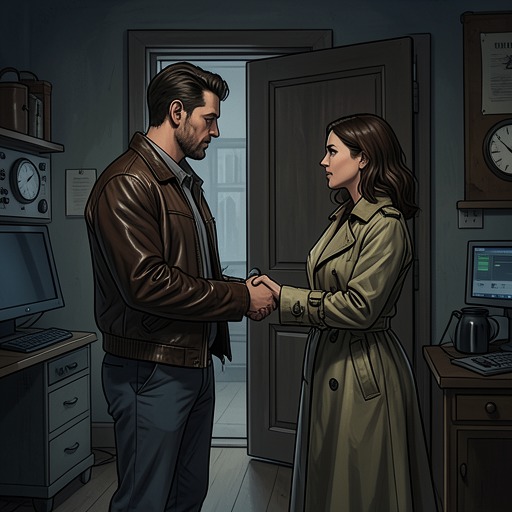
Haru no Depaato receives DL after a night and day spent with Ralph Wayvone in sex, amphetamines, champagne, and an elaborate steak meal. She arrives by Lincoln limousine on rain-slick streets, with dried semen on her stockings and one earring lost. The passage makes the delivery to the store feel less like a conventional hiring and more like an entry into a carefully managed arrangement. There, DL is installed in a room of her own and given a bag full of yen for immediate expenses until she begins drawing a regular salary.
Ralph explains that the other clients are meant to provide cover. Their presence gives DL a plausible reason to be at the establishment, while her employment secures her a place from which to prepare for the real objective. The arrangement has a double character: the clients are part of the job’s façade, but DL finds them no worse than she expected. More important to her, the location allows her to return to the dojo each day. Training, fighting capable opponents, stretching, and meditation offer a route back toward a refuge she had feared she had lost.
That return to practice does not remove the danger surrounding her work. As she travels outside the establishment, DL attends closely to accidents, rushing ambulances, and even bowls of severed shrimp heads in restaurants. These observations accompany the scenario she and Ralph are developing for Brock’s murder. Haru no Depaato thus holds two kinds of preparation at once: the inward discipline of the dojo and the outward, practical construction of an assassination plan.
Staging the Disguise
The plan depends on Brock’s expected visit to Tokyo for an international symposium of judges. He is to stay at the Hilton, and Ralph has obtained the program of his leisure activities. DL is to wait and organize her movements around that schedule, trusting that Brock will eventually appear because he is a regular client when he comes to the city. The department store is not merely a hiding place; it is linked to a timed attempt to bring DL and her target into the same room.
The store’s beauty staff prepare DL’s transformation. When they produce the wig—matched to the precise color and styling she is meant to wear—DL understands what the disguise entails. In the mirror, her own face appears beneath Frenesi Gates’s head of hair, an unnerving image that makes the impersonation feel like more than a costume. The clothes and dark makeup reproduce a 1960s American look, an appearance the staff believe Brock prefers. Because he will want to see the woman’s blue eyes, colored contact lenses are also prepared to complete the likeness.
The disguise makes identity at Haru no Depaato a practical, manufactured thing: hair, clothes, makeup, and eye color are assembled to direct Brock’s recognition. It is also fragile. DL worries that her eyes could give her away, and the lenses that are supposed to solve that problem later become a source of unease. The store’s transformation of her is therefore both a tactical resource and a reminder that the operation depends on appearances holding together at precisely the right moment.
The Encounter Behind the Plan
A later episode unfolds in the department store’s nighttime interior. Takeshi enters with a plastic access card, which the slot draws in with a sound like a groan before returning it after an electronic check. He finds a place almost emptied of signs of nighttime activity: no visible drinking, gaming, or other expected bustle. The quiet initially leaves open the possibility that the police have raided the establishment or that Brock has already found the forces Ralph feared.
Voices lead Takeshi onward, where roughly a dozen hostesses gather around him. They escort him through corridors and into an elevator, treating him as someone whose identity they already know. At the far end of a candlelit corridor, they address him as Vond-san and leave him at a black velvet door. The confused guest has been mistaken for Brock. The store’s staff and passageways have delivered him, without his understanding the error, directly to DL.
DL is waiting in the room in the costume prepared for the operation: hat, long earrings, and miniskirt. Takeshi reads the situation as an encounter with Brock’s preferred kind of woman; DL, absorbed in what she is doing, proceeds as if he were her intended target. The scene turns the store’s disguise into a trap for both people. Its success at producing the expected image helps conceal the mismatch in identity, while the arranged meeting places DL and Takeshi in a situation neither has correctly understood.
Recognition, Error, and Aftermath
Only afterward does DL recall the colored contacts. She becomes increasingly convinced that they may have been taken from the eyes of a dead woman, perhaps a prostitute punished for some transgression and lost to anonymity. The text leaves this as DL’s growing suspicion, not a confirmed account of the lenses’ origin. Its force comes from the way the disguise’s most intimate component—eyes selected to imitate Frenesi Gates—seems to carry the trace of another woman who cannot be identified.
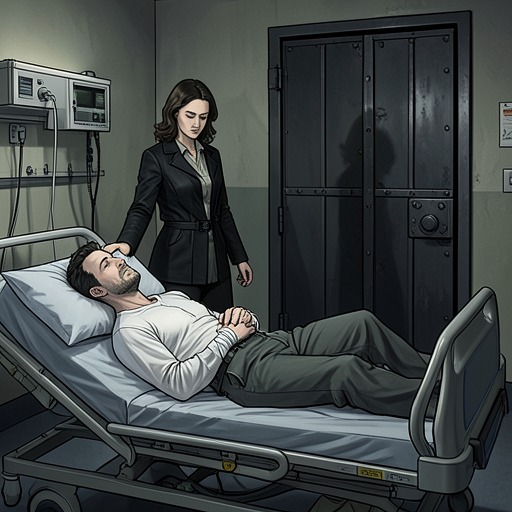
During the encounter, DL is guided by her own corrective lenses and by the pressure points she has learned to detect, rather than by the eyes of the person she is impersonating. When Takeshi cries out in Japanese, DL realizes that something has gone wrong. She sees that his eyes are pale green rather than Frenesi’s vivid blue, blinks hard, and moves from the bed into a fighting stance beside the door. Haru no Depaato’s carefully constructed operation ends not in a confirmed killing of Brock but in the recognition that the man before her is Takeshi.
The location’s narrative importance rests on this collision between preparation and mistake. The room, staff, access card, schedule, and disguise all seem to make the encounter controllable; the wrong man’s arrival exposes how little control the plan actually provides. Haru no Depaato is at once workplace, cover, training base’s counterpoint, and stage for a deception whose success depends on misidentification. When that misidentification breaks, the elaborate machinery of the place cannot undo what has already happened.