Holytail
VinelandHolytail is a remote Northern California growing community whose isolation offers shelter from outside scrutiny but cannot guarantee safety. As CAMP intensifies its campaign against cannabis, the settlement becomes a test of how long a locally organized refuge can withstand expanding state and federal pressure. Its precarious roads, vigilant warning network, and threatened harvest bind everyday life to the prospect of a raid; for Zoyd Wheeler, Holytail is also a place where work, risk, and the struggle to recover his confiscated home converge.
Setting and Access
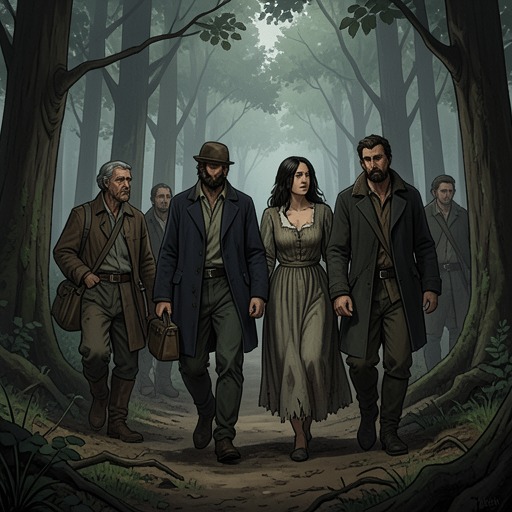
Holytail lies beyond the coastal range and its persistent fog, in a valley whose climate suits cannabis cultivation. It is described as nearly the last refuge for growers in Northern California. The approach is difficult even by road: after the Great Landslide of 1964, travel required winding along both banks of a river, relying on ferries that were not always available and bridges rumored to be haunted. Distance here is not simply measured in miles. The broken route makes entry uncertain and gives the community time to learn that outsiders are coming, while also making movement and evacuation difficult.
A related view of the region’s damaged infrastructure appears at the old YVPA bridge over Shade Creek. At least one lane remains mysteriously open even as sections disappear and detours are marked in spray paint on scraps of wall and plywood. Repair crews work around the clock; when Vato and Blood cross, they must wait for a truck carrying rubble and twisted reinforcing rods to maneuver along the dirt track. The bridge has been under repair since a flood of the Seventh River destroyed part of it in 1964. This passage gives the surrounding landscape a history of recurring damage and makes travel across it a negotiated passage through ruins, temporary repairs, and uncertain routes—not a reliable connection to the outside.
A Community Under Pressure
Holytail’s growers live with a widening campaign against them. CAMP’s destruction of crops intensifies season by season, while other state and federal agencies join the effort and a grand jury in Eureka issues subpoenas to increasing numbers of residents. Friendly deputies and towns considered safe are neutralized one by one and brought back under government control. The question hanging over the community is not whether the campaign will reach it, but when.
Vineland County Sheriff Willis Chunko has kept Holytail on his blacklist for years, although the terrain makes it exceptionally hard for him to penetrate the area. Each autumn he reappears on television beside piles of cannabis or in a field setting crops alight with a flamethrower. His public complaints that the growers hide in the trees turn enforcement into a recurring television spectacle, but the community’s response is practical rather than theatrical: whenever Chunko decides to move, Holytail’s residents receive advance warning.
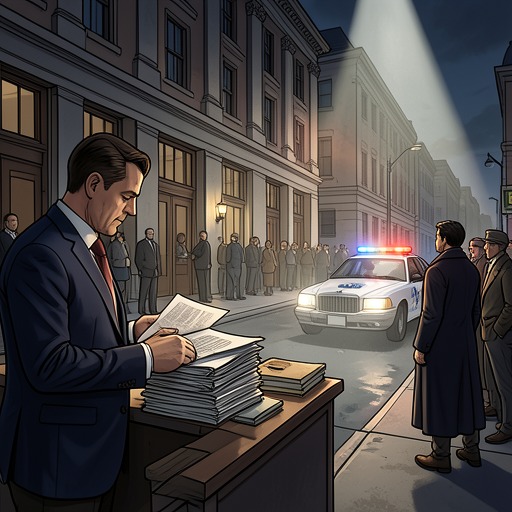
That warning system reaches well beyond the valley. Observers extend as far as Vineland, where some wait outside the sheriff’s office with rolls of coins ready to make calls. Others monitor the CB radios used by patrols on rural roads; still others watch the ridges and mountain peaks with binoculars and repurposed fishing-boat radar. The network turns distance into an early-warning resource, but it also shows how thoroughly the prospect of a raid has organized local life.
The Harvest and the Threat of a Raid
The danger grows more immediate as the plants mature. Warm weather brings fuller, more aromatic crops, but the same landscape that has supported cultivation increasingly exposes it to surveillance. Small unmarked blue aircraft appear against clear skies. Their pilots include former aviators, members of a vigilante squadron, anti-drug student activists, government consultants, and off-duty deputies and police officers, all under CAMP contract and led by Karl Bopp, a former Luftwaffe officer and Nazi who became a United States citizen. Reconnaissance continues for weeks. Each morning, air and helicopter crews wait near Vineland Airport for Bopp to announce the day of action.
At Piggy’s Tavern, growers debate whether to harvest or wait. Waiting could improve the yield, but it also leaves more time for CAMP to destroy it; frost and downpours add further uncertainties, as does each grower’s tolerance for risk. The stakes are not limited to a single crop. The anticipated outcome is that Holytail, like much of the old Emerald Triangle, will be pacified and reclaimed for a drug-free, tightly regulated America. The narrative’s satirical image of that promised order—inoffensive music, endless family soap operas on television, daily churchgoing, and perhaps a cookie as a reward for good conduct—sets official claims of redemption against the coercive campaign used to impose them.
Zoyd’s Work and Holytail’s Significance
Zoyd stays with growers he knows in Holytail, away from the people who have not seen him for a week and are beginning to wonder about his absence. His connection to the valley is not merely temporary refuge: despite his lawyer Elmhurst’s advice to stay clear while CAMP raids are under way, Zoyd continues hauling cannabis. For two weeks he helps move freshly cut sinsemilla and whole plants pulled up in haste, trying, like the other growers, to save as much of the harvest as possible before Chunko can burn it.
The work takes place amid nighttime evasions. In a battered Power Wagon, Zoyd drives with the headlights off after moonset, feeling his way along nearly invisible turns and steep logging roads between Holytail and the highway. Old Eagles tapes play; when the headlights of another vehicle appear, he breaks off singing and prepares for the possibility of an encounter with Brock Vond. His hope of recovering his small confiscated piece of Vineland has become entangled with these journeys away from home and back toward it. Holytail therefore functions as both a threatened agricultural refuge and a frontier of Zoyd’s personal struggle: the effort to preserve the crop runs parallel to his effort to regain what the government has taken, while the roads that carry him out may also lead him home.