Komani Invasion of Shinar
WatchmenThe Komani Invasion of Shinar is the campaign through which Komani raiders enter Shinar amid a rebellion against the Terran Empire, first presenting themselves as allies of the Shinarian resistance and later seeking to dominate the planet themselves. The invasion exposes the danger of treating military assistance as political freedom: the Shinarians invite the Komani to break imperial control, but the Komani’s appetite for battle and loot turns cooperation into occupation. The resulting crisis drives a reluctant partnership between Emil Vorgens, the Star Watch, and Shinarian leaders against a force that threatens both imperial authority and Shinarian independence.
Causes and Background
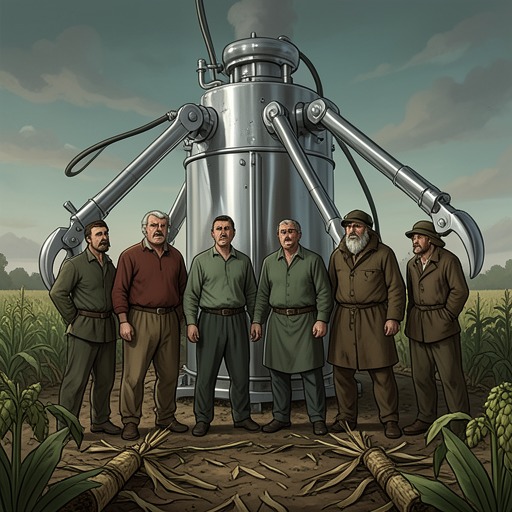
The immediate background is a Shinarian revolt produced by colonial pressure. When nutrient processors became necessary to the farmers’ economy, Clanthas appealed to the Terran governor and was told that the machines were vital. Rather than accept the decision quietly, Clanthas organized the farmers and held a demonstration in Katan, followed by demonstrations in other major cities. Some grew into riots; troops fired on unarmed civilians, the Terran governor was murdered, and Imperial Marines landed as the planet descended into turmoil.
Clanthas’s resistance drew moral force from an older Terran statement about freedom and the courage to resist enslavement. The words had originally belonged to Geoffrey Knowland, the Terran conqueror who defeated the Masters and established Terran rule over Shinar. Clanthas appropriated that language against the Terrans themselves, turning an imperial political ideal into an argument for Shinarian self-determination. The irony is central to the invasion: the Empire’s own history supplies part of the vocabulary with which its subjects challenge it.
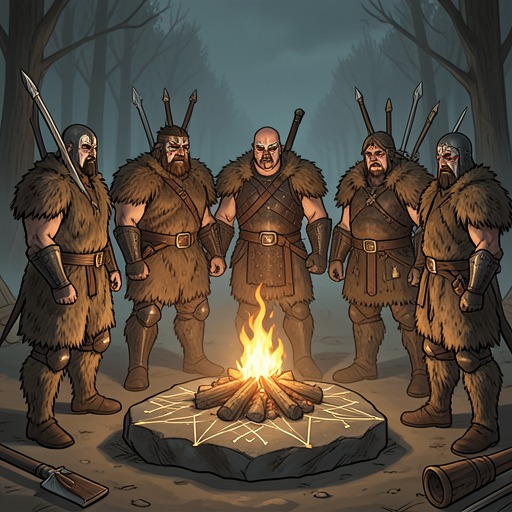
The Komani arrived when the planet was already unstable, sensing an opportunity for battle and looting. Terran orders directed Emil Vorgens to find the Komani leader, warn him against fighting the Empire, and offer the raiders safe conduct home if they immediately left Shinar. The order also invoked the allegiance that all Komani clans had sworn to the Empire and warned that the raiders could expect no help from the wider Komani nation. The attempted diplomatic solution revealed that the Terran authorities understood the Komani as a dangerous but potentially containable force; events on Shinar soon proved that assumption false.
Alliance and Escalation
The Komani were not initially acting as an independent occupying army. Merdon explained to Vorgens that the Shinarians had invited them into Shinar as allies and that they were helping fight the Terrans. He rejected the Terran commanders’ belief that the Shinarians were merely unwitting pawns in a Komani plan of conquest, insisting instead that the Komani were working for Shinar. Their incentives, however, were starkly narrower than the political hopes of their hosts: Merdon described them as fighters attracted by the smell of battle and the prospect of loot.
This arrangement gave the Shinarian rebellion short-term military strength but created a severe risk of defection. Merdon urged Vorgens to join the resistance because Vorgens’s own people had once fought the Empire. Vorgens refused, identifying himself not simply by ancestry but by service: he was a citizen of the Empire and a sworn Star Watch officer who could not turn against the people with whom he had served. His refusal establishes the invasion’s divided political field. Terran rule is oppressive to many Shinarians, yet opposition to the Empire does not automatically create a legitimate or trustworthy alternative.
The alliance expanded as Komani forces gathered from across Shinar. Okatar Kang assembled warriors from every corner of the planet, while Shinarian fighting units joined him and rumors spread that contingents from other Komani clans might land to participate. The Komani then surrounded Terran forces in the Carmeer district. Clanthas understood the encirclement as a catastrophe rather than a straightforward victory: he feared that the destruction of the Terrans would leave Shinar at the mercy of the Komani. Okatar, by contrast, wanted overwhelming strength before attacking, intending to wipe out the trapped Terrans completely.
From Allies to Conquerors
The invasion changes character when the Komani decide that Shinar is theirs to take. Okatar Kang, pacing like a caged animal before his council of nobles, concluded that the Shinarian leaders were wavering after the Terrans began retreating. He declared that the Komani had previously treated the Shinarians as allies but would now treat them as subjects. In his view, the planet was available for conquest, and he intended to take whatever the Komani wanted from it.
Okatar’s decision exposes the contradiction at the heart of the Komani intervention. The Shinarians had hoped that Komani military power would remove the Terrans and leave the local population able to govern itself. Okatar had a different horizon. He believed that a Komani victory on Shinar would demonstrate that Terran power could be humbled, encouraging other Komani clans to join his clan and enabling the Komani to seize the wider Empire. The local invasion was therefore also conceived as the opening move of a galactic war.
Okatar’s threat is not only military but ideological. He argues that the people of the galaxy have learned to hate the Terrans and that the Terrans gained their Empire by taking it from the Masters. The Komani, in his historical logic, are merely the next power to inherit that imperial structure. Vorgens warns that Okatar is plunging the galaxy into renewed chaos, but Okatar accepts that possibility and orders Vorgens shot before sunset rather than grant him the ceremonial execution traditionally given to bearers of ultimatums. The scene makes the invasion’s stakes explicit: the Komani claim to oppose imperial domination while preparing to reproduce it.
Resistance and Reversal
The threat of Komani conquest gradually alters Shinarian calculations. Vorgens tells the local leaders that the Mobile Force cannot defeat the Komani by itself and can do little more than defend its position until reinforcements arrive. He identifies Okatar’s weakness as his need for a rapid, decisive victory on Shinar. If the Terrans can hold him at bay and keep him frustrated, the other Komani clans may refuse to join him, and even his own warriors may tire of a fruitless war.
Vorgens frames the choice as a struggle for the planet rather than a simple endorsement of Terran rule. The Shinarians can fight alongside the Terrans against the Komani or allow the Komani to seize Shinar and use it as a springboard for galactic war. He cannot guarantee that the Empire will reward Shinarian cooperation with self-government, but he acknowledges that the possibility exists. The offer is politically uncertain and morally compromised, yet it gives the Shinarian leaders a reason to act against the immediate danger without abandoning their demand for autonomy.
The reversal becomes concrete when Clanthas and the other leaders decide to accept Vorgens’s proposal and work against the Komani. Their decision follows a prolonged reassessment of the alliance: the force invited to secure Shinarian freedom has become the more immediate threat to Shinarian survival. When Merdon later agrees to place his people under Vorgens’s orders, Vorgens promises rapid logistical support, arranging a squadron of vans and troop carriers within the hour. Merdon admits that he has been wrong about Vorgens and offers to fight beside him; the two men seal the change with a firm handshake before going together to the waiting people.
Historical and Narrative Significance
The Komani Invasion of Shinar is structured around competing claims to liberation. Clanthas invokes a Terran theory of freedom against Terran colonial power; Merdon invites the Komani as allies while believing that Shinar can direct their violence; Okatar converts anti-Terran resentment into a program of Komani expansion; and Vorgens, despite serving the Empire, becomes the officer who helps the Shinarians resist conquest. No faction possesses an uncomplicated claim to freedom. Political independence depends on military coordination, but military coordination repeatedly threatens to replace one domination with another.
The campaign also turns historical memory into an instrument of present action. The defeat of the Masters, the old Shinarian resistance, and Vorgens’s family history are invoked to explain what the current conflict means. Vorgens recalls that his grandfather recognized Terran military superiority and sent his oldest son into the Star Watch as an argument for accommodation; that son was assassinated before the war ended, while Plione IX eventually became a peaceful and prosperous imperial member. Okatar remembers a different lesson from imperial history: because the Terrans once took power from the Masters, the Komani may take it from the Terrans. The invasion thus becomes a contest between memories of resistance, accommodation, and inherited grievance.
Its consequences extend beyond the battlefield. The Komani’s betrayal forces Shinarian leaders to cooperate with the Terrans they had opposed, while the Terrans must treat those leaders as political actors rather than merely rebellious subjects. The conflict makes self-government a bargaining issue rather than a guaranteed result, and it shows why a local rebellion can become a strategic crisis for the entire Empire. Shinar is not simply invaded; it becomes the place where imperial legitimacy, local autonomy, and the Komani dream of expansion collide.