Sarah Calloway
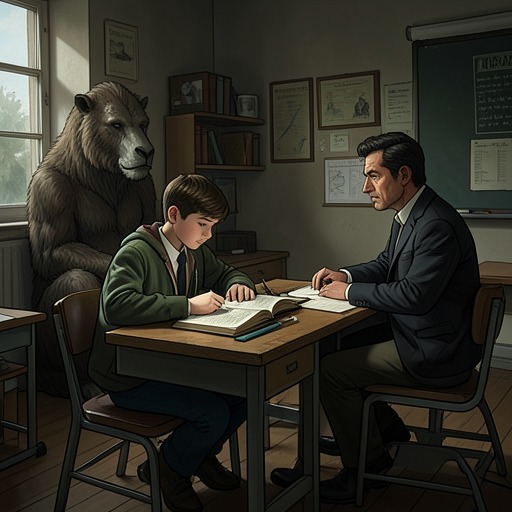
WoodwalkersSarah Calloway is a rattlesnake shapeshifter who teaches Humanology at Clearwater High. Her role brings the school’s hidden community into contact with the human world it must understand and navigate: she teaches students to recognize signs of human anger, warns them when particular behaviors may signal danger, and prepares them to meet Carag’s adoptive family without revealing their animal identities. She is presented as both polished and approachable, though some of the most unusual claims about her abilities reach Carag only as hearsay.
Identity and Background
Carag describes Sarah as beautiful enough to resemble a television star, and as someone he likes. She also has a boutique in Jackson Hole, where she regularly obtains elegant clothes. The detail has a specifically shapeshifter context: she replenishes her wardrobe especially when her snake self has just shed its skin. The account thus links her composed, fashionable human presentation to a recurring feature of her animal form, without suggesting that she treats either identity as a disguise to be discarded.
Holly tells Carag that Sarah can speak two languages at once during a partial transformation, using her forked tongue. Carag is not sure whether Holly is teasing him. Sarah has not demonstrated the ability in class, so it remains a reported talent rather than an observed one. He also notes that she has never bitten anyone. These qualifications matter: Sarah’s rattlesnake identity gives her potentially intimidating traits, but Carag’s direct experience of her is friendly and uneventful.
Teaching Humanology
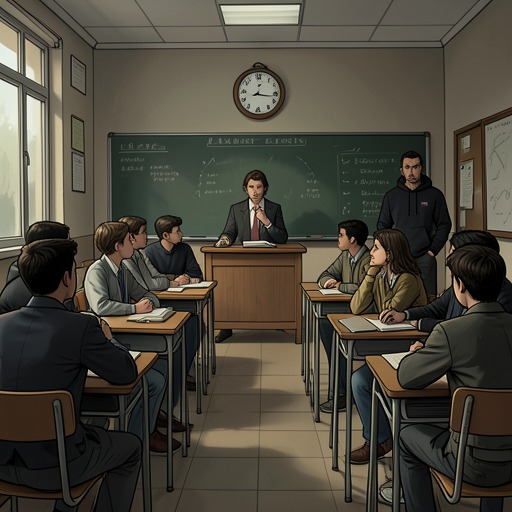
In one Humanology lesson, Sarah asks the class how to recognize when a human is in a bad mood. Cookie guesses that a person might move their ears backward. Sarah answers that humans almost never do so; adults might show such a sign only when very angry or when directing attention toward a partner. Her response treats human behavior as something students must learn to interpret rather than assume will resemble animal signals.
Carag offers a deliberately faulty generalization: in his view, men go shopping when they are in a bad mood, while women drink too much. Sarah corrects him by explaining that the pattern is usually the reverse. More importantly, she turns the correction into practical guidance: students should keep away from humans displaying either behavior. When Cookie asks whether such people are dangerous, Sarah first identifies those who drink as a risk, then adds that shoppers can become dangerous too when they cannot shut their closets and grow even angrier. Her comic escalation makes the warning memorable without obscuring its purpose: reading human moods can be a form of self-protection.
The class then gives the lesson a visual form. Cliff draws an angry face on the board, while Shadow, a young crow, supplies labels including a furrowed brow, narrowed eyes, and a red complexion. Both receive a plus and appear pleased. The students copy the diagram into their notebooks beside their earlier drawing of a happy face. Sarah’s teaching therefore moves from question and correction to shared classroom work, giving the students a set of visible cues they can record and recall.
School Life and Secrecy
Sarah’s instruction takes place within the school’s larger effort to keep shapeshifters’ existence secret from humans. She tells the class that visitors will arrive that afternoon—Carag’s adoptive family—and urges the students to remain in human form. The warning makes the social stakes of the visit immediate: the students’ ordinary classroom behavior must also protect the school’s secret. For Carag, the request is especially personal, since the visitors are the family with whom he lives, and he hopes his classmates will follow Sarah’s instruction.
Her lesson consequently serves two connected purposes. It gives students practical knowledge about humans, and it reminds them that encounters with humans demand control over how they appear. Sarah is not shown enforcing the school’s rules through punishment; in these scenes she teaches, corrects, and prepares. The account offers only a small number of moments with her, but they establish a clear combination of expertise and humor: she makes unfamiliar human behavior legible, while keeping the precautions around that knowledge firmly in view.