Klaus Haas
2666Klaus Haas is the imprisoned American suspect at the center of Santa Teresa’s disputed serial-murder narrative. Although he is publicly treated as the killer, he insists that women continue to die while he is behind bars, and eventually names Antonio and Daniel Uribe as the men responsible. His accusations point beyond an individual culprit toward a network of money, criminal influence, institutional failure, and a press that can turn uncertainty into a convenient conclusion.
Identity and Position
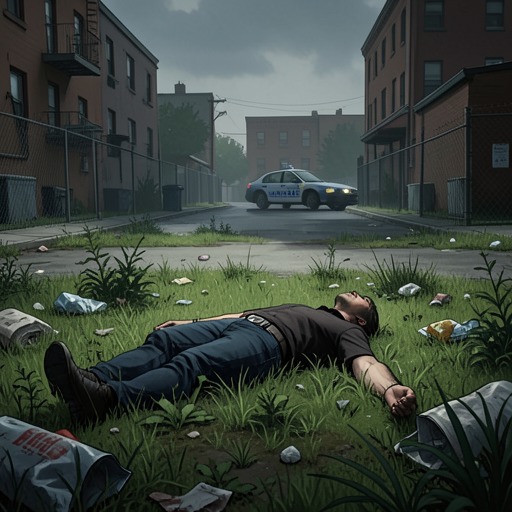
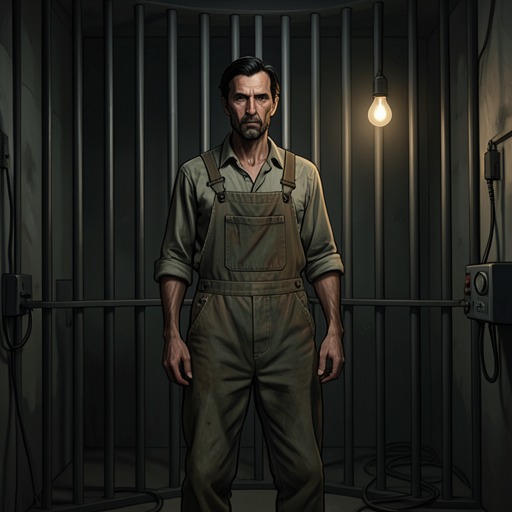
Haas is held in Santa Teresa’s penitentiary while women’s bodies continue to appear in the city and its surroundings. His confinement gives his case a double force: it makes him a ready-made suspect for the public, yet also lets him argue that the ongoing killings disprove the claim that he alone is responsible. He repeatedly draws attention to this contradiction, especially when he convenes reporters and asks how the crimes can continue with the supposed killer behind bars.
His position is not simply that of a man proclaiming innocence. Haas speaks as someone who claims access to information from within prison, where he says friends and acquaintances pass news along. At the same time, his sources and methods remain unverified, and the facts he offers do not automatically establish his innocence or the guilt of the people he names. The narrative keeps those questions open rather than treating his certainty as proof.
Claims, Accusations, and the Public Narrative
In January 1996, Haas again addressed reporters at the prison. He pointed to matching knots in the ropes used on Michelle Requejo and Estrella Ruiz Sandoval, emphasizing that Estrella was the only victim, he said, to have had direct contact with him because of her interest in computers. His argument challenged the assumption that the crimes could be attributed to him simply because he was already imprisoned. A novice reporter traveled to Hermosillo with the case file, but Sergio Gonzalez, whose earlier stories were in it, declined his editor’s invitation to return to the assignment. The episode places Haas’s public claims within an uneven news cycle: the crimes draw attention, but both editorial decisions and reporters’ willingness to pursue them shape what can be heard.
Later, the narrative gives a counterpoint to public certainty through Haas’s treatment of the massacre of members of Los Caciques inside the prison. He tells his lawyer that he witnessed the killing of four men, including their leader, Jesus Chimal. According to his account, Ayala, Farfan, Gomez, and others carried it out while guards watched and took photographs; he estimates that as many as twelve men helped restrain the victims, while other prisoners, himself among them, watched without intervening. The account does not present prison as a sealed space outside public knowledge: Haas and his lawyer discuss how much people outside may know, and how reporters’ discretion can be shaped by money. The killings are reported only briefly in the local papers, and the investigation fails to identify those responsible.
The later arrests of five members of Los Bisontes seem to offer authorities a solution. The men are accused of several killings, including the murders of Estefania and Herminia, and police suggest that their crimes may have been committed for hire. Because one detainee is the brother of Jesus Aguilera, known in prison as El Tequila and described as a friend and protégé of Haas, a story takes hold that Haas paid the gang to kill women resembling his alleged victims. The mayor then announces that the serial killings have been solved and recasts subsequent deaths as ordinary crimes. This official closure proves temporary: after the arrests, the city experiences a brief lull in the particular killings, but the competing explanations and the wider crisis remain unresolved.
Prison Violence and Shifting Allegiances
Haas’s account of the massacre also places him inside a prison order marked by spectacle, intimidation, and power. He says guards observed from above and took photographs rather than intervening. When he tells the story, he stresses that he could see the scene because of his height and that he watched to the end. His description implicates not only the named participants but also the watching cell block, including himself. The lawyer’s explanation that discretion may be worth money sharpens the connection between violence and the incentives of institutions beyond the prison walls.
The Los Bisontes’ arrival had already changed the atmosphere inside. When Chimal and his three companions entered the prison, other inmates watched them closely. Former Caciques offered Chimal a steel shiv and amphetamines; he carried the shiv while sleeping and kept the capsules with him. On the eighth day, the four men were forced into the laundry room, where other inmates attacked them. Haas was allowed into the room as though he belonged to the group, though the narrative also notes that he continued to despise those who admitted him. The episode complicates any simple picture of him as detached observer: he is a prisoner moving through relationships of fear and access, and his testimony comes from within that compromised setting.
The arrests further entangle Haas’s prison connections with the outside accusations. Roberto Aguilera, one of the Bisontes, is identified as the younger brother of El Tequila, Haas’s friend and protégé. Authorities use this connection as part of the story that Haas financed the killings. Haas later calls Sergio Gonzalez to deny it, explaining that he knows El Tequila and that one of the Bisontes is his brother, but insisting that this is the extent of the relationship. The connection is real; the alleged payment is not established by that fact alone.
From Denial to Naming the Uribes
After the Bisontes are arrested, Haas calls Sergio Gonzalez to challenge the claim that he paid them. He says the accusation is false, that he would need a great deal of money to finance the deaths, and that the proposed link rests on his friendship with El Tequila. He asks Sergio to help, but Sergio replies that he no longer writes about the killings. During the call Haas says the authorities are postponing his trial and trying to destroy him. The conversation ends without resolution when Sergio hears no answer from the other end of the line. A later visit leaves Sergio uncertain in another way: Haas seems colder than before, and Sergio suspects he may be guilty of something, then questions his own right to judge him by a smile or by his eyes.
In June, Haas convenes another press conference, this time saying that he has acquired information he did not previously have. He has appeared less composed, ignored his lawyer’s advice against the event, and not told her precisely what he intends to announce. At the conference he says that he has been investigating through prison contacts: friends of friends, he claims, pass information and favors. He initially repeats that he did not know Estrella Ruiz Sandoval and wishes he had known her, then covers his face. The reporters press for a name, while his lawyer describes his precarious position, delayed trials, lost evidence, and coerced witnesses. The scene makes the disclosure feel consequential but not self-authenticating: his claim of innocence and his claim to knowledge are both delivered under the pressure of a public performance.
Haas finally names Antonio Uribe as the killer of women in Santa Teresa and the surrounding area. He identifies Daniel as Antonio’s cousin and accomplice, saying that Daniel first helped dispose of bodies and later became involved in the killings himself. Haas describes the change as beginning with Daniel’s reaction to watching Antonio; when reporters ask for the word, he says Daniel became aroused and went on to rape and kill. The accusation is specific, but it remains Haas’s account, not a finding established by the scene.
He supplies a wider map of the family and its reach. Antonio and Daniel, he says, have joint Mexican and American citizenship, live in Santa Teresa, and also have a house in Phoenix. Antonio’s father, Pedro Uribe, owns more than a hundred cargo trucks carrying goods across the border for maquiladoras in Hermosillo and Santa Teresa. Daniel’s father, Joaquin Uribe, owns hotels in Sonora and Sinaloa and a chain of coffee shops in Santa Teresa. Both fathers are married to Americans; Antonio and Daniel are their eldest sons. Haas says the young men associate with wealthy people, police officers, and drug traffickers, and identifies Fabio Izquierdo and Estanislao Campuzano as figures in their criminal connections. The accusations transform the case from a mystery about a single imprisoned suspect into a claim about cross-border wealth and protection, without independently confirming that claim.
When asked what proof he has, Haas answers that one hears everything in prison. A Phoenix reporter calls this an urban legend, a fictional substitute for freedom; Haas counters that prison gives access to what happens outside the law. He says the Uribes disappeared from Santa Teresa six months earlier and may have been seen in Tucson, Phoenix, or Los Angeles, suggesting reporters verify the family connections by calling their parents. The reporters’ recognition of Pedro Uribe’s name and trucking operation gives the accusation a concrete social context, but not a demonstrated evidentiary chain. The distinction between a lead, a rumor, and proof remains central to the scene.
Change, Uncertainty, and Narrative Role
Haas’s relation to his own circumstances is rendered through shifts between assertiveness and vulnerability. In the prison yard he sits in the shade and thinks about the possible nonexistence of God, human insignificance, pain, and the luxury of memory and language. He imagines the Bisontes moving across the sunny side of the yard like grazing animals; the image calms him when he wakes with the sensation that his head has been pierced. In the same period, Enriquito Hernandez tells him that someone is looking into the Bisontes affair. Haas accepts this assurance and tells El Tequila that the matter is in Hernandez’s hands, bringing the drug lord’s prison authority into the orbit of his case.
His public posture becomes more unstable as the case continues. At the June press conference, Haas appears to have lost some of his earlier composure, and his lawyer worries about his vulnerability amid postponed proceedings, missing evidence, and pressured witnesses. He then speaks of Antonio and Daniel Uribe with striking certainty. That certainty is set against the earlier, officially circulated story that he hired the Bisontes, a story he denies, and against the lack of independent confirmation presented at the conference. The reader is asked to hold his accusation seriously without mistaking it for a settled verdict.
Haas’s narrative function is to make the boundary between culpability, knowledge, and credibility unstable. His imprisonment is used to argue both that he cannot be the sole killer and that he may still be connected to people involved in the crimes. His prison testimony exposes violence that authorities and reporters do not fully bring into public view, while his later naming of the Uribes proposes a new explanation that is itself difficult to verify. In a city where the killings repeatedly become news and then recede from attention, Haas’s interventions do not close the mystery; they reveal how official declarations, prison networks, personal accusation, and media attention compete to define what the public is allowed to believe.