The armistice ending the Western Front fighting
1919The armistice ending the Western Front fighting closes one phase of the war without ending the forces it set in motion. In the novel, November 11, 1918, is at once a day of national celebration and the date Theodore Roosevelt is taken gravely ill to hospital; in the weeks that follow, Randolph Bourne dies while planning an essay on American radicalism, and Ben Compton learns that the war’s end has not freed him from prison. The transition is measured less by a settled peace than by the sharp contrast between public rejoicing and the political, economic, and personal consequences that continue afterward.
A war that outlasts its battlefield
The armistice arrives after the war has overwhelmed Roosevelt’s earlier public authority. The Democrats’ victory and the war’s violence have drowned out the righteous voice associated with the Happy Warrior. Woodrow Wilson will not let Roosevelt lead a division, and Roosevelt’s remaining wartime role is limited to writing against Germany and sending his sons to serve. Quentin is killed. The amateur soldier, explorer, naturalist, and politician who once seemed to embody a vigorous public world can no longer direct events; the novel places his decline within the larger disappearance of that world.
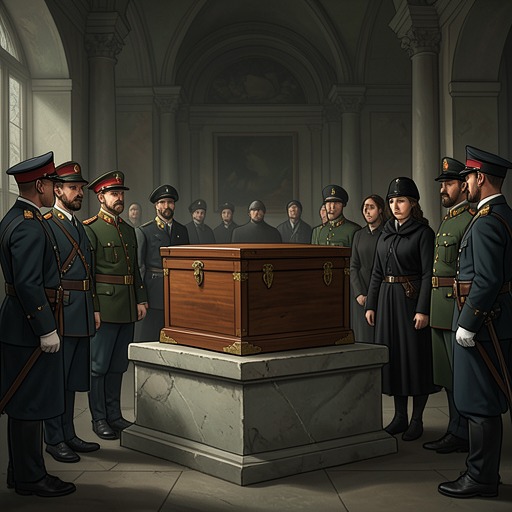
The change is not presented as an uncomplicated triumph. On Armistice Day, Roosevelt is taken to hospital with inflammatory rheumatism. He dies quietly in his sleep at Sagamore Hill on January 6, 1919. The timing makes his death a personal aftermath of the war rather than a battle casualty, while the account’s catalogue of his many public identities emphasizes what the new political moment has displaced. His sons inherit what the narrative calls the white man’s burden, a phrase that leaves the imperial assumptions of his legacy in view even as it marks the transfer of responsibility to the next generation.
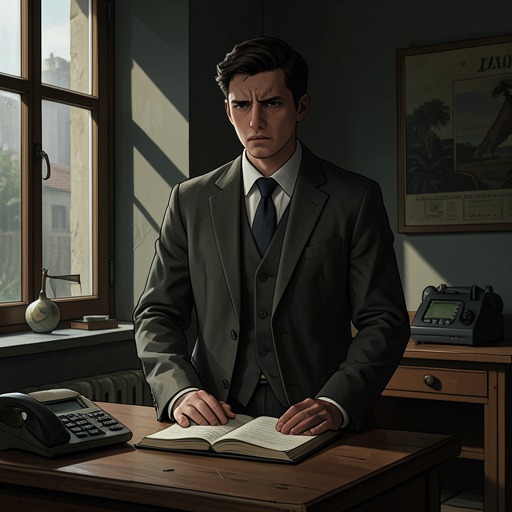
Randolph Bourne’s fate gives the transition a different, explicitly political meaning. He does not live to see the Peace of Versailles or the return of what the narrative calls normalcy. Six weeks after the armistice, he dies while planning an essay on the foundations of future radicalism in America. The unfinished work matters: the war has ended, but the question of how opposition might take shape in the United States remains urgent and unanswered. Bourne’s death places intellectual dissent among the losses of the war’s aftermath, even though he is not described as a battlefield victim.
Celebration beside punishment
Ben Compton’s experience makes the distance between the armistice and peace concrete. After revolutionary movements spread through Europe and the news reports Trotsky’s armies driving the White forces out of Russia, Fanya Stein tells people that she and Ben are married and takes him to live with her. She nurses him through influenza and double pneumonia. The reprieve is brief: a letter from Morris Stein reports that the court has denied Ben’s appeal but reduced his sentence to ten years, and that he must report the following day for delivery to the United States District Court, probably for transfer to Atlanta.
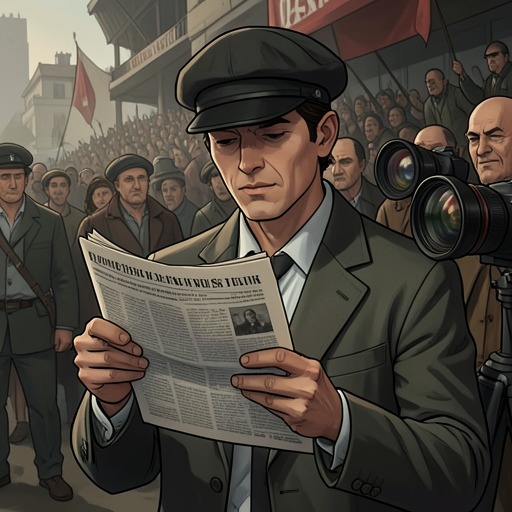
Ben does not meet this sentence in a quiet, emptied city. The next morning, Lower Broadway is striped with flags, crowds line both pavements, and a military band plays “Keep the Home Fires Burning” as he carries his suitcase toward Morris’s office. He has to remind himself that the celebrating public includes people associated in his mind with the imprisonment of Eugene V. Debs, the deaths of Joe Hill and Frank Little, the violence at Everett, and the effort to send him to prison. The song, flags, and procession make the armistice visible as a civic spectacle; Ben’s imminent incarceration exposes how little that spectacle has changed the treatment of dissenters.
At the office, Morris introduces Ben to Stevens Warner, who has served a year in prison for refusing to register. Morris proposes a nationwide campaign to free imprisoned men, beginning with Debs, and argues that the public is already coming to its senses. A military procession passes below the office window amid flags, paper, and cheering. Warner doubts that the parade will make soldiers forget their experience of military labor. The scene leaves the two meanings of the day unresolved: the armistice makes celebration possible, but it does not erase conscription, punishment, or the differences between those welcomed into the public procession and those marked for prison.
The machinery of conflict continues
The novel’s wider postwar world also resists a simple distinction between wartime mobilization and peacetime life. Its maritime episodes place commercial shipping within the same international networks of transport and risk that carried the war. On a United Fruit Company vessel anchored near Roseau, Dominica, a delay in loading limes frustrates the crew. An older island resident describes the company as a monopoly able to let growers’ fruit rot when they refuse its prices. The episode is not presented as a direct consequence of the armistice; rather, it shows how commercial power and unequal control of trade persist in the world the war has not remade.
Elsewhere, the sea lanes remain crowded with camouflaged freighters, transports, colliers, and hospital ships. French and British warships patrol offshore, and destroyers board vessels to inspect papers. The account moves from these visible controls to a tanker burning outside Genoa: a red glare first gives rise to a rumor that the town is under attack, before the ship’s fire is identified. The episode preserves the uncertainty and danger of wartime passage even as the narrative approaches a world beyond the Western Front’s fighting. Shipping, surveillance, and industrial fuel remain part of the landscape; the armistice does not make their structures disappear.
The same persistence appears in the novel’s treatment of finance and labor. By 1917, the Allies have borrowed $1.9 billion through the House of Morgan; by the end of the Peace Conference, the phrase “J. P. Morgan suggests” carries the force of an institution commanding vast financial power. In a separate account of the great steel strike, J. P. Morgan congratulates Gary for supporting the open shop and frames that position as a defense of American liberty. These details complicate the contrast between fighting for democracy overseas and the distribution of power at home: the end of combat leaves financial influence and industrial conflict intact.
The unresolved meaning of peace
The labor episodes make clear that the armistice is not a settlement of the social conflicts that the war intensified. In a New Jersey textile town, mill control shapes whether strikers can even find a hall; police and special deputies confront the workers, and Ben Compton is arrested after speaking to a crowd shut out of its meeting. Later, the picket line is broken up by police. A young woman is knocked down, and the narrator’s central observer, referred to as Daughter, is arrested after intervening. These events are not identified as consequences of the armistice, but they establish the continuing conditions under which working people organize and face suppression.
The political atmosphere is visible again at an Empire Casino meeting in the Bronx, called to send greetings to Russia’s workers. Federal agents take notes, police close the doors, and soldiers and sailors enter the gallery. Ben speaks against a war he says benefits bankers and munitions makers; he and others are arrested, and men of conscription age must show their registration cards before leaving. His later bail depends on an assurance that he will not agitate before trial. The case that culminates in his ten-year sentence shows why the armistice cannot stand as a synonym for political liberty.
Across these episodes, the armistice changes the calendar and the public language of the moment, but not everyone’s position within it. Roosevelt’s death and Bourne’s unfinished essay mark losses that the celebrations cannot recover; Ben’s sentence reveals the persistence of wartime repression; the labor and commercial scenes keep the unequal structures of power in view. The novel therefore treats the end of fighting as a threshold, not a resolution: peace begins amid mourning, imprisonment, and conflicts that continue in other forms.