World War I
1919World War I is the force that carries the novel’s characters across the boundary between private life and mass conflict, then makes clear that an armistice cannot by itself restore peace. The war appears not as a single front or one uniform experience, but as a chain linking American neutrality, enlistment, maritime transport, battlefield relief, political dissent, and postwar unrest. Its violence reaches people far from combat through propaganda, financial interests, patriotic pressure, and the consequences of refusing to conform.
From Neutrality to Mobilization
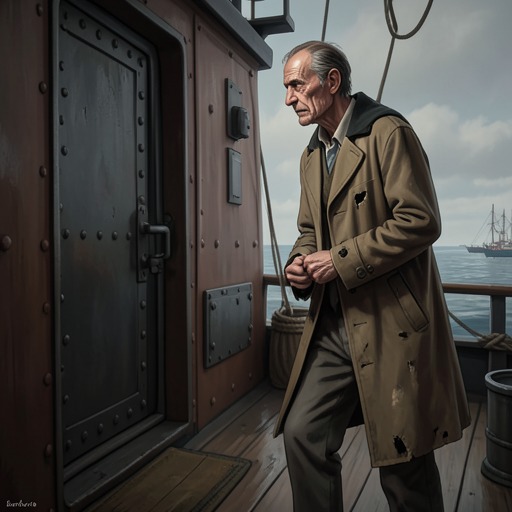
The transition into war is presented as a change in public feeling as well as government policy. Before the United States entered the conflict, Joe Williams, working aboard a merchant ship, argued that his country had no business in the war. News that German submarines were operating nearby sharpened the crew’s anxieties, and his position nearly brought him into a fight with fellow sailors. Their ship’s insecure passage and the crew’s arguments make neutrality a lived and disputed condition, not merely a diplomatic phrase.
Joe’s stance changes gradually rather than through one decisive conversion. Overseas, Janey writes to him from her work with the American Red Cross and argues that civilization must be defended. Joe begins to consider her position, follows reports that Germany is losing, and worries that dissent might make him seem pro-German or Bolshevik. He opens a savings account and buys a Liberty Bond. The movement from argument to bond purchase shows how the war’s claims reach a working sailor through correspondence, newspapers, and the practical wish to avoid suspicion.
The novel also places American entry within a wider contest over finance and public opinion. Its account describes an earlier insistence on neutrality, followed by pressure from financial centers after the sinking of the Lusitania and concern over Morgan loans. By 1917, the Allied Powers had borrowed $1.9 billion through J. P. Morgan & Co. The narrative sets the stated purpose of defending democracy against the economic relationships and institutional interests accompanying mobilization. It further presents Woodrow Wilson’s wartime government as staffed by corporate representatives serving for a dollar a year, making state power and business influence appear closely joined.
Volunteers, Soldiers, and the Transport of War
The war’s approach is also traced through the writer’s own path into service. After studying at Harvard University, traveling in Spain, and studying architecture, he volunteered in 1916 for the Norton-Harjes Ambulance Service. He served in France and Italy; after the United States entered the conflict, he enlisted in the American Expeditionary Forces. That experience supplied material for his first novel, Three Soldiers, and later fed the larger U.S.A. sequence. The biographical route connects the ambulance worker’s direct exposure to modern war with the fiction’s attention to soldiers who bear its costs.
Richard Ellsworth Savage’s passage to France presents enlistment as a break with the life he is leaving behind. Sailing aboard the Chicago in early June, he thinks of friends, poetry, pacifist companions, and familiar places as if he had set aside an unfinished book. At sea he is uneasy among the noisy crowd and the stories told by Red Cross workers; he wonders what awaits him overseas. The crossing therefore carries both a body and an unsettled imagination toward the war.
The sea itself becomes a working corridor of mobilization. One account describes camouflaged freighters moving in convoy under naval orders, their merchant captains signaling back and forth with the destroyers. Among them is a newly built wooden Shipping Board vessel that leaks so badly it must be abandoned and scuttled midway across the Atlantic. The episode places commercial shipping, military protection, and wartime profiteering in the same scene: the convoy is an organized defense, but the defective ship also suggests that public danger can coexist with private gain.
Richard Ellsworth Savage’s work in Paris brings the war to a hospital rather than a battlefield. In June, while awaiting transport home, he volunteers as a stretcher bearer at an American hospital on the Avenue du Bois de Boulogne. Air raids occur on clear nights, and the nearby front sends wounded people directly to base hospitals. He helps carry patients from the pavement into the hospital. The scene gives the war a civilian-facing geography: the front is close enough for its casualties to arrive at the city’s doors, and relief work becomes part of the daily machinery of combat.
Entertainment is recruited into that machinery too. A concert party that had arrived in France thirteen months earlier was the first of its kind to perform at the front. On the day of the drive at Château-Thierry, its members staged a show for American troops from a flatcar used as a base for a large naval gun, a few kilometers behind the line. They were later assigned to the leave area at Aix-les-Bains, where they worked in a canteen by day and performed and danced at night. The account places morale work beside military operations without making the two indistinguishable: performance offers diversion, but its itinerary follows the army’s changing needs.
War at Home: Conviction, Work, and Repression
The declaration of war alters the atmosphere around Eveline Hutchins. Plans for shows and home decoration with Eleanor Stoddard and Freddy Seargeant come to nothing as flags and uniforms fill the streets and people become preoccupied with spies and pacifists. Eleanor takes a job with the American Red Cross; Don Stevens joins relief work connected with the Friends; Freddy delays deciding what to do until the draft calls him. Eveline’s father writes in praise of Wilson, while she feels that the people around her have become irrational. The war is thus registered in abandoned plans, competing forms of service, and a public mood that makes suspicion ordinary.
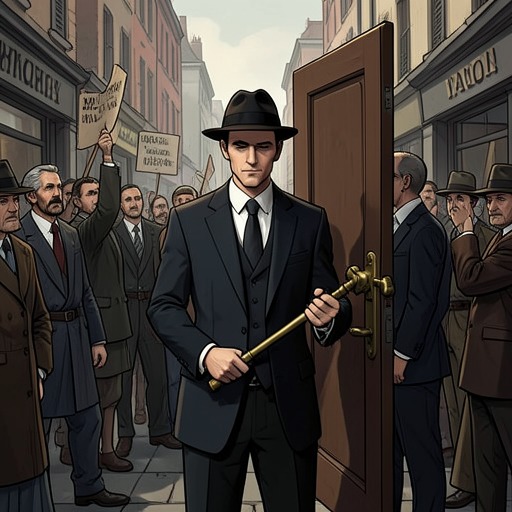
Ben Compton’s opposition to the war carries a different cost. After the United States declares war, he visits Fanya Stein, who has returned from Washington after a peace delegation was driven from the White House lawn and several participants were arrested. Ben insists that the country’s economic interests favor war and predicts that the consequences may produce revolution. Yet he leaves Fanya to go to a meeting, and on the way out catches himself making a gesture associated with his father. His political commitment does not erase private attachments or inherited habits; it puts them under pressure.
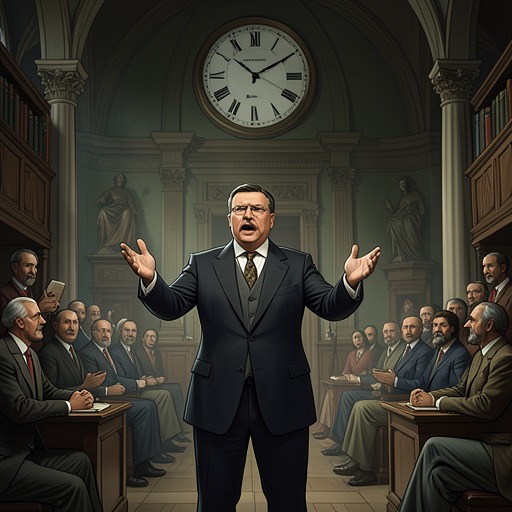
Ben registers for the draft on Morris Stein’s advice but writes conscientious objector on his card. He and Stein then quarrel over whether to submit to the prevailing order or agitate against the war. Ben chooses agitation, knowing it will cost him his job and end his chance to study law. A drugstore employer refuses to take him back for fear of police attention, while his brother urges him to seek better-paid work in a munitions factory. Even his family and acquaintances tell him to stop opposing the war. His decision to continue is therefore made against a network of practical warnings, not in ignorance of the consequences.
War-related conflict also becomes labor conflict. During a textile strike in New Jersey, Ben appears before a growing crowd, where supporters urge people to stand their ground. Later, he invites a companion to join a picket line before dawn. Workers, including young women inadequately dressed for the cold, reach the mills as police begin breaking up the line; some sing Solidarity Forever while others jeer at strikebreakers. The sequence links wartime mobilization to the struggle over who controls industrial work and public space. The uniformed deputies and the strikers’ organized presence make the street a site of competing authority.
The repression of dissent continues beyond the strike. At Everett, Ben and Bram Hicks join other members of the Industrial Workers of the World traveling by boat to hold a meeting. Armed deputies occupy the dock, and the arriving workers are arrested as they step ashore. Ben later works in Morris Stein’s office and speaks at protest meetings about the Everett massacre. At another gathering, held at the Empire Casino, federal agents sit among the audience with a stenographer while police close the doors after the first few hundred people have entered. Ben is eventually released on $15,000 bail, on the assurance that he will not agitate before trial. Even that condition cannot settle the conflict: he tells the authorities that, if released, he will continue opposing capitalist war until arrested again.
Armistice and the Unfinished Peace
The approach of peace is first experienced through uncertainty. A German government request asks the President of the United States to invite negotiations and seek an immediate general armistice on land, sea, and in the air. In Tours, a rumor that an armistice has been reached brings drinking and celebration among military personnel; when the rumor proves false, Richard Ellsworth Savage feels almost relieved. The false alarm exposes how thoroughly expectation has shaped daily life. The real armistice arrives later, after a period in which people around headquarters seem to know more than they will say.
When the news is confirmed, celebration erupts in the office shared by Eveline and Eleanor. Major Wood pulls them away from their desks, kisses them, and announces that the moment has come; Eveline then kisses Major Moorehouse. The office takes on the disorderly exuberance of a victory celebration. In Tours, Richard Ellsworth Savage shares supper with Colonel Edgecombe and other officers, then encounters the colonel in the courtyard. The colonel calls it a great day for the human race. These scenes register relief through sudden gestures and collective release, but they do not claim that the war’s underlying conflicts have disappeared.
The narrative’s account of the armistice remains in tension with its scenes of public unrest and military power. In Paris, a walk that initially seems ordinary becomes charged when the Republican Guard rides past; later, soldiers in helmets stand beside stacked rifles as crowds cheer them. The sequence makes the city’s apparent normality unstable: the tension is not announced everywhere at once, but becomes visible in uniforms, weapons, and the movement of forces through public streets. Elsewhere, the continuing presence of military authority frames Richard Ellsworth Savage’s effort to leave France, while the strains of war remain in the lives and decisions of those who return or stay behind.
The final movement toward commemoration gives absence an official form. A congressional resolution authorizes the Secretary of War to bring to the United States the body of an American member of the American Expeditionary Forces who died in Europe and whose identity has not been established, for burial in the memorial amphitheater at Arlington National Cemetery. The passage does not supply a name or a personal history. Its force lies in that omission: the national act of remembrance is organized around a dead serviceman who cannot be identified.
Narrative Form and Significance
The war’s scale is conveyed partly through the novel’s shifts of form. Newsreels interrupt the main text with contemporary newspaper headlines, fragments of reporting, advertising slogans, and popular song lyrics. Their quick, abrupt succession turns public language into a collage of information and persuasion. The war is not confined to what characters witness; it also arrives as headlines, slogans, and songs, the repeated materials through which a population is asked to understand events.
Across these episodes, war connects the movement of ships and money to the movement of people, arguments, and force. Joe Williams’s altered convictions, the writer’s service in the ambulance corps, Richard Ellsworth Savage’s hospital work, Ben Compton’s refusal, and the arrest of workers at Everett are not interchangeable experiences. Together they show how a global conflict enters different lives through unequal demands: military service, patriotic pressure, dangerous labor, political surveillance, or the loss of a future one had expected to pursue. The armistice ends the fighting described in the novel, but its political and social aftermath remains visible in strikes, repression, contested public spaces, and the unnamed body prepared for burial.