The myth of the inexhaustible forest
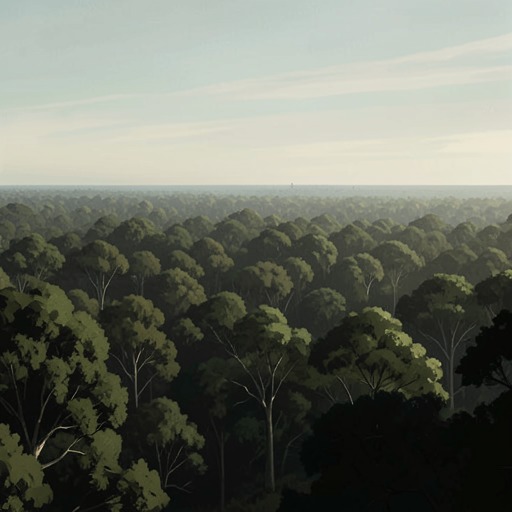
BarkskinsThe myth of the inexhaustible forest is the conviction that trees constitute an effectively limitless resource: unlike animals or other goods vulnerable to scarcity and shifting markets, forests seem permanent because they are immense and appear to renew themselves. In the novel, that conviction first becomes a business plan in Charles Duquet’s ambition to build a fortune through timber. It then expands into a frontier ideology that excuses waste and clearing, even as forests retreat and shortages become visible. Against it, the work sets observation, conservation, and the slower obligation to plant for people not yet born.
A resource imagined as permanent
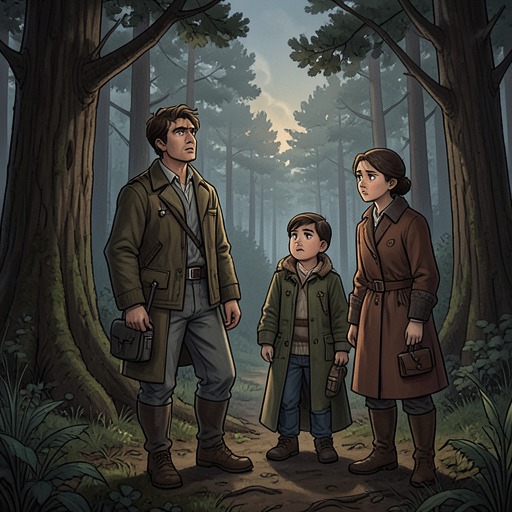
After seeing how the fur trade could swing between surplus and scarcity, Charles Duquet rejects beaver, fish, seals, game, and birds as foundations for lasting wealth. He searches instead for a commodity that Europe lacks and can supply without apparent end. Timber seems to answer: New England’s pines already serve the English navy, and Duquet imagines that New France could likewise provide wood for ships, houses, and fuel. He reasons that the forest is vast and replaces itself, so its profits might continue indefinitely. He intends to use fur trading to accumulate capital, then shift into timber when prepared, and briefly proposes that the Trépagny brothers remain his partners in the later enterprise.
The forest is therefore not merely scenery in Duquet’s plan but the imagined basis of a permanent fortune and family legacy. He wants wealth that can pass to his sons and a family name transformed into an honor. His calculation rests on a sharp contrast: animals may vanish or lose their market, while forests seem to exceed both human need and the limits of time. The prospect of transport and markets troubles him as a practical matter, but the possibility that timber itself might run out does not yet displace his belief in abundance.
Evidence that abundance has limits
Duquet’s own observations begin to complicate the doctrine. In China, he asks Wuqua about forests, describing his belief that they are everlasting because they replenish themselves while also acknowledging that forests in France have diminished and that settlement in New France pushes the forest back. The question is revealing: Duquet notices depletion but treats it as a puzzle that might not apply to the vast forests of the New World.
Wuqua’s account supplies a wider history of human dependence on wood. He describes land cleared for crops and the continuing cutting of trees to feed and warm a large, poor population. Timber also serves crafts and industry: pine is burned for the soot used in ink, while metalworking, pottery, and brickmaking require fuel. Where trees have become scarce, people gather grass to burn or use animal dung. Wuqua acknowledges that tree planting and expanded cropland complicate any simple measure of forest loss, but he also names wood shortages. His examples make depletion a consequence of ordinary needs and economic activity, not an unimaginable exception.
Duquet responds unhappily to the possibility that the forests of France and China, and the mountains of Italy, are not everlasting. Wuqua answers that nothing is everlasting, including forests and mountains. The exchange directly challenges the premise on which Duquet hopes to build his timber enterprise. Yet Duquet does not accept the warning as a reason to abandon his plan. He believes the New World’s deep forests began on a scale unlike the diminished forests he has seen elsewhere, and concludes that they will endure. The evidence invites the reader to see this as a contradiction within his reasoning: he registers retreat and scarcity, then treats the apparent abundance of a new frontier as proof that the old pattern will not recur.
Wuqua also describes gardens as pleasurable illusions of wilderness, made after trees have been removed. His account links the appreciation of forests to their absence: cultivated scenes can preserve an image of wild country even where actual forests have diminished. The idea of harmony between people and nature, expressed through tian ren he yi, remains something Wuqua says he cannot explain to Duquet. Duquet, who admits to despising the unruly forest while valuing its material benefits, does not share that understanding. The contrast is not simply between different landscapes, but between seeing forests as a relation to be lived within and seeing them chiefly as a resource to be converted into wealth.
From frontier abundance to industrial waste
Later episodes show the belief moving beyond one merchant’s calculations into a system of extraction. In New Zealand, shore stations combine logging camps with trading posts for flax, spars, and lumber. Warehouses, sawmills, small shipyards, and other enterprises draw Europeans to the coast, where camps take the most useful timber and shift to the next promising area. The forest is cut first for kahikatea and then kauri; downed wood can carpet the ground for miles, before the mass is burned to clear brush, vines, wildlife, and forest growth. This sequence reveals the material consequences of treating each new forest as available for rapid profit: extraction moves outward, while waste and ecological loss remain in the places it leaves behind.
The Michigan white pine discovery gives the myth another expression. James Duke sees the stand as the making of Duke & Sons and imagines deploying a thousand men to cut it. Armenius Breitsprecher, looking into the fire, recognizes the scale of the company’s appetite as a threat: he fears it means clearing the continent. He objects to clear-cutting, the waste of usable wood, soil destruction, erosion, and the assumption that another forest will always be available. The discovery does not simply promise wealth; it reveals how the promise of endless supply can turn an existing pattern of rapine into the company’s defining engine. Breitsprecher’s own small, scattered tracts, a meager return for the forests he has surveyed, sharpen the contrast between the company’s appetite for a vast pine resource and his limited share in it.
The global timber trade reinforces the same logic. Duke & Breitsprecher sends its first shipload of best pine to Sydney, Australia, and a buyer seeks a decade-long supply contract while also expressing interest in kauri. The exchange connects Michigan timber to an overseas market and opens the prospect of logging in New Zealand. In the novel, the appetite for new sources crosses oceans: the question is not only whether one forest is being depleted, but how markets and businesses respond by searching for another.
Conservation, knowledge, and future time
The counterargument develops through careful observation and planning. Dieter Breitsprecher’s correspondence with George Perkins Marsh attends to small, measurable changes: branches fallen from trees, the depth of leaf mold, the way roots, moss, and decaying leaves slow and absorb rain, and the consequences for soil and birds when trees are removed or ponds drained. These observations replace the sweeping assurance of inexhaustibility with attention to ecological processes and consequences. Dieter hopes to see the landscapes Marsh has studied, while their correspondence makes clear that forest change can be understood through comparison and sustained notice.
After Dieter and Lavinia Duke marry, he presses for cutover pinelands not to be sold to speculators but set aside for management through a separate Maintenance Timberland division. He oversees replanting and management, alongside acreage he had retained from the company merger. The policy gives Duke & Breitsprecher’s public reputation a measure of conservation, but it also represents an economic argument: Dieter tells the board that timber may become scarcer and more valuable than expected, and that land held for decades can produce future wealth as lumber or paper. Trees planted on older Breitsprecher land already demonstrate that restoration can create valuable timber over time. The board is made to consider decades rather than months or a few years, even if that longer horizon unsettles its members.
Dieter’s principle becomes clearest during the New Zealand visit. When the possibility of planting kauri seedlings is raised, Ahorangi explains that the mature trees are thousands of years old and that a seedling could require a hundred human generations to replace one fallen tree of exceptional girth. Dieter answers that planting is worthwhile even when the people doing it will never see the trees mature: the purpose is the health of the world and the lives of future people. The contrast with Duquet’s claim to permanent wealth is decisive. Both imagine futures extending beyond themselves, but the object and time scale differ: Duquet expects the forest to sustain his fortune; Dieter accepts that responsible care may bring no return within a human lifetime.
The later seedling work turns that ethic into a practical challenge. Conrad Breitsprecher recognizes that seedlings can help keep forests alive, but questions whether generic bare-root pine and spruce will survive rough logged-over sites. He studies site preparation, species suited to burned ground, the effects of invasive grasses and plants, seedling methods, nursery costs, and the role logging companies must play in regeneration. Poor natural reseeding leaves too few trees on barren cuts, so he concludes that companies need to plant among the stumps and that site preparation must be part of the service offered to them. His research and business decisions do not erase the earlier damage; they answer the myth by treating regeneration as work with costs, limits, and a time horizon longer than immediate profit.
Significance
The myth persists not because the novel presents forests as literally endless, but because the characters and businesses repeatedly interpret apparent abundance as permission to take without restraint. Duquet sees forest loss in France and hears about shortages in China, yet reserves an exception for the New World. Later, timber firms shift from one source to another and treat the next stand as proof that supply remains secure. In this pattern, expansion postpones acknowledgment of limits rather than disproving them.
The novel also distinguishes conservation undertaken for future commercial value from care grounded in responsibility beyond one’s own lifetime. Dieter’s managed timberland still promises wealth, but his insistence on planting kauri for generations who will never see the mature trees sets a different ethical measure. Conrad’s forestry work likewise makes regeneration dependent on research, site conditions, and the willingness of industry to pay for it. Together, these efforts recast the forest not as a permanent stock waiting to be claimed, but as a living system whose continuance depends on decisions made now.
The concept’s force comes from the distance between what the characters know and what they choose to believe. Forests visibly withdraw near settlements; wood shortages are named; clear-cutting leaves erosion and waste; centuries of tree growth cannot be compressed into a company’s short planning cycle. Yet the fantasy of limitless supply survives because it is useful to commerce and frontier expansion. Against that fantasy, the novel sets observation, long-term management, and the humble act of planting a seed that its planter will never see grown.