Soul and flesh (meat)
BluebeardThe soul-and-meat idea is Rabo Karabekian’s idiosyncratic model of moral responsibility: an inward soul receives news of what the body does but cannot control it. At first, the model lets him distinguish shame from action and forgive people by imagining past their bodily failings. In the closing exchange with Circe Berman, however, the distinction changes direction. She treats Rabo’s body not merely as the source of embarrassing conduct but as the maker of the great picture in his potato barn, and persuades him to address it with gratitude. The concept ends not in a clean separation of spirit and flesh, but in a moment of acknowledgment between them.
The Soul as Witness
Rabo introduces the division while reflecting on his conduct after the war. He says that his soul knows his meat is doing bad things and feels embarrassed, while the meat continues doing them. His formulation separates moral recognition from physical agency: the soul registers what happens but does not seem able to stop it. The joke depends on the mismatch between the lofty language of the soul and the blunt, comic word “meat,” but beneath the humor lies a serious account of helplessness before one’s own behavior.
His explanation also makes the distinction more than a passing turn of phrase. Rabo describes each person’s soul, including his own, as a flexible neon tube inside the body. The tube can receive news about what is happening to the meat, but has no control over it. The image gives the soul a vivid form while making its power conspicuously limited: it shines and registers, yet cannot direct the body. Rabo presents the theory only half jokingly, leaving its comic ingenuity intact without removing the sense of divided agency.
The idea emerges alongside his account of war’s cost. Rabo counters the claim that the war took three years from a man by insisting that it took eight years from him, and says that his youth went with them. He recalls that Dorothy thought she had married a mature, fatherly retired military gentleman, whereas she got someone he describes as an undisciplined young man. The soul-and-meat distinction gives comic shape to the discrepancy between the self a person might claim and the conduct that other people have to live with. It does not absolve Rabo of the consequences; it dramatizes his embarrassment at being unable to make his actions match his sense of himself.
Forgiveness by Stripping Away the Body
Rabo applies the same model to people he likes when they do something terrible: he says he “flense[s] them and forgive[s] them.” He explains the word by recalling how whalers stripped skin, blubber, and meat from a whale carcass down to its skeleton. In his mental version, the stripping removes the person’s meat so that he can see only the soul and forgive it. The method converts an act of physical dismemberment into a private ethical maneuver: to preserve affection, Rabo imagines the person apart from the conduct that has hurt or disappointed him.
That maneuver has a revealing limit. The soul is imagined as the morally legible remainder, while the meat bears the actions that provoke shame or condemnation. Forgiveness becomes possible through subtraction, as if the person’s body and behavior could be peeled away from who the person essentially is. Yet Rabo’s description of his own soul as a helpless receiver complicates any simple division between innocent spirit and culpable flesh. The soul knows what the body does; it is not unaware, even if it cannot command. The theory therefore holds together both the desire to excuse and the discomfort that makes an excuse necessary.
Paul Slazinger and the Hand Grenade
Near the book’s closing conversation, Rabo and Circe worry about Paul Slazinger. Rabo imagines how helpless Paul’s soul must have felt when Paul’s meat threw itself onto a hand grenade about to explode. His thought extends the theory beyond ordinary bad behavior to a bodily act of extreme sacrifice: the soul is still cast as a witness to what the meat does, even when the act is not presented as mere folly or wrongdoing.
Circe asks why the grenade did not kill Paul. Rabo answers that the hand-grenade factory must have done unforgivably sloppy work. The exchange keeps the discussion in its characteristic register of grave concern interrupted by a joke. The soul’s helplessness is not explained away; instead, the comic reply shifts attention to the material object and its failure. The image of Paul’s body meeting the grenade thus sharpens the concept’s central tension: the body can act with decisive force, while the soul can only reckon with the outcome.
The Body Behind the Mural
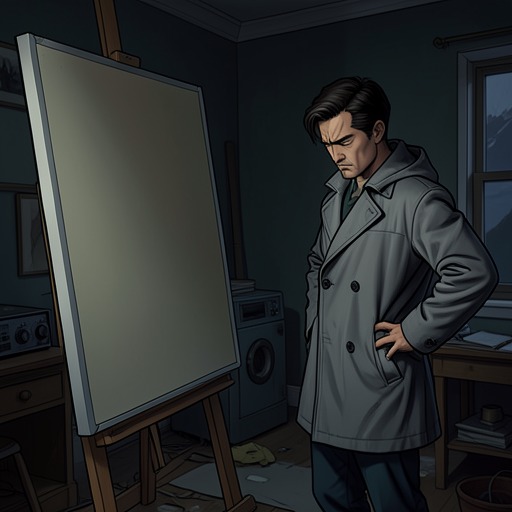
Circe brings the distinction back to Rabo himself by setting two acts beside one another: Paul’s meat performed the hand-grenade act, and Rabo’s meat made the picture in the potato barn. Rabo agrees that the account sounds right. His soul did not know what kind of picture to paint, he says, but his meat did. The contrast revises the earlier moral emphasis. Meat is still the bodily agent acting beyond the soul’s command, but now its action has produced something wonderful rather than something to be ashamed of.
The mural matters to this exchange because Circe does not ask Rabo to deny the separation he has described. She uses his own terms to change what follows from it. If the soul has been ashamed of the meat for so long, she argues, it is time for the soul to thank the meat for finally doing something wonderful. Rabo accepts the thought, but Circe insists that he must actually perform the gesture rather than leave it as an agreeable idea.
She instructs him to hold a hand in front of his eye, look at the strange and clever animals with love and gratitude, and say the words aloud. Rabo does so, holding his hands in front of his eyes and saying with all his heart, “Thank you, Meat.” The physical gesture makes the concept reciprocal: the soul’s recognition is expressed through the body, directed toward the body that made the mural. The closing exclamation joins meat, soul, and Rabo in happiness, briefly replacing the earlier opposition between an embarrassed inward witness and an unruly physical self with a shared act of gratitude.