The clockwork alligator
HomunculusThe clockwork alligator is a mechanical creature hidden inside a Keeble box. It appears late in the story as one of several valuable objects whose similar containers make identification uncertain: unlike the homunculus, it occupies a separate box, and it is distinct from the emerald that Jack Owlesby is to inherit. Its brief but striking emergence confirms that the box holds a working creature, not merely another of the story’s mysterious treasures.
Identity and Concealment
The clockwork alligator is also described as a bird-eating cayman. The evidence identifies it by what it does rather than by any account of its construction: it is concealed in a box, rises when the lid opens, catches small birds, and then withdraws again. The name marks it as a mechanical object, but its sudden, animal-like action makes the distinction between device and creature feel momentarily unstable.
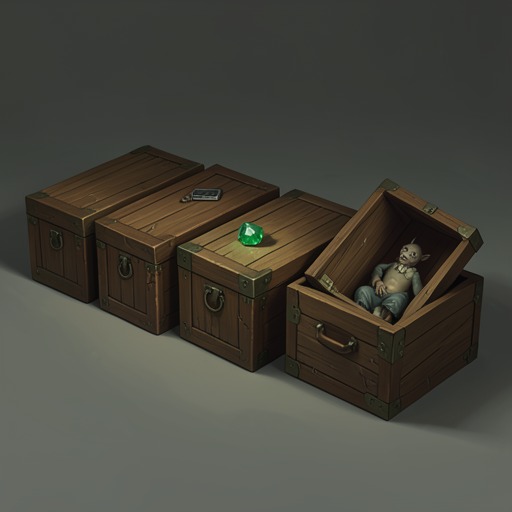
The box matters because it belongs to a group of containers that look much alike. Jack Owlesby’s great emerald was his inheritance from his father, Sebastian Owlesby, who had withdrawn his interest in the West African Gem Company in the form of the stone. Sebastian prevailed upon William Keeble to build a box for it, almost identical to the lead-lined cube used to contain the homunculus. The alligator’s own box adds a further object to this already confusing set.
The Boxes and Their Confusion
When Captain Powers discovered that the emerald box had disappeared from his chest, the loss was immediately consequential: the box held Jack Owlesby’s inheritance. The similarity between the emerald and homunculus boxes later made it possible that Nell Owlesby had confused them while agitated. William Keeble, roused from deep fatigue, confirmed that the two boxes were identical apart from the differences in their carving and painting. Nell accepted that she might have crossed them up and suggested that Dr. Birdlip could have the emerald.
That uncertainty does not make the clockwork alligator box the same as either of those containers. Langdon St. Ives was reminded that two boxes were at Kelso Drake’s house: one contained the homunculus, while the other contained the clockwork alligator. The distinction is important to the search, since the small man and the machine were separate objects, each believed to be valuable. When St. Ives saw a Keeble box on an aquarium, he picked it up before Ignacio Narbondo could stop him; the brief inspection underscores how easily the boxes could draw attention before their contents were known.
Emergence and Narrative Significance
The clockwork alligator’s clearest appearance comes when its box is opened in the firelight. Dr. Birdlip turns toward it, Kelso Drake steps back, and the lid springs away. The bird-eating cayman rises from inside and takes several small birds before sinking back into the box. The episode establishes the object’s operation through a concise demonstration: it is activated by the opening of its container, emerges far enough to feed, and then returns within.
The final scene also resolves the practical confusion between the alligator and the emerald without collapsing them into one object. Dorothy Keeble has been recovered and stands with Jack Owlesby, while Captain Powers displays an open Keeble box containing the great emerald. The alligator’s earlier emergence and the emerald’s presentation are separate revelations, clarifying that the boxes’ resemblance had obscured distinct contents. In the story’s chain of contested containers, the clockwork alligator is both an unusual machine in its own right and a reminder that the identity of a box cannot be taken for granted.