Around the late eighteenth century
The Homunculus Enters Human Hands
A dying sailor’s account of a bottle imp and an Abyssinian merchant’s later sale of the creature link the [Homunculus](entity:character-recall-character-homunculus-febfc1ea6c9e) to a long chain of violent, bewildered custodians. Its powers over motion, matter, and life attract experimenters while its confinement conceals how dangerous it is.
About eighty years before 1875
Joanna Southcote’s Claim
[Joanna Southcote](entity:character-recall-character-joanna-southcote-ce55c0843f38) believes she has conceived a messiah and later tells [Shiloh](entity:character-recall-character-shiloh-975bed3a4ced) that a tiny creature in a box is his father. The claim becomes the foundation of his apocalyptic identity and his conviction that the [Homunculus](entity:character-recall-character-homunculus-febfc1ea6c9e) can restore his mother.
Before May 1861
The Homunculus Reaches Sebastian
[Sebastian Owlesby](entity:character-recall-character-sebastian-owlesby-16d277981586) comes into possession of the [Homunculus](entity:character-recall-character-homunculus-febfc1ea6c9e) and begins probing its powers, encouraged by [Ignacio Narbondo](entity:character-recall-character-ignacio-narbondo-135d57bd4277). [William Keeble](entity:character-recall-character-william-keeble-786f27b434ea)’s ingenious box gives the creature a secure enclosure, but contact with its promises of power helps pull Sebastian toward obsession and moral collapse.
Late May 1861
Sebastian’s Experiments Turn Horrific
In his notebooks, Sebastian describes corpse animation, the search for youthful glands, and experiments that make him believe decay can be reversed. He and [Ignacio Narbondo](entity:character-recall-character-ignacio-narbondo-135d57bd4277) murder a young costerlad in [Limehouse](entity:location-recall-location-8017e2e9ea94) to obtain a gland, a crime Sebastian later admits he helped bring about.
The night of the Limehouse murder in 1861
Narbondo Is Beaten and Escapes
After the boy is killed, Sebastian helps turn a crowd against [Ignacio Narbondo](entity:character-recall-character-ignacio-narbondo-135d57bd4277), who is beaten and thrown into the Thames. Narbondo survives and escapes, leaving Sebastian with a private share of guilt that deepens his despair and self-disgust.
In 1861, after Sebastian’s confession
Nell Shoots Sebastian
Sebastian begs [Nell Owlesby](entity:character-recall-character-nell-owlesby-33b2909eae35) to kill him after confessing his crimes and his continuing desire to pursue the [Homunculus](entity:character-recall-character-homunculus-febfc1ea6c9e)’s powers. When his remorse gives way again to dangerous obsession, Nell shoots her brother through the heart rather than let his decline continue unchecked.
The night Sebastian dies in 1861
Nell Sends a Box to Birdlip
Nell escapes with one of the similar Keeble boxes and gives it to [Birdlip](entity:character-recall-character-birdlip-8e787e112d85), whose strange dirigible can keep the [Homunculus](entity:character-recall-character-homunculus-febfc1ea6c9e) aloft and beyond Narbondo’s reach. Years later, she will wonder whether fever and grief caused her to confuse the creature’s box with the box containing Jack’s emerald.
1870
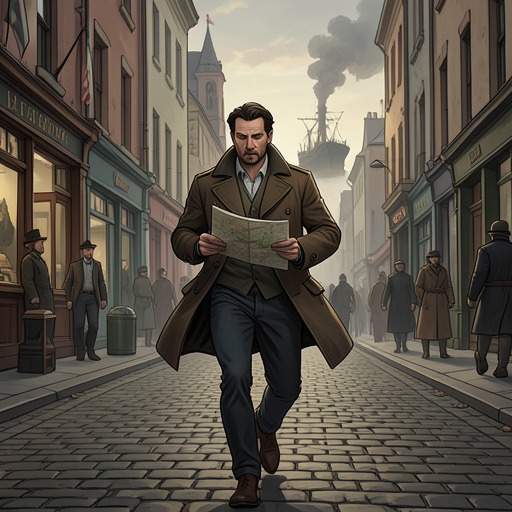
The Dirigible Appears over London
A hunchback races through the predawn streets beneath an immense, humming airship, while Londoners watch its skeletal pilot drift above their city. The sighting becomes a recurring omen for [Shiloh](entity:character-recall-character-shiloh-975bed3a4ced) and later draws the [Royal Academy](entity:organization-recall-organization-royal-academy-7b0e82da4acf)’s attention to [Birdlip](entity:character-recall-character-birdlip-8e787e112d85)’s craft.
1870, after the dawn sighting
St. Ives Hears of the Ship
[Langdon St. Ives](entity:character-recall-character-langdon-st-ives-d3f8dc45aa35) hears the crowd’s alarm and chases the dirigible’s course through Petticoat Lane, losing it as it rises into cloud. He has already been searching for a crystal egg and other scientific marvels, and the sight turns the alien craft into a new object of pursuit.
April 4, 1875, evening
St. Ives Meets Kraken
In Leicester Square, [Langdon St. Ives](entity:character-recall-character-langdon-st-ives-d3f8dc45aa35) encounters [Bill Kraken](entity:character-recall-character-bill-kraken-675851273c89), a former associate of the Owlesbys now selling peas and quoting fragmentary science. Kraken remembers the unnatural experiments of Sebastian and warns that a machine may be hidden in one of [Kelso Drake](entity:character-recall-character-kelso-drake-5d5fcc0ebfc1)’s brothels.
April 4, 1875, later that evening
Kraken Names Drake as a Lead
Over food and ale, [Bill Kraken](entity:character-recall-character-bill-kraken-675851273c89) tells [Langdon St. Ives](entity:character-recall-character-langdon-st-ives-d3f8dc45aa35) that [Kelso Drake](entity:character-recall-character-kelso-drake-5d5fcc0ebfc1) once discussed the sought-after machine and may have concealed it in a West End brothel. St. Ives pays Kraken for the lead and invites him to a meeting at [Captain Powers](entity:character-recall-character-captain-powers-703356d61d45)’ shop.
April 4, 1875, late evening
Godall Reports the Pale Men
At the tobacco shop, [Theophilus Godall](entity:character-recall-character-theophilus-godall-91830ad07629) recounts seeing two pallid, apparently insensible men and following them to [The Blood Pudding](entity:location-recall-location-8c01025c444c). He suspects the hunchback he saw there was [Ignacio Narbondo](entity:character-recall-character-ignacio-narbondo-135d57bd4277), who seemed to be eating live birds among men who looked dead or scarcely conscious.
April 4, 1875, night
Narbondo Watches Keeble’s House
[Captain Powers](entity:character-recall-character-captain-powers-703356d61d45) has been watching a hunched figure lurking outside [William Keeble](entity:character-recall-character-william-keeble-786f27b434ea)’s house and identifies him as [Ignacio Narbondo](entity:character-recall-character-ignacio-narbondo-135d57bd4277). When [Langdon St. Ives](entity:character-recall-character-langdon-st-ives-d3f8dc45aa35) arrives, the doctor slips away, leaving the group unsure whether he is watching Keeble, the shop, or both.
April 4, 1875, near midnight
The Oxygenator Plans Are Stolen
A masked intruder breaks into [William Keeble](entity:character-recall-character-william-keeble-786f27b434ea)’s attic while [Langdon St. Ives](entity:character-recall-character-langdon-st-ives-d3f8dc45aa35) discusses the oxygenator for his spacecraft. Keeble and St. Ives pursue him into the rain, but he escapes; the encounter makes clear that someone is targeting Keeble’s inventions.
In the days after April 4, 1875
Keeble Demonstrates the Clockwork Alligator
[William Keeble](entity:character-recall-character-william-keeble-786f27b434ea) shows [Langdon St. Ives](entity:character-recall-character-langdon-st-ives-d3f8dc45aa35) a miniature engine that repeatedly raises a cayman and makes it devour clockwork birds. Keeble has spent years perfecting it, and its resemblance to [Birdlip](entity:character-recall-character-birdlip-8e787e112d85)’s engine suggests that the inventor may have a practical grasp of perpetual motion.
At the next Trismegistus Club gathering
Pule Is Turned Away from the Club
[Willis Pule](entity:character-recall-character-willis-pule-d17c6a579368) arrives at [Captain Powers](entity:character-recall-character-captain-powers-703356d61d45)’ shop claiming to know [Dorothy Keeble](entity:character-recall-character-dorothy-keeble-d9e9b58f8d5b) and professing interest in the work of [Sebastian Owlesby](entity:character-recall-character-sebastian-owlesby-16d277981586). [Theophilus Godall](entity:character-recall-character-theophilus-godall-91830ad07629) recognizes him as dangerous and ejects him before he can learn the club’s plans.
At the same gathering
Godall Links Pule to Narbondo
After following [Willis Pule](entity:character-recall-character-willis-pule-d17c6a579368) from the shop, [Theophilus Godall](entity:character-recall-character-theophilus-godall-91830ad07629) sees him meet [Ignacio Narbondo](entity:character-recall-character-ignacio-narbondo-135d57bd4277). The revelation ties the intrusions, the interest in Keeble’s inventions, and Drake’s pursuit into a wider conspiracy.
Later that week
Owlesby’s Notebooks Arrive
A package brings [Langdon St. Ives](entity:character-recall-character-langdon-st-ives-d3f8dc45aa35) pages from [Sebastian Owlesby](entity:character-recall-character-sebastian-owlesby-16d277981586)’s lost notebooks. They record Sebastian’s moral collapse, his experiments with corpses, and his belief that the [Homunculus](entity:character-recall-character-homunculus-febfc1ea6c9e) could arrest decay; a final note says Nell gave a box to [Birdlip](entity:character-recall-character-birdlip-8e787e112d85).
After the notebooks arrive
The Notebooks Expose the Limehouse Crime
[Langdon St. Ives](entity:character-recall-character-langdon-st-ives-d3f8dc45aa35) reads Sebastian’s account aloud to the [Trismegistus Club](entity:organization-recall-organization-trismegistus-clu-d045b5fd6321), revealing that Sebastian helped murder a boy for a carp gland and later turned on [Ignacio Narbondo](entity:character-recall-character-ignacio-narbondo-135d57bd4277). The confession deepens [Jack Owlesby](entity:character-recall-character-jack-owlesby-15a3b5e69c20)’s understanding of his father’s past and confirms that Nell acted to stop a dangerous man.
During the same club meeting
Keeble Gives Jack the Engine
[William Keeble](entity:character-recall-character-william-keeble-786f27b434ea) gives [Jack Owlesby](entity:character-recall-character-jack-owlesby-15a3b5e69c20) the clockwork alligator as a birthday gift, offering a small, joyful counterweight to the revelations about Sebastian. [Bill Kraken](entity:character-recall-character-bill-kraken-675851273c89) watches from the adjoining room and notices the hidden sea chest where [Captain Powers](entity:character-recall-character-captain-powers-703356d61d45) keeps a second box.
During the club meeting, late that night
Kraken Steals the Hidden Box
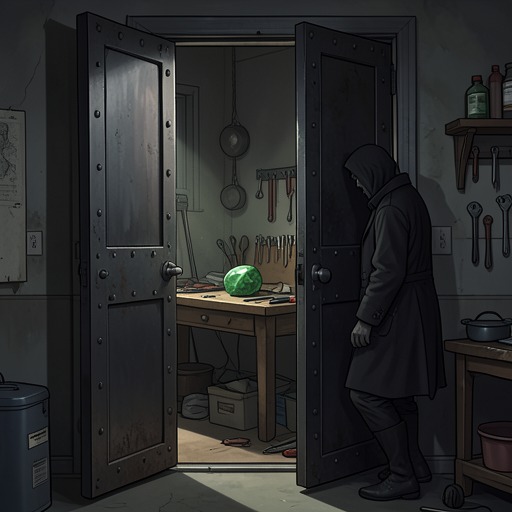
While the others admire Jack’s birthday gift, [Bill Kraken](entity:character-recall-character-bill-kraken-675851273c89) opens [Captain Powers](entity:character-recall-character-captain-powers-703356d61d45)’ sea chest and takes the box hidden beneath its false bottom. The voice he hears from inside convinces him it is more than a toy; the theft separates the club from what they believe is Jack’s emerald.
Immediately after Kraken’s theft
Drake Confronts the Club
[Kelso Drake](entity:character-recall-character-kelso-drake-5d5fcc0ebfc1) enters [Captain Powers](entity:character-recall-character-captain-powers-703356d61d45)’ shop and demands Keeble’s engine, using [Dorothy Keeble](entity:character-recall-character-dorothy-keeble-d9e9b58f8d5b) to threaten [William Keeble](entity:character-recall-character-william-keeble-786f27b434ea). Jack lunges at Drake, but the club restrains the fight and forces the millionaire to leave empty-handed.
That night, after Drake leaves
The Club Learns of Drake’s Partnership
[Theophilus Godall](entity:character-recall-character-theophilus-godall-91830ad07629) reports seeing [Kelso Drake](entity:character-recall-character-kelso-drake-5d5fcc0ebfc1) visit [Ignacio Narbondo](entity:character-recall-character-ignacio-narbondo-135d57bd4277) and describes their meeting at [The Blood Pudding](entity:location-recall-location-8c01025c444c), where Narbondo was surrounded by corpse-like men. The club suspects Drake wants an army of obedient laborers or hopes to buy the secret of life from the doctor.
That night
Pule and Narbondo Exhume Joanna
At [Hammersmith Cemetery](entity:location-recall-location-46b11fe5de46), [Willis Pule](entity:character-recall-character-willis-pule-d17c6a579368) and a laborer dig up [Joanna Southcote](entity:character-recall-character-joanna-southcote-ce55c0843f38)’s coffin for [Shiloh](entity:character-recall-character-shiloh-975bed3a4ced). The rotten coffin breaks open, and a corpse rises from the grave and walks away, leaving Pule shaken but still forced to take Joanna’s remains with him.
The same stormy night
Pule Steals a Carp from the Oceanarium
[Willis Pule](entity:character-recall-character-willis-pule-d17c6a579368) breaks into [the oceanarium](entity:location-recall-location-3e0c881bb568) and struggles to net a carp for [Ignacio Narbondo](entity:character-recall-character-ignacio-narbondo-135d57bd4277)’s reanimation work. A watchman and dog interrupt him, but Pule escapes with a badly injured fish, whose gland may be too damaged to serve the experiment.
The same night, before dawn
Nell Is Abducted
As [Nell Owlesby](entity:character-recall-character-nell-owlesby-33b2909eae35) walks through the rain toward [Captain Powers](entity:character-recall-character-captain-powers-703356d61d45)’ shop, a carriage shadows her and men block her escape in an alley. [Shiloh](entity:character-recall-character-shiloh-975bed3a4ced)’s followers seize her and take her to [Ignacio Narbondo](entity:character-recall-character-ignacio-narbondo-135d57bd4277), hoping her knowledge will reveal the [Homunculus](entity:character-recall-character-homunculus-febfc1ea6c9e)’s whereabouts.
Before dawn, at Narbondo’s laboratory
Narbondo Attempts to Restore Joanna
[Ignacio Narbondo](entity:character-recall-character-ignacio-narbondo-135d57bd4277) tries to animate Joanna’s remains with the damaged carp gland, his vaporizer, and the body of another dead man. Joanna’s bones briefly stir and her skull moves, but the resurrection collapses into scattered parts, enraging [Shiloh](entity:character-recall-character-shiloh-975bed3a4ced).
Dawn after the failed experiment
Godall Rescues Nell
From a room overlooking the laboratory, [Theophilus Godall](entity:character-recall-character-theophilus-godall-91830ad07629) sees Nell break free during the confusion. He intercepts [Shiloh](entity:character-recall-character-shiloh-975bed3a4ced) and his two walking-dead guards in the street, threatens the evangelist with a pistol, and gets Nell away before the group can recapture her.
The following morning
Pule Seeks More Carp at Billingsgate
Exhausted and desperate, [Willis Pule](entity:character-recall-character-willis-pule-d17c6a579368) goes to [Billingsgate Market](entity:location-recall-location-1c576c8d9d7e) to buy replacement carp for Narbondo’s failed experiment. A preacher’s tract and a string of humiliating bargains worsen his agitation, while he remains convinced that the right fish can still restore Joanna.
The following morning, at Billingsgate Market
Pule Finds Kraken with a Box
[Willis Pule](entity:character-recall-character-willis-pule-d17c6a579368) finds [Bill Kraken](entity:character-recall-character-bill-kraken-675851273c89) asleep beside a [Keeble box](entity:object-recall-object-keeble-box-1c2fa5c6f67f) and uses brandy and flattery to make him reveal that he has stolen the emerald. Before Pule can take it, [Ignacio Narbondo](entity:character-recall-character-ignacio-narbondo-135d57bd4277) arrives, recognizes the box, and forces Kraken into his wagon.
The next morning
St. Ives Departs for Harrogate
[Langdon St. Ives](entity:character-recall-character-langdon-st-ives-d3f8dc45aa35) leaves [London](entity:location-recall-location-london-420923d4a60a) by train with the completed oxygenator from [William Keeble](entity:character-recall-character-william-keeble-786f27b434ea), determined to prepare his own spacecraft. He tells himself that the club can manage without him, despite the growing danger around Narbondo and Drake.
During the train journey north
St. Ives Captures Two Ghouls
[Langdon St. Ives](entity:character-recall-character-langdon-st-ives-d3f8dc45aa35) and Hasbro discover two of [Ignacio Narbondo](entity:character-recall-character-ignacio-narbondo-135d57bd4277)’s animated dead men aboard the train and confine them. One dies after refusing food; the other also dies, demonstrating that the reanimated bodies are fragile and their borrowed activity does not amount to restored life.
After St. Ives reaches Harrogate
Deener Sabotages the Spacecraft
[Billy Deener](entity:character-recall-character-billy-deener-9eb55164393b) breaks into [St. Ives’s manor](entity:location-recall-location-4525e4b14ab7), but Hasbro interrupts him before he can find the hidden manuscript. While St. Ives and Hasbro pursue [Willis Pule](entity:character-recall-character-willis-pule-d17c6a579368) along the [River Nidd](entity:location-recall-location-387825d92ceb), Deener enters [the silo](entity:location-recall-location-1a338fc03acc) and smashes plants and controls inside the spacecraft.
That evening in Harrogate
The Spacecraft Launches by Accident
[Billy Deener](entity:character-recall-character-billy-deener-9eb55164393b)’s interference triggers the rocket beneath [Langdon St. Ives’s spacecraft](entity:object-recall-object-langdon-st-ives-s-spac-24395bb88a9c), which tears through [the silo](entity:location-recall-location-1a338fc03acc) roof and launches wildly before separating from its booster. It crashes into Lord Kelvin’s barn, destroying St. Ives’s work and drawing a crowd that has also heard reports of a bandaged stranger.
That night and the following morning
Pule Escapes the Harrogate Mob
The villagers mistake the fleeing, bandage-wrapped [Willis Pule](entity:character-recall-character-willis-pule-d17c6a579368) for an alien and hunt him across the countryside. [Langdon St. Ives](entity:character-recall-character-langdon-st-ives-d3f8dc45aa35) encourages the search while concealing his own role in the rocket’s destruction; Pule hides, then makes for the station to escape back to [London](entity:location-recall-location-london-420923d4a60a).
The following morning, on the return train
Pule Escapes the Train with a Box
[Willis Pule](entity:character-recall-character-willis-pule-d17c6a579368) recognizes [Langdon St. Ives](entity:character-recall-character-langdon-st-ives-d3f8dc45aa35) aboard the train and waits for a chance to flee. After the scone seller identifies him as an alien, Pule breaks through the carriages, attacks a sleeping man carrying a [Keeble box](entity:object-recall-object-keeble-box-1c2fa5c6f67f), steals it, and leaps from the moving train.
After escaping the train
Pule Releases the Green Mist
At the [Bailey Hotel](entity:location-recall-location-a00fb92f3b9d), [Willis Pule](entity:character-recall-character-willis-pule-d17c6a579368) tries the crank on the [Keeble box](entity:object-recall-object-keeble-box-1c2fa5c6f67f) and releases a cloud of green powder. The mist colors his face and causes him to believe the device may have destroyed or altered an emerald; his fear and rage intensify as he carries it back toward Narbondo.
After St. Ives returns to London
The Academy Pressures St. Ives
At a dinner arranged by the [Royal Academy](entity:organization-recall-organization-royal-academy-7b0e82da4acf), [Parsons](entity:character-recall-character-parsons-ff784c804840) urges [Langdon St. Ives](entity:character-recall-character-langdon-st-ives-d3f8dc45aa35) to make [William Keeble](entity:character-recall-character-william-keeble-786f27b434ea) cooperate with scientific investigators. St. Ives resists their attempt to claim Keeble’s engine, especially when a crowd gathers outside to hear [Shiloh](entity:character-recall-character-shiloh-975bed3a4ced) preach about the approaching dirigible.
Later that day, in Kensington Gardens
Shiloh Stages a Skull Revelation
[Shiloh](entity:character-recall-character-shiloh-975bed3a4ced) displays [Joanna Southcote’s skull](entity:object-recall-object-joanna-southcote-s-sku-96fd60c8bbfe) in a glass case and claims it can speak, but the fading jaw movements and a heckler’s mockery turn his revelation into a public fiasco. [Langdon St. Ives](entity:character-recall-character-langdon-st-ives-d3f8dc45aa35) sees that the skull’s intermittent animation is real enough to bear [Ignacio Narbondo](entity:character-recall-character-ignacio-narbondo-135d57bd4277)’s signature, though it cannot sustain a convincing miracle.
After the failed public performance
Shiloh Takes Joanna’s Remains
[Shiloh](entity:character-recall-character-shiloh-975bed3a4ced) abandons the crowd with the skull and the remains of his mother, determined to recover the [Homunculus](entity:character-recall-character-homunculus-febfc1ea6c9e) and restore his standing. He believes the box used during Narbondo’s experiment may have stirred the dead and begins to suspect that it contains the Homunculus itself.
That night
Kraken Returns to Narbondo’s Laboratory
[Bill Kraken](entity:character-recall-character-bill-kraken-675851273c89) slips back into [Ignacio Narbondo](entity:character-recall-character-ignacio-narbondo-135d57bd4277)’s laboratory to recover a [Keeble box](entity:object-recall-object-keeble-box-1c2fa5c6f67f), while the remains of [Joanna Southcote](entity:character-recall-character-joanna-southcote-ce55c0843f38) twitch on the slab. He is trapped when [Willis Pule](entity:character-recall-character-willis-pule-d17c6a579368) forces the door, but escapes through a concealed passage as a fresh outbreak of animated corpses erupts around him.
The same night
The Dead Flood Pratlow Street
Narbondo’s hidden store of corpses stirs to life and spills through the laboratory’s secret passage, jostling [Langdon St. Ives](entity:character-recall-character-langdon-st-ives-d3f8dc45aa35) and Hasbro on the stairs. [Shiloh](entity:character-recall-character-shiloh-975bed3a4ced) escapes with a box and Joanna’s bones, while [Bill Kraken](entity:character-recall-character-bill-kraken-675851273c89) flees into the night amid the shambling dead.
The next morning
The Club Regroups after the Outbreak
The [Trismegistus Club](entity:organization-recall-organization-trismegistus-clu-d045b5fd6321) gathers at [Captain Powers](entity:character-recall-character-captain-powers-703356d61d45)’ shop, bruised and uncertain after the previous night’s chaos. They learn that [Jack Owlesby](entity:character-recall-character-jack-owlesby-15a3b5e69c20) has been attacked and [Dorothy Keeble](entity:character-recall-character-dorothy-keeble-d9e9b58f8d5b) is missing, shifting their immediate purpose from recovering boxes to rescuing Dorothy.
That morning
Pule Escapes the Morgue
[Willis Pule](entity:character-recall-character-willis-pule-d17c6a579368) wakes on a slab in a morgue among the bodies from Narbondo’s hidden passage. Mistaken for a walking corpse because of his green-stained face, he kills an attendant while escaping and heads back toward Drake’s house, still obsessed with Dorothy and his lost prize.
Later that day, on the road to Hampstead
Godall Takes Shiloh’s Wagon
Disguised as one of the dead, [Theophilus Godall](entity:character-recall-character-theophilus-godall-91830ad07629) joins [Shiloh](entity:character-recall-character-shiloh-975bed3a4ced)’s procession and is invited onto the preacher’s wagon. He overpowers Shiloh, takes the wagon and the box, and leaves the evangelist to follow on foot with Joanna’s remains.
That afternoon, on Pratlow Street
Pule’s Bomb Fails to Kill Narbondo
[Willis Pule](entity:character-recall-character-willis-pule-d17c6a579368) returns to [Narbondo’s laboratory](entity:location-recall-location-70d2863d958b) with a homemade bomb, intending to destroy his former partner. [Bill Kraken](entity:character-recall-character-bill-kraken-675851273c89) and Hasbro interrupt him; the bomb rolls away and explodes outside, allowing [Ignacio Narbondo](entity:character-recall-character-ignacio-narbondo-135d57bd4277) to escape over the rooftops while Pule is left more enraged and isolated.
That afternoon
The Club Plans the Wardour Street Raid
[Bill Kraken](entity:character-recall-character-bill-kraken-675851273c89) returns to [Captain Powers](entity:character-recall-character-captain-powers-703356d61d45)’ shop and reveals that Dorothy is being held at [Drake’s Wardour Street house](entity:location-recall-location-4c5d35154a6f), where she is ill and guarded. Captain Powers assigns the group roles: [Langdon St. Ives](entity:character-recall-character-langdon-st-ives-d3f8dc45aa35) and [William Keeble](entity:character-recall-character-william-keeble-786f27b434ea) will enter through the sewer, while others prepare to support their escape and meet the dirigible on [Hampstead Heath](entity:location-recall-location-a2e1d27d8e12).
That afternoon
St. Ives and Keeble Enter by Sewer
[Langdon St. Ives](entity:character-recall-character-langdon-st-ives-d3f8dc45aa35) and [William Keeble](entity:character-recall-character-william-keeble-786f27b434ea) reach Drake’s house through the sewer while [Winnifred Keeble](entity:character-recall-character-winnifred-keeble-abed0dc41ff3) gains access separately, disguised as a washerwoman. Their quiet entry quickly becomes chaotic when they blunder into one of the house’s lurid private rooms and alarm its occupants.
During the Wardour Street raid
Dorothy Is Found and Freed
The Keebles and [Langdon St. Ives](entity:character-recall-character-langdon-st-ives-d3f8dc45aa35) find Dorothy drugged and retrieve her from the house. [William Keeble](entity:character-recall-character-william-keeble-786f27b434ea) strikes [Kelso Drake](entity:character-recall-character-kelso-drake-5d5fcc0ebfc1) after Drake’s humiliating entanglement, and Winnifred fires at [Billy Deener](entity:character-recall-character-billy-deener-9eb55164393b) as the party escapes with Dorothy.
During the Wardour Street raid
St. Ives Finds the Alien Craft
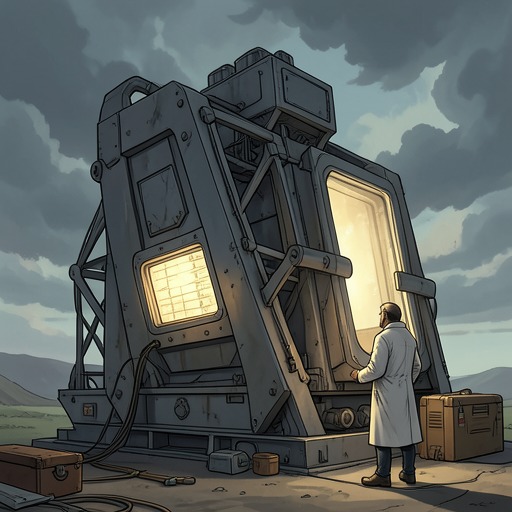
After his friends leave with Dorothy, [Langdon St. Ives](entity:character-recall-character-langdon-st-ives-d3f8dc45aa35) finds the polished alien spacecraft displayed in Drake’s great hall. He climbs inside, discovers its responsive controls, and begins to understand that the machine is a genuine vehicle rather than an inert curiosity.
Late that afternoon
St. Ives Escapes in the Alien Craft
When animated corpses crowd around the spacecraft, [Langdon St. Ives](entity:character-recall-character-langdon-st-ives-d3f8dc45aa35) fumbles with its controls until the vessel rises through the house and speeds out over [London](entity:location-recall-location-london-420923d4a60a). His first flight is perilous, but he gradually masters the levers and climbs into the evening sky.
That evening
The Group Reaches Hampstead Heath
[Captain Powers](entity:character-recall-character-captain-powers-703356d61d45), [Theophilus Godall](entity:character-recall-character-theophilus-godall-91830ad07629), Hasbro, and the Keebles gather on [Hampstead Heath](entity:location-recall-location-a2e1d27d8e12) amid an enormous crowd expecting [Birdlip](entity:character-recall-character-birdlip-8e787e112d85)’s return. The [Royal Academy](entity:organization-recall-organization-royal-academy-7b0e82da4acf) has cordoned off a landing area, while Drake, [Shiloh](entity:character-recall-character-shiloh-975bed3a4ced), and their supporters move through the surrounding throng.
On Hampstead Heath, before the dirigible lands
Pule Takes a Box from Deener
[Willis Pule](entity:character-recall-character-willis-pule-d17c6a579368), his face still green and his wits failing, encounters [Billy Deener](entity:character-recall-character-billy-deener-9eb55164393b) near the landing ground. Pule kills Deener with a cricket bat, takes a [Keeble box](entity:object-recall-object-keeble-box-1c2fa5c6f67f) from the wagon, and disappears into the crowd before [Langdon St. Ives](entity:character-recall-character-langdon-st-ives-d3f8dc45aa35) can stop him.
That night, on Hampstead Heath
Birdlip’s Dirigible Descends
[Birdlip](entity:character-recall-character-birdlip-8e787e112d85)’s battered dirigible glides over the silent crowd and settles onto [Hampstead Heath](entity:location-recall-location-a2e1d27d8e12), its skeletal pilot still lashed to the wheel. The [Royal Academy](entity:organization-recall-organization-royal-academy-7b0e82da4acf) presses forward, but [Captain Powers](entity:character-recall-character-captain-powers-703356d61d45) and the club also recognize that the craft may carry [Jack Owlesby](entity:character-recall-character-jack-owlesby-15a3b5e69c20)’s emerald or the [Homunculus](entity:character-recall-character-homunculus-febfc1ea6c9e).
As the dirigible lands
Kraken Reclaims a Box from Drake
[Bill Kraken](entity:character-recall-character-bill-kraken-675851273c89) rushes into [Kelso Drake](entity:character-recall-character-kelso-drake-5d5fcc0ebfc1) and knocks him down, taking a [Keeble box](entity:object-recall-object-keeble-box-1c2fa5c6f67f) from the millionaire’s hands. Drake chases him into the surging crowd, where the long history of his crimes turns the mob against him.
At the same time on Hampstead Heath
Godall and Jack Contest Pule’s Box
[Theophilus Godall](entity:character-recall-character-theophilus-godall-91830ad07629) and [Jack Owlesby](entity:character-recall-character-jack-owlesby-15a3b5e69c20) pursue [Willis Pule](entity:character-recall-character-willis-pule-d17c6a579368) as he grapples with [Shiloh](entity:character-recall-character-shiloh-975bed3a4ced) and the evangelist’s followers. When the box changes hands, Jack recovers it and heads toward the dirigible, while Godall distracts Shiloh with the Marseilles Pinkle.
At the climax on Hampstead Heath
The Homunculus Is Freed
A box is smashed in the struggle, and the tiny [Homunculus](entity:character-recall-character-homunculus-febfc1ea6c9e) tumbles free before the immense crowd. It runs toward [Birdlip](entity:character-recall-character-birdlip-8e787e112d85), whose skeleton is still confined to the dirigible’s gondola, while the box’s destruction at last ends the creature’s long imprisonment.
Immediately after the Homunculus is freed
Birdlip Takes the Homunculus’s Ship
The [Homunculus](entity:character-recall-character-homunculus-febfc1ea6c9e) climbs into [Birdlip](entity:character-recall-character-birdlip-8e787e112d85)’s ribcage and appears to restore the pilot’s purpose. Birdlip accepts the creature’s box, releases his hold on the dirigible’s wheel, and boards the alien spacecraft with the Homunculus, leaving his failing airship behind.
That night, moments later
The Homunculus and Birdlip Depart
With [Birdlip](entity:character-recall-character-birdlip-8e787e112d85) and the [Homunculus](entity:character-recall-character-homunculus-febfc1ea6c9e) aboard, the alien spacecraft lifts from the Heath and vanishes among the stars. [Langdon St. Ives](entity:character-recall-character-langdon-st-ives-d3f8dc45aa35) has finally flown the craft he sought, while the tiny creature escapes its prison and begins a new journey beyond Earth.
After Birdlip’s departure
The Emerald Is Restored to Jack
[Captain Powers](entity:character-recall-character-captain-powers-703356d61d45) presents [Jack Owlesby](entity:character-recall-character-jack-owlesby-15a3b5e69c20) and [Dorothy Keeble](entity:character-recall-character-dorothy-keeble-d9e9b58f8d5b) with the enormous emerald, confirming that the box recovered from the confusion contains Jack’s inheritance. Their future together is no longer tied to Drake’s threats or the secrets of Sebastian’s past.
Later that night
The Dirigible Breaks Apart
A rising wind tears [Birdlip](entity:character-recall-character-birdlip-8e787e112d85)’s exhausted dirigible from its moorings, and the airship collapses as the crowd rushes in to salvage its pieces. The engine and wreckage disappear among the people, leaving the [Royal Academy](entity:organization-recall-organization-royal-academy-7b0e82da4acf) without the machine it hoped to study.
Near the end of the night
The Club Leaves the Heath
[Langdon St. Ives](entity:character-recall-character-langdon-st-ives-d3f8dc45aa35) and his companions leave the Heath with the emerald, the recovered boxes, and the memory of a bewildering public spectacle. The club has defeated several immediate threats, though [Kelso Drake](entity:character-recall-character-kelso-drake-5d5fcc0ebfc1) may yet cause trouble and the mysteries of science remain unresolved.
After the events on Hampstead Heath
Pule Is Found Among the Carp
[Theophilus Godall](entity:character-recall-character-theophilus-godall-91830ad07629) later reports that [Willis Pule](entity:character-recall-character-willis-pule-d17c6a579368) was found unconscious in a dogcart among carp, with [Ignacio Narbondo](entity:character-recall-character-ignacio-narbondo-135d57bd4277) nearby. Pule’s schemes have collapsed into madness, and Narbondo shows no sign of rescuing the former assistant who had served him so long.
The final hours of the night
St. Ives Accepts the Unfinished Mystery
[Langdon St. Ives](entity:character-recall-character-langdon-st-ives-d3f8dc45aa35) reflects that the night’s events have not made the world more intelligible, even to a scientist. He has lost the alien craft but has completed a voyage, and he returns to the prospect of future work with his friends, aware that wonder cannot always be reduced to explanation.