Years before the main story, after the Watts uprising
The Cleared Neighborhood
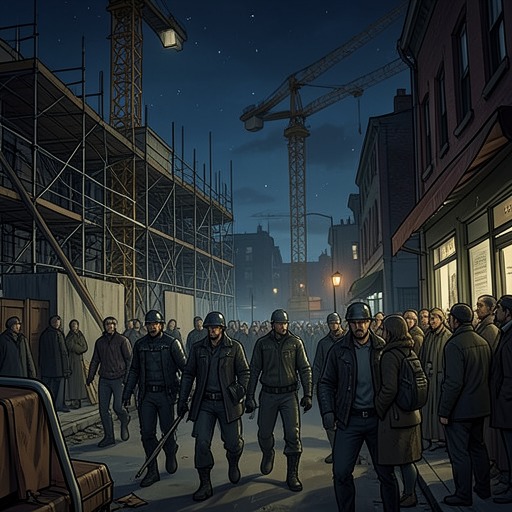
The neighborhood where [Tariq Khalil](entity:character-recall-character-tariq-khalil-72caf7ece3dc) grew up is bulldozed and replaced by the planned development that becomes [Channel View Estates](entity:location-recall-location-channel-view-estates-faeac22603cc). The displacement follows a longer [Los Angeles](entity:location-recall-location-los-angeles-11eff639bdf5) pattern of communities being cleared for the ambitions of developers, while the promised prosperity belongs to others.
During the same broad period of redevelopment, the South Bay remembers how a Black family’s attempt to move into [Gordita Beach](entity:location-recall-location-gordita-beach-3133e39469d4) ended in racist violence and an empty lot. These histories make the novel’s land deals more than a backdrop: they establish the unequal power that later surrounds [Mickey Wolfmann](entity:character-recall-character-mickey-wolfmann-dff8dab044ab)’s projects.
From 1917 through the postwar years
The Schooner’s Transformation
The fishing schooner Preserved survives the 1917 Halifax explosion that destroys much of the harbor. It later becomes a racer, then is bought by blacklisted actor [Burke Stodger](entity:character-recall-character-burke-stodger-16d3b60c712a), who sails away from the United States.
After Preserved disappears in the Pacific, it reappears years later in the Caribbean, refitted and renamed the [Golden Fang](entity:character-recall-character-golden-fang-57ff2899b2bf). Its history becomes entangled with covert operations, drug traffic, and the disappearance of people who trouble powerful interests.
Before Doc’s investigation, during the late 1960s
Coy’s Faked Death
[Coy Harlingen](entity:character-recall-character-coy-harlingen-b04eae4008c1) and his wife, Hope, become heroin users, and their daughter Amethyst is born into a household shaped by addiction and scarcity. Shasta encounters the family and helps connect Coy with [Burke Stodger](entity:character-recall-character-burke-stodger-16d3b60c712a), who offers him a route into a recovery program and covert work.
Coy accepts recruitment by [Vigilant California](entity:character-recall-character-vigilant-california-671f8055d167). To erase his former identity, he stages an overdose with a deliberately lethal-looking dose, survives, and is reported dead. His new work as an informant and undercover operative separates him from Hope and Amethyst, while a payment is secretly sent to Hope in a way meant to look like money Coy left behind.
Shortly before the main story
Mickey’s Change of Heart
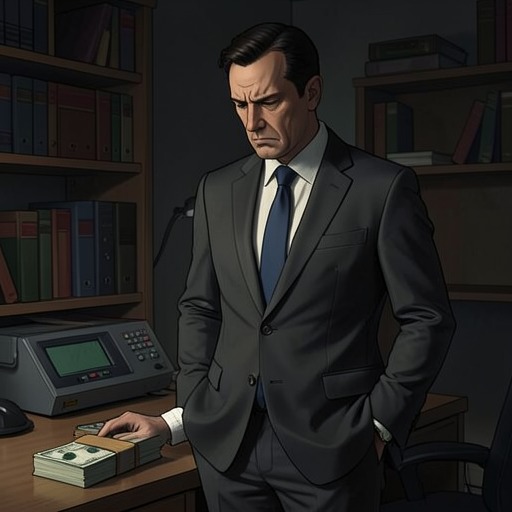
[Mickey Wolfmann](entity:character-recall-character-mickey-wolfmann-dff8dab044ab), a powerful developer, begins to believe that the wealth he accumulated through housing and land deals should be returned to the people from whom it was extracted. He imagines redirecting his fortune and creating [Arrepentimiento](entity:location-recall-location-arrepentimiento-257d5569b2a4), a desert settlement where people could live without paying for shelter.
The plan alarms those whose power depends on his money and influence. Mickey’s resolve brings him into conflict with his wife Sloane, his associates, the FBI, and the shadowy interests connected to the [Golden Fang](entity:character-recall-character-golden-fang-57ff2899b2bf).
At the opening of the main story
Shasta Returns to Doc
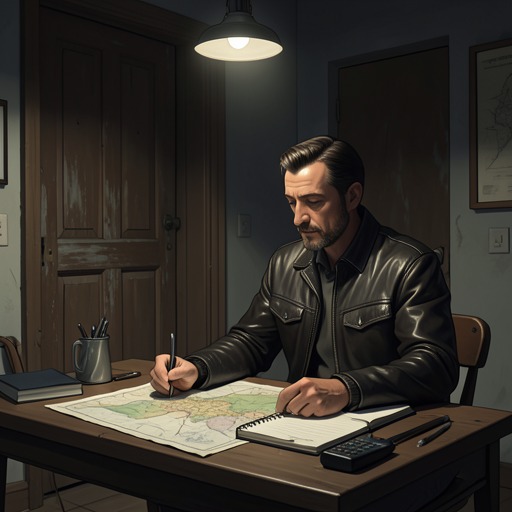
[Shasta Fay Hepworth](entity:character-recall-character-shasta-fay-hepworth-c6cbb2e6153e) arrives at [Doc Sportello](entity:character-recall-character-doc-sportello-caeebc56032e)’s home after more than a year away. She has changed her appearance and lifestyle, and asks him to investigate a plan she believes is being prepared against Mickey.
She says Sloane and her lover, [Riggs Warbling](entity:character-recall-character-riggs-warbling-f9eb7326f75d), want to move Mickey into a mental institution and take control of his fortune. Shasta is being drawn into their scheme as bait, but she is uncertain how much loyalty she owes Mickey. Doc agrees to ask [Penny Kimball](entity:character-recall-character-penny-kimball-eec0f3935043) for help and begins investigating without a formal retainer.
That night, after Shasta’s visit
Doc Consults Aunt Reet
Doc calls [Aunt Reet](entity:character-recall-character-aunt-reet-9d47bc50ca86), whose knowledge of Southern California property gives her a panoramic view of developers and their schemes. She describes Mickey as a volatile real-estate magnate protected by an armed contingent of former [Aryan Brotherhood](entity:organization-recall-organization-b1f2ca53ffca) inmates.
She warns Doc against approaching him casually, but says Mickey has been spending time at [Channel View Estates](entity:location-recall-location-channel-view-estates-faeac22603cc). Doc considers involving the police, then hesitates because his old adversary [Bigfoot Bjornsen](entity:character-recall-character-bigfoot-bjornsen-32b925957ea7) may use the case against him. Aunt Reet urges caution as Doc decides to investigate on his own.
The following day
The Bait at Chick Planet
[Tariq Khalil](entity:character-recall-character-tariq-khalil-72caf7ece3dc) hires Doc to find [Glen Charlock](entity:character-recall-character-glen-charlock-37a6193d6d50), a former prison associate who owes Tariq money and now works as a bodyguard for Mickey. Tariq also reveals that his old Artesia neighborhood has been erased for [Channel View Estates](entity:location-recall-location-channel-view-estates-faeac22603cc), giving the inquiry a second connection to Mickey’s development empire.
Doc drives to the development and enters [Chick Planet Massage](entity:location-recall-location-chick-planet-massage-8b243244d460), where [Jade](entity:character-recall-character-jade-6d03ec72ae11) recognizes Glen and says the bodyguards have just dispersed. Doc loses consciousness inside the building. When he wakes, Bigfoot is there beside the body of Glen Charlock, and Doc learns that Mickey has vanished as well.
Immediately after Glen’s killing
Bigfoot Questions Doc
Bigfoot takes Doc to the Compton station and treats him as the obvious suspect: he had asked for Glen by name, was found unconscious at the scene, and has a history of sleeping through violent crimes. Doc insists he never saw Glen alive and knows nothing about the shooting.
Bigfoot releases him after the news reports that Mickey is missing and the police need to draw out whoever took him. He also tries to recruit Doc as an informant, offering access to drugs and money. Doc refuses, unwilling to betray the people he knows, and leaves with the investigation unresolved.
The day after Doc’s release
Hope Questions Coy’s Death
[Hope Harlingen](entity:character-recall-character-hope-harlingen-5b186a16e4c2) asks Doc to investigate her husband’s supposed heroin overdose. She doubts Coy is dead because she never identified the body herself, the police said someone from the band had done so, and an unexplained deposit appeared in her account soon after.
Doc sees that Hope’s conviction is not ordinary denial. He takes a photograph of Coy and agrees to ask the police about the death, while Hope explains how she and Coy fell into heroin use and how their daughter recovered from the neglect visible in the old photographs.
Soon after Hope hires Doc
The Wolfmann Household
Doc visits [Sloane Wolfmann](entity:character-recall-character-sloane-wolfmann-0a3088a7b20b) under a false professional identity to test whether she knows about Mickey’s supposed plans for psychiatric treatment. Her reaction suggests she does not recognize the fictional clinic he describes, and she offers a bank account through which a purported refund could be returned.
Doc meets [Riggs Warbling](entity:character-recall-character-riggs-warbling-f9eb7326f75d), Sloane’s spiritual coach and apparent lover, then sneaks into Mickey’s bedroom. There he finds custom ties bearing explicit portraits of several women, including Sloane and [Luz](entity:character-recall-character-luz-cac854db5354), but none of Shasta. The encounter sharpens his suspicion that the people around Mickey are entangled in sexual arrangements and financial maneuvering.
After Doc’s visit to the Wolfmann residence
Jade Admits the Setup
Bigfoot and another officer stop Doc outside the Wolfmann house, where Doc suspects that the police are monitoring one another as well as the case. Later, [Jade](entity:character-recall-character-jade-6d03ec72ae11) sends him a warning about the [Golden Fang](entity:character-recall-character-golden-fang-57ff2899b2bf) and asks to meet at [Club Asiatique](entity:location-recall-location-club-asiatique-9c13dfd93650).
Jade admits that the police pressured her to place Doc at the scene of Glen’s death, promising to drop charges. She also says the Aryan bodyguards were cleared away before the raid, leaving Glen behind. Before she can explain more, she introduces Doc to a frightened man who turns out to be [Coy Harlingen](entity:character-recall-character-coy-harlingen-b04eae4008c1).
The same night at Club Asiatique
Coy Reappears
Coy tells Doc that he is officially supposed to be dead and asks him to check discreetly on Hope and Amethyst. Coy says he is staying with the Boards in Topanga, where almost nobody recognizes him, and that he is clean but trapped in a job he cannot safely leave.
He asks Doc what he knows about the [Golden Fang](entity:character-recall-character-golden-fang-57ff2899b2bf). Coy describes it as a schooner carrying unknown cargo and points toward a vessel offshore, which he says arrived around the same time he did. The sight and Coy’s caution deepen Doc’s suspicion that the boat, the drug network, and the missing people are connected.
The next day
The Golden Fang’s History
Sauncho shows Doc the schooner from the [San Pedro](entity:location-recall-location-90d6b372d9cc) harbor and recounts its history as Preserved, its disappearance, and its return under the [Golden Fang](entity:character-recall-character-golden-fang-57ff2899b2bf) name. Sauncho’s maritime firm has found the vessel’s insurance history so strange that ordinary gossip and records have yielded little.
He adds that Mickey and a female companion reportedly sailed aboard the schooner shortly before Mickey disappeared, and that weighted cargo may have been dropped at sea. The story gives Doc a possible route into the case, though the boat remains both an actual vessel and a symbol of hidden power.
Shortly after Sauncho’s account
Nixon Bills from the Seabed
Sauncho joins federal agents on an ocean search and helps recover containers full of counterfeit United States currency bearing Richard Nixon’s face. The unusual bills may have originated in a covert operation intended to destabilize North Vietnamese currency, but their presence in American waters is unexplained.
Sauncho later tells Doc that Mickey was seen aboard the [Golden Fang](entity:character-recall-character-golden-fang-57ff2899b2bf) before it sailed and that the insurance policy covered only that voyage. The policy’s beneficiary was a Beverly Hills company, raising the possibility that the voyage was an insurance fraud or a carefully staged disappearance.
During the search for Mickey
Coy’s Staged Protest
Doc sees a television report from a rally at [Century Plaza](entity:location-recall-location-century-plaza-200ad7cecb8c) where a supposed anti-Nixon protester is seized by men in matching suits. [Penny](entity:character-recall-character-penny-20f5e0e3e7bd) identifies the man as Chucky, an informant used by the police’s [Red Squad](entity:organization-recall-organization-red-squad-c5d96223c49c) and [Public Disorder Intelligence Division](entity:organization-recall-organization-public-disorder-ed0d4c00b60e) to infiltrate political groups.
Doc recognizes the protester as Coy but keeps that knowledge from Penny. The staged outburst gives Coy public credibility as a radical and demonstrates how law enforcement can manufacture a persona for covert use, while leaving Doc unsure which agencies truly control him.
Soon after the rally
The Boards’ Haunted House
Doc and [Denis](entity:character-recall-character-denis-dd3c30c38ae1) visit the Boards’ Topanga mansion under the guise of working for a music magazine. The house feels watched and fearful despite its countercultural abundance; Doc sees the pressure exerted by silent operatives among the musicians and their entourage.
He finds Coy in a rehearsal room, where Coy covertly asks Doc to check a vehicle for him. At a party, Doc becomes convinced under the influence of an unfamiliar joint that the Boards and the visiting band [Spotted Dick](entity:character-recall-character-spotted-dick-b8b67441a061) are zombies. He flees with Denis and [Jade](entity:character-recall-character-jade-6d03ec72ae11) as apparent pursuers chase them down the canyon, though the incident remains entangled with intoxication and fear.
After the escape from Topanga, during Doc’s investigation
Coy’s Informant Life
Coy explains that [Vigilant California](entity:character-recall-character-vigilant-california-671f8055d167) recruited him by promising recovery, money, and a way to support his family after his staged death. The organization trained him as an actor and infiltrator, then sent him into antiwar and other political groups while making his separation from Hope and Amethyst permanent.
Coy eventually realizes that he is serving interests beyond the visible organization. Seeing a child who reminds him of Amethyst makes him understand how deeply he misses his family and how wrong the choice was. His desire to return is genuine, but the people who recruited him have made leaving dangerous.
During Doc’s search for Mickey and Coy
The Ojai Institute
[Aunt Reet](entity:character-recall-character-aunt-reet-9d47bc50ca86) identifies [Chryskylodon Institute](entity:location-recall-location-chryskylodon-institu-20f2b97d53ad) as a likely private institution connected to Mickey’s property holdings. Doc visits [Ojai](entity:location-recall-location-ojai-9f8009532939) under a false identity, tours the polished grounds, and sees a new wing funded anonymously by a devoted benefactor.
In a concealed observation area, Doc recognizes Coy among people undergoing a strange group treatment. He also spots a guard wearing a custom tie bearing Shasta’s image. Coy later slips away with Doc, confirms that Hope and Amethyst are safe, and insists he cannot return to them without putting his family at risk.
After Doc’s visit to Ojai
Arrepentimiento Is Abandoned
Doc and [Tito Stavrou](entity:character-recall-character-tito-stavrou-bb529f90bc81) travel to the desert to see Mickey’s project, [Arrepentimiento](entity:location-recall-location-arrepentimiento-257d5569b2a4). The promised settlement is nearly deserted: construction has stopped, contractors have been abandoned, and [Riggs](entity:character-recall-character-riggs-4c4262a3cbe3) is living alone in one of the experimental zomes with a gun.
Riggs says Mickey has returned to Sloane and abandoned his plan to give away his wealth. He believes Mickey was taken and mentally altered, and describes a new public life for Mickey that includes a deal with federal authorities and renewed involvement in [Las Vegas](entity:location-recall-location-2ca5b4ac110f) casino development. The project’s collapse marks the apparent defeat of Mickey’s attempt at restitution.
During the Las Vegas investigation
Doc Finds Mickey in Vegas
Doc goes to [Las Vegas](entity:location-recall-location-2ca5b4ac110f) with [Trillium Fortnight](entity:character-recall-character-trillium-fortnight-96218754e546), who wants help finding [Puck Beaverton](entity:character-recall-character-puck-beaverton-07bd111f2325). In [North Las Vegas](entity:location-recall-location-ead4c7a3972d), Doc discovers Puck and [Einar](entity:character-recall-character-einar-6ebf9a4a25bf) running a slot-machine scam, but Puck bolts when both machines appear to hit jackpots at once.
At the [Kismet Lounge and Casino](entity:location-recall-location-kismet-lounge-and-ca-8df118c25ef7), Doc places a long-shot bet that Mickey was abducted against his will. In a restricted area, he sees Mickey being escorted by FBI agents and other suited men, apparently tranquilized and under their control. An agent confronts Doc and warns him that Mickey’s sudden desire to give away his fortune had threatened powerful interests.
The morning after Doc sees Mickey
Puck and Trillium Marry
After a night away from the motel, Trillium returns with Puck in a makeshift wedding procession. They have married quickly, with [Einar](entity:character-recall-character-einar-6ebf9a4a25bf) acting as best man before departing with another prospective groom.
Puck tells Doc that Mickey’s desert city was meant to offer free homes to anyone who arrived and found a place available. He warns Doc not to investigate the forces behind Mickey’s disappearance, suggesting that they are more powerful than ordinary organized crime and that racial explanations offered by federal agents are a cover.
After Doc returns to Los Angeles
The Golden Fang’s Reach
[Jade](entity:character-recall-character-jade-6d03ec72ae11) and [Bambi](entity:character-recall-character-bambi-947f95c8c19c) tell Doc that [Golden Fang](entity:character-recall-character-golden-fang-57ff2899b2bf)-connected people have been following them. Jade later explains that the Golden Fang is not merely a schooner but a vertically integrated heroin cartel, with fronts that include massage businesses and local dealers.
Doc learns that Coy has worked for both the police and [Vigilant California](entity:character-recall-character-vigilant-california-671f8055d167), while Shasta’s disappearance and Mickey’s projects intersect with the same network. The Golden Fang appears to encompass a boat, a company, a criminal organization, and a system of political control, making it difficult to identify what can be confronted directly.
After Doc’s return from Las Vegas
Clancy Seeks Glen’s Killer
[Clancy Charlock](entity:character-recall-character-clancy-charlock-4818adefa0f8), Glen’s sister, hires Doc to investigate her brother’s death. She doubts that Glen was simply protecting Mickey during the raid and says he was more likely to flee when real danger appeared. A fellow bodyguard, [Boris Spivey](entity:character-recall-character-boris-spivey-fa31e99a93ab), may know what happened.
Boris explains that Glen was not supposed to be on duty during the attack. Puck had been assigned to the shift that would let the attackers in, but exchanged places with Glen at the last moment without warning him. Boris also says Mickey’s attempt to give away his fortune had frightened people around him, including Shasta.
After Boris’s account
The Raid Footage
Farley Branch develops footage of the [Channel View Estates raid](entity:event-recall-event-channel-view-estates-ra-76ec186fb783). The images show masked, heavily armed men surrounding the development and attacking the bodyguards; Glen is visibly shot while unarmed and afraid.
The footage confirms that the event was a planned armed assault rather than a harmless training exercise. Its poor image quality prevents Doc from identifying the shooter, but it strengthens his suspicion that the raid was meant to conceal a more specific target and that the official account is a cover.
During Doc’s follow-up investigation
The Vigilante Connection
Doc visits [Arthur Tweedle](entity:character-recall-character-arthur-tweedle-67dcd44eb634), a police reservist involved in [Vigilant California](entity:character-recall-character-vigilant-california-671f8055d167). Tweedle boasts of an arsenal, describes private security and counterguerrilla work, and confirms that his group participated in the [Channel View Estates raid](entity:event-recall-event-channel-view-estates-ra-76ec186fb783).
Doc recognizes a distinctive ski mask like those in Farley’s film, but cannot prove Tweedle was the gunman who killed Glen. The encounter links the raid to a privately organized force that operates with police approval and racial hostility, deepening Doc’s distrust of official channels.
Soon after Doc visits the police reservist
Blatnoyd’s Death
Bigfoot tells Doc that [Rudy Blatnoyd](entity:character-recall-character-rudy-blatnoyd-d72765d47d38), a dentist connected to [Golden Fang](entity:character-recall-character-golden-fang-57ff2899b2bf) Enterprises, has died from a fatal neck injury. The circumstances are suspicious, and Bigfoot asks about Doc’s recent contact with him.
Doc later learns that the wounds resemble bites from a wild animal and suggests that the injury may have involved a gold-and-copper dental alloy. Bigfoot’s willingness to pursue the detail hints that Blatnoyd’s death may expose a larger concealed operation rather than an ordinary accident.
After Blatnoyd’s death
Leonard’s Death
Bigfoot reports that [Leonard Jermaine Loosemeat](entity:character-recall-character-leonard-jermaine-lo-ca3028ad773c), known as El Drano, has been found dead in a [Venice](entity:location-recall-location-519cfa9fe115) canal. Leonard had sold Coy the heroin that supposedly killed him, though Coy survived, and had recently been receiving unexplained payments from an account connected to Mickey’s Arbolada Savings and Loan.
Leonard’s housemate [Pepe](entity:character-recall-character-pepe-248684b6524c) says the payments felt like blood money and that Leonard had become disturbed by their source. The death suggests that the people behind Coy’s staged overdose are silencing participants who know too much.
After Leonard’s death
The Prussia Network
Doc and [Fritz](entity:character-recall-character-fritz-b276574c3e72) discuss [Adrian Prussia](entity:character-recall-character-adrian-prussia-c074b43697c9), a loan shark whose debts bind clients to powerful people and whose criminal cases repeatedly collapse. Prussia’s reach appears to extend into the police, allowing him to punish debtors and competitors with little risk of prosecution.
Doc learns that Puck was once connected to Prussia and was arrested on a trivial drug-seed charge by a detective who hated him. Bigfoot’s guarded comments suggest that the case touches the killing of his former partner, [Vincent Indelicato](entity:character-recall-character-vincent-indelicato-06436221ba3a), and that [Internal Affairs](entity:organization-recall-organization-22202a43fe19) has buried the relevant records.
During Doc’s inquiry into Prussia
Puck’s Confession
Bigfoot meets Doc privately and hints that a detective’s hatred of Puck led to a conflict the police cannot openly discuss. Doc pieces together that Prussia may have arranged the killing of Bigfoot’s partner and that the department has protected Prussia ever since.
[Penny](entity:character-recall-character-penny-20f5e0e3e7bd) gives Doc access to the sealed record. It identifies the dead detective as [Vincent Indelicato](entity:character-recall-character-vincent-indelicato-06436221ba3a) and Bigfoot as the officer who identified the body. The documents show a long pattern of Prussia escaping murder charges, while one supposed accomplice, [Boris Spivey](entity:character-recall-character-boris-spivey-fa31e99a93ab), was used as a fall guy.
After Doc learns about Indelicato
Coy’s Recruitment Is Exposed
Doc tells Shasta that Coy survived his supposed overdose and has been working as an informant. Shasta reveals that she introduced Coy to [Burke Stodger](entity:character-recall-character-burke-stodger-16d3b60c712a), who connected him with [Vigilant California](entity:character-recall-character-vigilant-california-671f8055d167) after the Manson murders heightened fear among young people in Hollywood.
She explains that Coy’s faked death was meant to let him recover and begin a new life, but that his assignments drew him into political surveillance and left him desperate to return to Hope and Amethyst. The story reframes Shasta’s earlier involvement as an attempt to help a vulnerable friend, even though the outcome bound Coy to coercive employers.
Before Shasta’s return to Gordita Beach
Shasta’s Voyage and Escape
Shasta tells Doc that men took her to [San Pedro](entity:location-recall-location-90d6b372d9cc) and put her aboard the [Golden Fang](entity:character-recall-character-golden-fang-57ff2899b2bf) without explaining their plans. When the schooner reached Maui, she persuaded the crew’s cook to help her get ashore and later encountered Saint Flip, who gave her a place to stay.
Her escape explains how she disappeared from [Los Angeles](entity:location-recall-location-los-angeles-11eff639bdf5) and why she could send Doc a postcard from the Pacific. She had felt Doc’s presence during one of his drug-induced visions of the ship, suggesting that the novel’s supernatural connections may be more than a product of Doc’s imagination.
After Shasta returns to Gordita Beach
Doc and Shasta Reunite
Doc finds Shasta living in the Saint’s beach house. They fall into an intimate encounter, but she makes clear that sex does not mean they are back together. Shasta recounts Mickey’s possessive behavior and the humiliating sexual arrangements he imposed, while Doc struggles with jealousy and with the possibility that he never understood her life.
She also confirms that she was taken aboard the [Golden Fang](entity:character-recall-character-golden-fang-57ff2899b2bf) and escaped in Maui. Their reunion gives Doc new information about the ship, but it does not resolve the emotional distance between them or the larger mystery of Mickey’s fate.
After Doc and Shasta reunite
Tariq Reveals the Arms Deal
Tariq returns to Doc’s office with Clancy and reveals that Glen had arranged an arms deal while in prison. Glen wanted the [Aryan Brotherhood](entity:organization-recall-organization-b1f2ca53ffca) to accept him without personally carrying out a killing, so he hired Tariq to arrange the murder of a prison informant.
The promised weapons were to come through friends of Glen’s: a group of dentists operating from the [Golden Fang](entity:character-recall-character-golden-fang-57ff2899b2bf)’s [Los Angeles](entity:location-recall-location-los-angeles-11eff639bdf5) headquarters. The deal never went through, but it places Glen’s history, the Golden Fang, and the armed forces around [Channel View Estates](entity:location-recall-location-channel-view-estates-faeac22603cc) in the same chain of events.
Immediately after Tariq’s revelation
Doc Resists the Authorities
Tariq explains that his group, [WAMBAM](entity:character-recall-character-wambam-ffa147b562d5), expected Glen to secure weapons, and that the intended transaction linked Black militants to the [Golden Fang](entity:character-recall-character-golden-fang-57ff2899b2bf). Doc considers whether to tell the FBI or Bigfoot, but neither law enforcement nor the rival forces seem trustworthy.
A strange conversation with a plastic image of Thomas Jefferson at the Plastic Nickel underscores the danger of choosing between institutions that exploit people in different ways. Doc decides not to expose Tariq or WAMBAM, especially because the arms deal never happened, and keeps searching for a path that does not simply deliver one vulnerable group to another power.
Later in the Las Vegas investigation
Doc Finds Puck in Vegas
Doc accompanies Trillium to [Las Vegas](entity:location-recall-location-2ca5b4ac110f), where they learn that Puck and [Einar](entity:character-recall-character-einar-6ebf9a4a25bf) have left their former apartment and that FBI agents have been asking after them. Trillium’s attachment to Puck is evident, even as she recounts the unstable and often painful relationship they share with Einar.
At the [Nine of Diamonds](entity:location-recall-location-nine-of-diamonds-7bbcfb51d161), Doc discovers the pair’s method: Einar manipulates slot machines while Puck claims the winnings. When both machines hit at once, Einar disappears and Puck bolts, leaving Doc and [Tito](entity:character-recall-character-tito-4b2dc05ff814) to collect the jackpots. The encounter leads Trillium back to Puck, and she later marries him.
During Doc’s Las Vegas visit
Mickey’s Federal Custody
At the [Kismet Lounge and Casino](entity:location-recall-location-kismet-lounge-and-ca-8df118c25ef7), federal agents tell Doc that Mickey’s conversion to philanthropy had threatened the established order. They have recorded Mickey describing the injustice of charging people for shelter and his wish to return the money he made.
Doc has already seen the agents escort Mickey through the casino, and now understands that the government was not simply searching for a kidnap victim. Mickey’s sudden transformation had become a problem for people who wanted to redirect his wealth toward casinos, political interests, and the [Golden Fang](entity:character-recall-character-golden-fang-57ff2899b2bf)’s operations.
During the Las Vegas episode, after the wedding
Trillium Is Injured
After Puck and Trillium marry, Doc leaves them the motel room and car as a wedding present. He later learns that Trillium has been admitted to [Sunrise Hospital](entity:location-recall-location-sunrise-hospital-062f11ecd88f) with a concussion and other injuries, though the details of what happened remain unclear.
Her disappearance from Doc’s immediate company and her later hospital record reveal the cost of her impulsive attachment to Puck and the violence around his life. The report confirms that she survived and returned to [Los Angeles](entity:location-recall-location-los-angeles-11eff639bdf5), but their relationship continues on terms Doc cannot control.
After Doc returns from Las Vegas
The Boards’ Assault on Denis
[Denis](entity:character-recall-character-denis-dd3c30c38ae1) says that members of the Boards broke into his apartment, ransacked it, and made food into smoothies without sharing. Doc suspects they were looking for photographs from the Topanga party, though Denis first interprets the intrusion through his fear that the band has become evil.
The episode reflects the novel’s repeated uncertainty between ordinary exploitation and supernatural corruption. The photographs remain significant because they include Coy at the Boards’ house and may connect his supposed death, his undercover work, and the people monitoring him.
After Doc receives Penny’s sealed records
Doc Enters Prussia’s Office
Doc visits [Adrian Prussia](entity:character-recall-character-adrian-prussia-c074b43697c9) at [AP Finance](entity:organization-recall-organization-ap-finance-fc14df50c784) and discovers Puck working as Prussia’s associate. Puck denies knowing him, then drugs Doc with PCP and has him transported to an unknown room, where he is handcuffed to a bed.
While Doc is incapacitated, he hallucinates a figure calling itself the [Golden Fang](entity:character-recall-character-golden-fang-57ff2899b2bf), which claims to be the vengeance invoked when an insider becomes too troublesome. The vision echoes the organization’s reach, but Puck’s deliberate drugging makes clear that Doc has been neutralized in a very physical way.
While Doc is held prisoner
Puck Explains Indelicato’s Killing
Puck tells Doc that Glen was the true target of the Channel View attack because the [Golden Fang](entity:character-recall-character-golden-fang-57ff2899b2bf) no longer trusted him. He also confesses that he killed [Vincent Indelicato](entity:character-recall-character-vincent-indelicato-06436221ba3a) after Adrian arranged the murder through the police, which then concealed the truth and allowed both men to escape justice.
Puck explains how Prussia became a contract killer for officials who wanted political opponents removed, with federal clearance incentives and police protection smoothing the work. Doc realizes that the apparent divisions between law enforcement, loan sharks, and private operators conceal a shared machinery of coercion.
The same night
Doc Escapes the Trap
When Puck returns with heroin intended to incapacitate or kill him, Doc uses hidden plastic shims to free himself from the handcuffs. He attacks Puck in the dark, takes back his gun, and injects Puck with the heroin.
Adrian arrives armed, and Doc shoots him during the ensuing exchange. He calls for an ambulance, but later encounters Adrian again on [Gummo Marx Way](entity:location-recall-location-gummo-marx-way-d5a4bfb3afe7) and sees him collapse after sirens approach. The encounter leaves Doc uncertain about what he truly saw, while the deaths become another piece of the police department’s manipulated accounting.
Immediately after the confrontation with Adrian
Bigfoot Takes the Heroin
Doc finds Bigfoot in the garage moving a large package of heroin into his car. Bigfoot admits that he has obligations and refuses to explain the full arrangement, even though Doc recognizes that the drugs connect to the [Golden Fang](entity:character-recall-character-golden-fang-57ff2899b2bf).
Bigfoot lets Doc leave and later returns his car, but secretly leaves the heroin in Doc’s trunk. Doc realizes he has been turned into bait for the people seeking the shipment and must get the drugs out of his possession before he is arrested or killed.
The following day
Doc Trades the Shipment
Doc replaces the heroin package with a box of garbage and checks it as luggage at [Burbank Airport](entity:location-recall-location-burbank-airport-265e484986d4), creating a bureaucratic distraction while he and [Tito](entity:character-recall-character-tito-4b2dc05ff814) arrange another car. They hide the real shipment in [Denis](entity:character-recall-character-denis-dd3c30c38ae1)’s fire-damaged apartment, where the absent television set on the box leads Denis to stare at the wrapped bricks as if they might show a documentary.
[Crocker Fenway](entity:character-recall-character-crocker-fenway-1a8a2bf548bc) later contacts Doc on behalf of the people who want the heroin returned. Doc agrees to a handoff at a shopping mall only after securing a promise that people close to him and Coy will be left alone. He returns the shipment in exchange for a credit card in Coy’s name, a sign that Coy has been formally released from at least one employer.
After the heroin handoff
Preserved Is Abandoned
Sauncho calls Doc to report that the [Golden Fang](entity:character-recall-character-golden-fang-57ff2899b2bf) has returned to [San Pedro](entity:location-recall-location-90d6b372d9cc) and appears ready to leave again. They take a small boat out to follow it as federal and [Coast Guard](entity:organization-recall-organization-853e8ceadb3f) vessels close in.
The schooner heads toward the impossible surf associated with Saint Flip’s offshore break. Its crew escapes in cigarette boats, leaving the vessel without power. The Coast Guard boards and secures it, creating the possibility that the ship may become legally abandoned after a year and a day. Sauncho’s long fascination with the vessel becomes a potential claim to its future.
After the Golden Fang voyage and the handoff
Coy Returns to His Family
Coy is officially released from the payroll of his covert employers, and he begins rebuilding his life with Hope and Amethyst. He plays again with the Boards at the Surfadelic Freak-In at [Will Rogers Park](entity:location-recall-location-will-rogers-park-bca29282bca7), where Amethyst responds to his saxophone performance before she fully understands who he is.
Coy tells Doc that he is free of the organizations that used him and is preparing to travel to Hawaii with his family. Doc refuses to let Coy frame the rescue as something Doc accomplished: Coy survived, made his own choices, and now has the chance to live the life he saved.
Near the ending
Doc Keeps Looking
The Kismet sends Doc a ten-thousand-dollar check, honoring his long-shot bet that Mickey was abducted. The casino’s letter says that after legal and religious consultations, it has concluded Mickey was taken against his will, though the authorities remain beyond ordinary legal remedy.
Hope tells Doc that Coy has returned and that she and Amethyst are planning to travel with him. Doc also learns that Beer opened for the Boards and that the family is moving toward a tentative reunion. The case’s practical mysteries have mostly settled, but Doc remains aware that Mickey’s fate and the [Golden Fang](entity:character-recall-character-golden-fang-57ff2899b2bf)’s power are not fully resolved.
The final night
The Fogbound Convoy
After the Lakers lose the championship, Doc drives through [Los Angeles](entity:location-recall-location-los-angeles-11eff639bdf5) as fog erases the freeway’s signs, distances, and landmarks. He falls into a line of cars whose drivers follow one another’s taillights through the blindness, forming a temporary convoy without knowing who else is in it.
Doc imagines that future motorists might share names and stories and remember this improvised mutual aid, but the thought remains only a possibility. He continues driving with no certainty about what lies beyond the fog, ending the novel inside the same uneasy mixture of fellowship, danger, and unresolved perception that has shaped his investigation.