Joseph Brodsky
LimonovJoseph Brodsky enters Eduard Limonov’s story first as a poem passed hand to hand in a Kharkov bookstore, then as a rival whose prestige seems impossible to escape. Arrested for social parasitism and banished to the Far North, he became a celebrated dissident poet without accepting the roles of obedient Soviet writer or conventional anti-Soviet dissident. His life moves between obscurity and public veneration: from a nearly unreadable carbon copy circulating underground to the literary salons of New York, where he offered advice to émigrés who had been sent to his door.
Early life and the making of a poet
Brodsky was the son of a junior officer and, like Limonov, left school early. Before poetry made him famous, he worked at a milling machine, dissected bodies in a morgue, and served as a geological assistant in Yakutia. He and another young man travelled to Samarkand and hijacked a plane in an attempt to reach Afghanistan. The episode led to his internment in a psychiatric hospital, where treatment included painful sulfur injections and ukrutka: being wrapped in a sheet, plunged into an icy bath, and left to dry in the same sheet.
At twenty-three, Brodsky was arrested on charges of social parasitism. His trial might ordinarily have passed unnoticed, but a journalist recorded it in shorthand, and the transcript circulated as Samizdat. The judge asked who had enrolled him among the poets. Brodsky paused before answering, “Who enrolled me in the ranks of the human race? God, perhaps…” The exchange electrified a generation. Anna Akhmatova, who had recognized the young poet as a prodigy, remarked on the extraordinary biography being made for him. The proceeding turned a prosecution into a public literary drama, and the authorities’ attempt to classify him helped secure his place in underground culture.
Exile and underground reputation
Brodsky was banished for five years to the Far North near Arkhangel’sk, where he shovelled manure in a small village. The frozen earth, the white expanses, and his friendship with the villagers entered the poems he wrote there. Those poems travelled back to Leningrad by circuitous routes and became cult objects among dissident and semi-dissident circles across the Soviet Union.
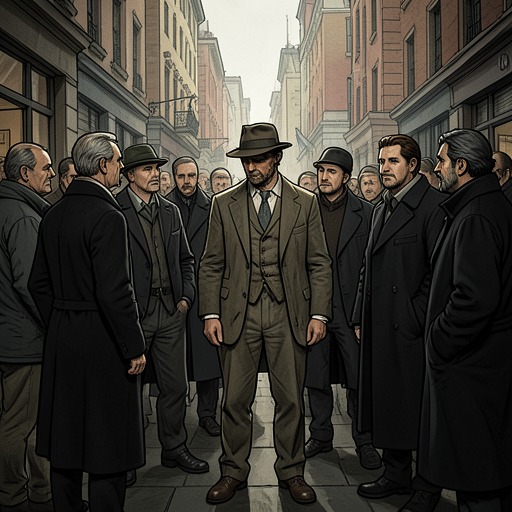
At bookstore 41 in Kharkov, the underground meeting place where artists and poets gathered after closing, Brodsky’s name was already on everyone’s lips. One evening a faint fifth- or sixth-generation carbon copy of his poem Procession arrived from Leningrad. Limonov later judged it a dubious pastiche of Marina Tsvetaeva, yet also one that fitted the bookstore’s social and cultural world precisely. The scene sets Brodsky’s literary influence against the precarious material form in which his work travelled: an almost unreadable sheet passed between readers, carrying a reputation far larger than the copy itself.
A rival in Limonov’s eyes
Brodsky’s acclaim irritated Limonov in part because the two poets were near contemporaries. Limonov could treat Aleksandr Solzhenitsyn as belonging to his father’s generation, but Brodsky was only three years older. The younger writer therefore seemed to occupy the same competitive field while already commanding a different kind of authority. Limonov mocked him as an eternal top student sheltered by the teacher, but the account complicates that caricature with Brodsky’s early adventures, psychiatric confinement, trial, and exile.
After returning from the North, Brodsky appeared occasionally in the Moscow underground’s kitchen gatherings. He arrived late, left early, and sat in a dark corner in baggy trousers and a worn sweater, his long hair already thinning. Others gathered around him, reciting his poems and trial retorts and recalling the support he had received from figures including Shostakovich, Sartre, and T. S. Eliot. Limonov, whose insolence and crushed-velvet jackets had made him a star before Brodsky’s arrival, resented the transfer of attention. He tried to reassure himself that Brodsky’s aura was a constructed persona; the narrator acknowledges that there may be some truth in this, while noting that self-fashioning is hardly unique to Brodsky.
Brodsky’s stance also separated him from writers who sought accommodation. He rejected publication offers dangled by more compliant colleagues, including invitations to join them. His persistent conscientious objection eventually prompted the KGB to order him to leave the Soviet Union in 1972. Limonov may have welcomed that departure, but Brodsky’s authority continued to travel: exile removed him from the underground gatherings without diminishing his reputation there.
New York: authority put to practical use
Three years after his expulsion, Brodsky had become a favourite of Western intellectual circles, from Octavio Paz to Susan Sontag. He helped new friends see more clearly the realities of the Soviet regime, even when many remained sympathetic to communism. His literary standing was reinforced by his ease in conversation and gift for befriending prominent writers; interviews with him became a genre of their own. Russian émigrés in New York respectfully called him nachal’nik, or boss.
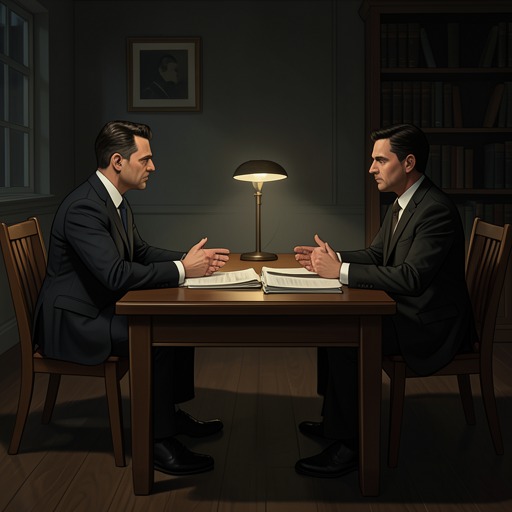
When Limonov and Tanya arrived, Brodsky was one of the contacts passed along to emigrants from the underground. He did not immediately remember Limonov among the many Russians who were sent his way, but arranged to meet them at a tearoom in the East Village. The setting suited long discussions of literature but not Limonov, who disliked the kind of place associated with old Moscow intellectuals; matters were made worse by the absence of alcohol. Tanya’s presence eased the meeting. Brodsky, already graying, smoking, and coughing, seemed older than his years to Limonov, who felt reduced to a petulant child before a wise, cheeky elder. The friendliness did not erase the imbalance: Brodsky knew that he had made it, while the newcomers still had a long way to row.
Brodsky nevertheless offered concrete help. He warned that America was a jungle and that survival required an elephant’s skin, then pointed Limonov toward Moishe Borodatikh, editor in chief of the Russian émigré daily Novoye russkoye slovo. The paper might not chase Watergate scoops, he joked, but writing for it could help Limonov earn a living while learning English. He also offered to introduce Limonov and Tanya to his friends, the Libermans. Limonov took pleasure in revealing that they already knew the Libermans and were going to a party at their home. The exchange leaves Brodsky both generous and self-assured: he provides a route into émigré life, yet his advice also makes plain the distance between an established literary figure and the newly arrived writer who hoped to rival him.