Eduard Limonov
LimonovEduard Limonov’s life in Emmanuel Carrère’s account is a sequence of radical reinventions: Soviet underground poet, emigrant and New York drifter, celebrated Parisian writer, Balkan combatant, and leader of the National Bolshevik Party. The transformations are not simply career changes. They make Limonov a figure through whom the book follows the passage from Soviet repression to postcommunist disorder, while refusing to settle whether he is a hero, a scoundrel, or both.
Names, beginnings, and self-invention
Limonov began as Eduard Savenko, but even his literary identity became an act of authorship. At a gathering at Anna’s home, a group of young writers playfully rename one another. Savenko becomes Ed Limonov, a name chosen for its association with his acidic, combative humor: limon means lemon, while limonka is slang for a type of hand grenade. Others discard their invented names; Limonov keeps his. The choice anticipates a life in which he repeatedly makes himself into a character, and insists that the character belongs to him.
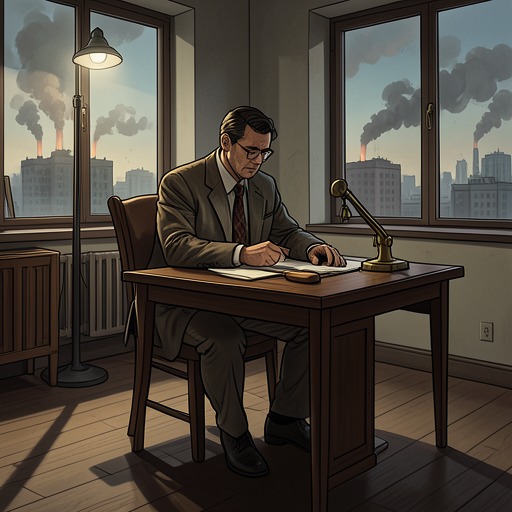
In 1968, he and Anna move to Moscow on their own initiative, without obtaining the residency permit, or Propiska, required to live there legally. Their life is consequently clandestine and precarious. They occupy small rooms on the outskirts, move frequently to avoid attention, and pass through subway checkpoints at risk of being discovered. Their possessions are few: a suitcase for clothes, a typewriter for poems, and a sewing machine for trousers. They also make cheap-calico handbags, buying material for one ruble and selling each bag for three. The material details show the distance between the poet’s ambitions and the improvised work needed to survive.
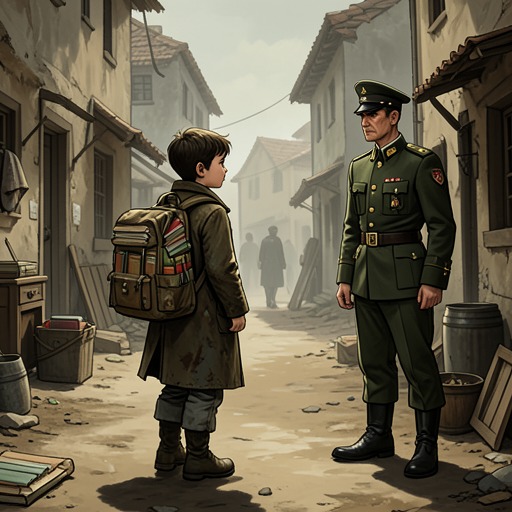
Limonov is drawn to lives shaped by violence and historical extremity. As a child, he had heard that Trotsky was an enemy of humanity, yet he is captivated by the spectacle of Trotsky’s life. He also listens to Porphyry, a Ukrainian who served first in the Red Army, later joined the Vlasov Army, and guarded a camp in Pomerania. Porphyry speaks plainly about having killed people and tells Limonov that, with his back to the wall, he too would do what others do. The episode gives Limonov’s fascination with danger an early context: violence appears not as an abstraction but as a possible test of what a person becomes under pressure.
Exile, writing, and public reinvention
When Limonov’s poems and proposed stories about Kharkov toughs and the Moscow underground fail to attract readers, polemic offers another route into public life. The opportunity arrives after Andrei Sakharov wins the Nobel Peace Prize. Limonov’s visibility then takes a startling form: a Soviet newspaper prints a photomontage of him beneath a headline presenting him as someone who exposes the truth about dissidents and emigration. His editor confronts him with the suggestion that he works for the KGB. Limonov leaves the office without waiting to be dismissed. The episode places him at the unstable boundary between dissident, public provocation, and suspected instrument of the state, without resolving the suspicion.
After emigrating from the Soviet Union, Limonov lives in New York in circumstances far removed from the image of a solemn, bookish dissident. His scandalous novel It’s Me, Eddie recounts a life of odd jobs, poverty, sordid hotels and street living, sexual relationships with men and women, drunken binges, robberies, and brawls. Carrère compares the book’s angry urban energy with the drifter played by Robert De Niro in Taxi Driver and with the vigor of Henry Miller’s novels. The point is not that Limonov simply resembles either model, but that his writing turns degradation and disorder into a forceful literary persona.
The novel reaches a French readership through an unlikely publishing success. Jean-Jacques Pauvert is won over by translated chapters and decides to publish it, although his own company has again gone bankrupt and he must find another publisher. In the fall of 1980, the book appears in France under Pauvert’s sensational title, The Russian Poet Prefers Big Blacks. The title and the book’s New York material help establish Limonov not as a conventional political exile but as an author whose notoriety depends on confronting readers with a deliberately disreputable life.
Carrère later encounters him in Paris in another role. When Diary of a Loser appears in France, Carrère, then hosting a weekly local-radio program, invites Limonov on and collects him by motorcycle. In a sparely furnished studio in Le Marais, weights lie on the floor and hand grippers beside the typewriter. Limonov wears a tight black T-shirt, has a flattop haircut, and looks to Carrère like a paratrooper, though his large glasses and expression retain something childlike. The contrast between the punk image used in an article about him and this more recent appearance underscores how quickly Limonov’s public surface changes.
Political militancy and war
The collapse of communism marks a turn toward more openly political and violent commitments. While others celebrate the change, Limonov says that Mikhail Gorbachev should face a firing squad. He begins spending long stretches in the Balkans, where his participation on the Serbian side horrifies Carrère and others in his circle. A BBC documentary shows him firing on besieged Sarajevo under the approving gaze of Radovan Karadžić, the Bosnian Serb leader and a known war criminal. The account does not treat this as a minor detour from the writer’s life: it is a consequential crossing from provocative language into armed conflict.
Limonov later remains for two months in a mountainous region and, by his own account, takes part in raids on villages, ambushes, and skirmishes, risking his life. Carrère asks whether he killed anyone. Limonov says that he had often fired and had seen men fall, but that he could not say whether he had hit them; war, he observes, is not clear-cut. Carrère admits to some suspicion about this answer, while acknowledging that he has rarely thought Limonov a liar. The uncertainty matters: the narrative records both Limonov’s account and the biographer’s doubt, rather than converting a disputed detail into a certainty.
Back in Russia, Limonov helps create the National Bolshevik Party, whose name delights its founders even though each will later claim credit for it, then attribute it to the other when seeking respectability. Limonov devises the name of their newspaper, Limonka, or The Grenade. A painter friend draws the flag on a kitchen table: a white circle on red, with a black hammer and sickle where a swastika might otherwise appear. The design joins communist and fascist visual associations in a single emblem, making the party’s deliberate political provocation visible before its members even march.
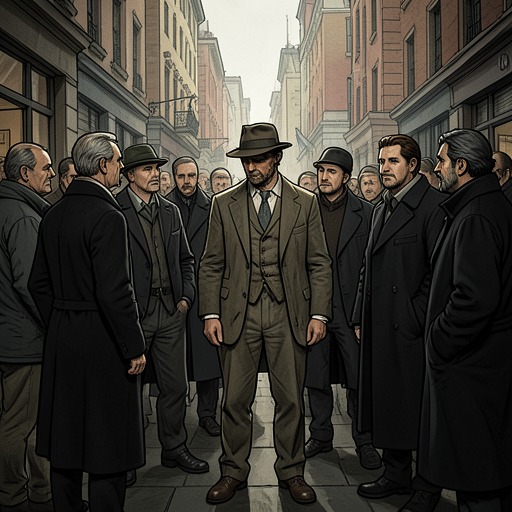
Limonov becomes a familiar presence at demonstrations in Moscow. Readers of his articles in Dyen recognize and congratulate him, treating his presence as evidence that Russia is not lost. At a rally organized with Viktor Alksnis, Limonov takes a megaphone and denounces the supposed democrats as profiteers who have betrayed the blood shed by their fathers in the Great Patriotic War. He argues that people have suffered more in one year of democracy than in seventy years of communism, and urges them to prepare for civil war. The crowd applauds after each sentence. In this scene, his talent for polemic has moved from literary controversy to a political performance that gives popular anger a voice and a direction.
Arrest, prison, and discipline
The book’s account eventually returns to Limonov as a prisoner. At a cabin in the mountains, a force of roughly thirty special-forces soldiers bursts in at dawn. Limonov has lost his glasses; in wool underwear and barefoot, he is made to kneel with the others in the lingering snow. As the leader, he is the first permitted to dress. The soldier assigned to escort him into the cabin confesses admiration for his books and appears proud to be arresting him, almost hoping for an autograph. The incongruity does not erase the force of the arrest; it shows Limonov’s literary reputation surviving into the very machinery that takes him into custody.
He spends fifteen months in strict isolation at Lefortovo Prison before being transferred by government aircraft to Saratov for trial. The elaborate escort suggests a notorious enemy of the state, while the stated reason for the venue is jurisdictional: Saratov is the Russian jurisdiction closest to Kazakhstan, where he is alleged to have committed the crimes. In Saratov, a prisoner must repeatedly give not only his full name and patronymic but the articles of the criminal code under which he is held. Limonov learns to recite those charges as a verbal routine, a prison formula that continues to spring to his lips when he is suddenly awakened.
Camp life is different from imprisonment in Lefortovo and Saratov, but Limonov finds that the condition of a prisoner has changed little since the world described by Aleksandr Solzhenitsyn. The camp day officially begins at 5:30 with a siren; Limonov wakes at five. Before the barracks stir, he lies beneath his blanket and observes his breathing, savoring a period of time that belongs to him alone. Without a watch, he can still sense the minute when the siren will sound. Prison imposes a collective schedule, yet this small interval becomes a private discipline: a measure of attention and control inside enforced routine.
Relationships, return, and narrative significance
The costs of Limonov’s self-fashioning recur in his intimate relationships. During the blackout after a prolonged, catastrophic bout of drinking, he cannot remember the week that follows. He knows that Tanya left on February 22, 1976, and wakes six days later in the Winslow Hotel with Lenya Kosogor at his bedside. The broken sequence—departure, lost days, and waking—is a personal rupture rendered through its surviving facts rather than a fully remembered scene.
In December 1989, Limonov returns to the Soviet Union after fifteen years away. On the road into Moscow, he remembers the opposite journey in February 1974: hungover, lying in a car with his head on Tanya’s knees as the snowy buildings and woods pass by. Now he returns alone, invited as a prominent visitor and welcomed at the airport like a VIP. He chooses to sit beside the driver rather than with the other guests and the public-relations representative. The contrast between departure and return makes his new public standing visible, but it also leaves the lost partnership at the center of the recollection.
After seeing Romanian television footage of the execution of Nicolae and Elena Ceaușescu, Limonov returns from Moscow with Natasha, who has run away and come back in her familiar meek and gentle manner. Carrère connects the moment to Limonov’s thoughts about his parents and to the dream of growing old and dying beside Natasha. The relationship remains part of his recurrent effort to imagine a lasting private life, even as his movements and political commitments repeatedly pull him into public upheaval.
Carrère’s own relation to Limonov is marked by both distance and recognition. After losing contact, he takes time to obtain Limonov’s phone number and hesitates over whether to approach him as an old acquaintance or a guarded journalist, and whether to speak Russian or French. Limonov recognizes him immediately and remembers that he attended a ceremony at the Dubrovka Theater the previous year. The easy recognition unsettles Carrère’s expectation that he would need to explain who he was. Their later encounters therefore carry two perspectives at once: the intimacy of a remembered acquaintance and the scrutiny of a biographer trying to understand a man he has not seen for fifteen years.
That tension shapes the book’s final return to its beginning. Carrère says that when he started reporting on Limonov, the former prisoner had been free for four years, and that it took almost four more years to gather what he had not known. By then Limonov had become an idolized writer and an urbane freedom fighter, celebrated in society pages; imprisonment had made him a kind of teen idol, and his alliance with Garry Kasparov had made him appear an acceptable politician. Yet Carrère cannot shake the feeling that Limonov is still performing himself, as if a microphone remained under his collar and his life were a reality show. The unresolved performance is central to Limonov’s significance: his life reflects immense historical changes, but he also continually turns those changes into a stage on which to construct, test, and display a heroic self.