Zolotarev, the Altai guide
LimonovZolotarev, the Altai guide, first appears as an unlikely figure on the edge of Eduard Limonov’s political expedition: taciturn, outwardly provincial, and apparently given to vague spiritual talk. In the Altai Mountains, however, his command of the natural world and his unforced calm become indispensable to the group’s stay. He teaches Limonov skills and forms of attention that the city has not, and ends the journey not as a mere guide but as a friend and a master in his own way.
Identity and First Impressions
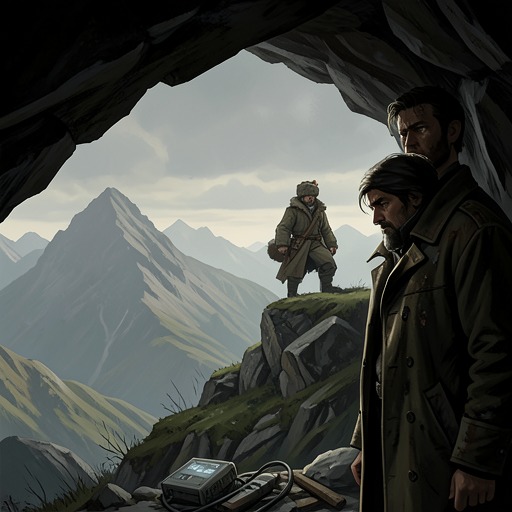
The book supplies little conventional biography for Zolotarev. He lives in Barnaul and is chosen to guide Limonov and four of his men into the mountains of the Altai region, where they are looking for a remote place that might serve as a training camp. In the city, Limonov sees him as an old provincial hippie, with dirty hair and a bandanna, who breaks his silence only to murmur new-age language about energy and karma. The description records Limonov’s first judgment, not a settled account of the guide: the expedition will make that judgment seem inadequate.
Zolotarev’s reserve is part of his presence. The narrator compares his small build, slanted eyes, and sparing speech to Dersu Uzala, the Mongol trapper familiar to Russian schoolchildren from an adventure novel and Kurosawa’s film. That comparison places him, in Limonov’s view, outside the habits of urban life: he does not merely know the country but seems at ease within it. His force and mischief are not immediately obvious. The narrator suggests that a first glance could almost miss an extraordinary person, and that recognizing him changes the impression entirely.
The Altai Expedition
In the summer of 2000, Limonov travels with four of his men through a region described as vast, sparsely populated, and exceptionally remote. Zolotarev has located a possible retreat in the southern mountains. The party arrives at a log cabin about six miles from the nearest village, a journey that takes almost an hour over the rough road. Its roof is partly collapsed, its windows are covered with plastic, and inside are two rooms, four beds, and a stove that appears usable. The group brings sleeping bags and provisions and settles in.
The imagined training camps already have a life of their own within the National Bolshevik Party: many party members believe Limonov has established secret camps modelled on those of jihadists in Pakistan. The narrator distinguishes rumour from what exists on this expedition. Limonov does not dispel the stories, but at this point there are no camps; this is a scouting trip, and the cabin is only a possible site. For three weeks, the men hunt and gather as well as practise shooting and close combat. No one disturbs them. The contrast between their martial training and their remote surroundings is central to the episode: Limonov, a child of the concrete, discovers a world that does not operate by the rhythms of the city.
Teacher and Spiritual Influence
Zolotarev’s authority grows through practical acts rather than political instruction. On the first morning, Limonov finds him meditating in the lotus position, facing the rising sun. At first the sight amuses him; in less than three days, he finds himself receptive to the calm he senses in the guide. Zolotarev takes him fishing in mountain streams, shows him how to gut and cook the catch, and helps him choose herbs and berries to accompany it. His knowledge is not presented as an accumulation of facts alone: he appears to belong to the environment in which he moves, while Limonov feels like an over-civilized visitor beside him.
The banya, a rudimentary countryside sauna beside the cabin, provides another lesson. Limonov can tolerate its heat and, in winter, is willing to roll naked in the snow between sessions, but he ordinarily dislikes sitting still and feels that idleness wastes his time. Zolotarev treats the bath as something close to a religious ritual. After long mountain treks, the two men spend about an hour drinking vodka in the steam, relaxing and often remaining silent. Zolotarev occasionally recites a saying by his favourite author, Lao-tzu: “He who knows does not speak. He who speaks does not know.” In his company, Limonov ceases to find the saying ridiculous and shares the quiet confidence of the moment. The episode marks a change in Limonov’s attention: the guide’s silence, once a sign of provincial vagueness, now carries knowledge and composure.
Friendship and Narrative Significance
As September brings colder weather and icy fog at dawn, the group prepares the cabin for winter. Three National Bolsheviks are to remain there, cut off when snow makes the road impassable. They stack wood and gather necessities that cannot be found in nature, including sugar, candles, and nails. Limonov envies the men who will stay and imagines returning in April, after the thaw, to relieve them; he does not remain because he has a party to manage in Moscow. The expedition therefore offers him a possible withdrawal from political responsibilities without becoming a permanent departure from them.
At parting, Limonov tells Zolotarev that he had initially thought little of him, but has come to know him and is proud to call him a friend. Zolotarev’s expression remains wooden as he answers, “I was watching you,” then says that Limonov has a soul and that he likes his men, although he is not involved in politics. The exchange reverses their initial positions: Limonov had assessed the guide, but the guide had also been observing him. Limonov offers to bring him a party membership card when he returns, and Zolotarev says it would be a pleasure. The offer leaves their difference intact—Zolotarev is explicitly outside politics—while turning the farewell into an expression of mutual regard. His importance in the narrative lies in this brief but consequential encounter: through him, the political leader experiences a form of competence, calm, and human connection not founded on authority or ideology.