Lo último y lo perdido
MayaLo último y lo perdido names a recurring idea in the novel: the last sight of something, or the prospect of its loss, can seem more precious than its preservation for those who come after. The phrase links Taveuni’s ecological vulnerability to the narrator’s meditation on endings, historical firsts, and tourism. Its central irony is that the desire to witness a vanishing paradise may hasten the transformation that makes it vanish.
The Value of the Last
The narrator gives the idea its compact expression in the maxim “El que mira el último, mira mejor.” The claim is not simply that a final sight is clearer or more beautiful. It describes a human attraction to the disappearing and the irrecoverable: the value assigned to experiencing something that future generations might enjoy is, he observes, often outweighed by the value of having seen what will later collapse. The same impulse appears in families’ competition to have been the last person to speak with someone who has died. A last encounter gains a charged importance because it cannot be repeated.
The idea makes disappearance a source of prestige. The final witness possesses an experience that cannot be shared on equal terms by anyone arriving afterward; being present at the end becomes a distinction in itself. The narrator’s maxim therefore connects private mourning to public spectacle. In both cases, proximity to loss can feel like a privilege, even when the loss is painful or preventable.
Taveuni: Garden and Lost Paradise
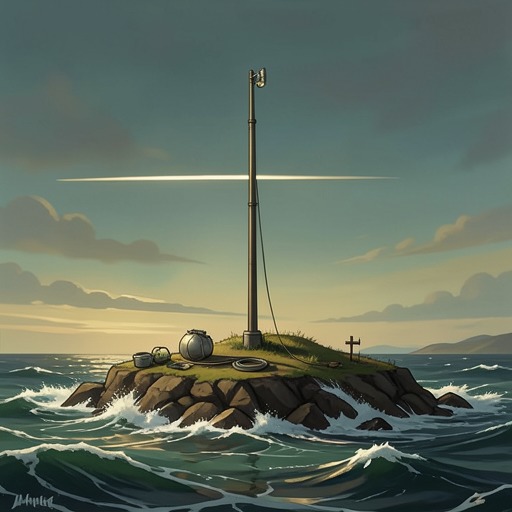
Taveuni gives the reflection a concrete setting. The island is called the Garden Island, but the narrator suggests that “the last Paradise” would be a more practical name: in a few decades, a single vowel could turn “last” into “lost,” and many visitors might not notice the change. The wordplay compresses the island’s threatened future into a tiny alteration of language. What sounds like a promise of rarity already contains the possibility of ruin.
The ecological account behind that warning is specific. On the islands of the South Pacific, isolated habitats had maintained old balances among native plants and animals, but imported species, deforestation, and the careless exploitation of plantations have contributed to erosion and habitat loss. Stowaway rats, mice, and insects arrived with ships; attempts to control them brought further introductions, including toads and cats, which in turn could become serious pests and prompt the importation of still more predators. The cycle threatens birds and native reptiles, while no replacement food chain can be assembled as quickly as the natural balance can be damaged. In Oceania, the narrator notes, endangered animal species make up an especially high proportion relative to the region’s area and population.
Taveuni has fared better than many islands, but it is not untouched by these pressures. Its rugged volcanic terrain limits plantation development and tourism; black lava beaches also constrain resort expansion, while frequent rain complicates the appeal of its white coral beaches. Cotton plantations gave way to sugar and, later, the growing importance of coconuts and tourism. The island’s biological richness remains striking: more than a hundred bird species include the native Orange-breasted Pigeon, and the absence of the Indian mongoose has helped preserve that diversity. Imported magpies and toads have nevertheless displaced some native species. The greater fruit bat, with a wingspan that can reach five feet, is still present; older islanders regard cooked beka as a delicacy. The island’s beauty is not an abstract backdrop but a living, unevenly protected system.
The Business of Vanishing
The narrator predicts that shrinking, polluted paradises will not bring tourism to a halt. They will give it new selling points. He imagines future promotions inviting visitors to see Lake Baikal after it has disappeared, to visit the Maldives before they go underwater, or to be the last person to see a living tiger. As destinations become fewer and more damaged, their scarcity may make them more marketable. “Necrological tourism” turns anticipated ecological loss into an attraction and the threatened place into a final opportunity for consumption.
The same contradiction appears in the narrator’s account of globalization and commercial agriculture. In places where people once ate what they grew, more land is devoted to crops that local people may not be able to afford and that serve the demands of richer countries. Food becomes merchandise; people become less able to live directly from their surroundings. The narrator contrasts this extractive economy with the ecological balance built over millions of years, which human intervention can dismantle with alarming speed. His criticism is not only that nature is being damaged, but that economic language can make the damage sound like ordinary progress or trade.
A counterexample comes from Bouma, a small village on the eastern side of Taveuni. When residents were offered substantial foreign currency for land to be logged, they debated the proposal and rejected the sale. Instead, they supported making the forest a national park. The protected area covers five thousand hectares, and villagers maintain its trails, including railings on steep sections, and provide toilets, picnic areas, and campsites. Ecotourism offers an income that can last longer than the one-time payment for cutting the trees; similar projects are being planned elsewhere on the island. This choice gives the natural landscape agency in the community’s future: preservation is not presented as a refusal of livelihood, but as an alternative way to sustain one.
Firstness, Lastness, and the Millennium
Taveuni’s position on the 180th meridian extends the idea from ecological endings to calendar time. The island lies on the International Date Line, so the narrator describes one half as belonging to one day and the other half to another. It is also expected to be the first inhabited place to enter the third millennium. That distinction seems to make Taveuni an ideal stage for a global celebration, but the narrator treats the prospect as another way that a place can be valued for its exceptional position at a boundary.
At the date-line monument, a three-dimensional map of the island shows the line crossing it from north to south, while the sign announces, “INTERNATIONAL DATELINE WHERE EACH NEW DAY BEGINS.” Standing with one foot in today and one in tomorrow does not impress the narrator by itself. What troubles him is the larger event gathering around the site: Fiji is studying how to celebrate the first moment of the year 2000, television reports and rehearsals are anticipated, and “year 2000 tourists” are expected to arrive in large numbers. Tickets are already sold out and rising in value; some travelers are willing to pay thousands of dollars extra to avoid celebrating the millennium only once or on a single continent.
The narrator imagines satellite dishes sprouting across one of the few places on the planet still without television. Reports sent from the supposed last paradise to the outside world would, in his view, disturb the island’s remaining innocence. The paradox is sharp: the act of transmitting the dream to a mass audience breaks the conditions that made it seem like a dream. Taveuni is not merely a scenic location for a new-century spectacle; the attention directed at its boundary risks converting its relative isolation into another consumable experience.
The Reversible Distinction
The narrator’s meditation on explorers makes the link between first and last explicit. Roald Amundsen was the first to reach the South Pole and, in the narrator’s formulation, also the last person able to claim that untouched portion of nature as a conquest. Scott’s arrival little more than a month later makes the cost of that distinction visible. Neil Armstrong, too, was the last person to be first to walk on the Moon: the achievement cannot be repeated in its original form. “Los últimos serán los primeros,” the narrator observes; the categories turn into each other when an achievement closes off the possibility of another first.
This reversal reveals that the cult of the last and the desire to be first are not separate impulses. The narrator first considers the need to be first a further human obsession, then concludes that, underneath, it is the same desire as the attraction to what is last or lost. Both seek a unique position in relation to an irreversible threshold: the first to cross it, or the final witness before it closes. The approaching millennium concentrates that impulse in one island, where visitors may compete for space at the instant the calendar changes.
Lo último y lo perdido thus holds together an ecological warning and a critique of spectatorship. Taveuni’s threatened habitats, Bouma’s locally managed forest, the imagined market for vanishing wonders, and the coming millennium all turn on the relation between seeing and altering what is seen. The maxim that the last observer sees better acquires an uneasy double meaning: the final witness may receive a privileged view, but a world organized around the privilege of being last risks treating preventable loss as the very spectacle that makes a place valuable.