Gaia Hypothesis
MayaThe Gaia Hypothesis is Laura’s account of Earth as a living organism that can respond to ecological damage, even if its recovery means the extinction of humanity. In the novel, the idea reaches beyond environmental metaphor: Laura places her identity within the planet and its other forms of life, while Frank tests her claims against biology and the limits of scientific explanation. The concept thus joins an account of ecological crisis to a larger argument about evolution, purpose, and what can endure beyond an individual life.
Earth as a living system
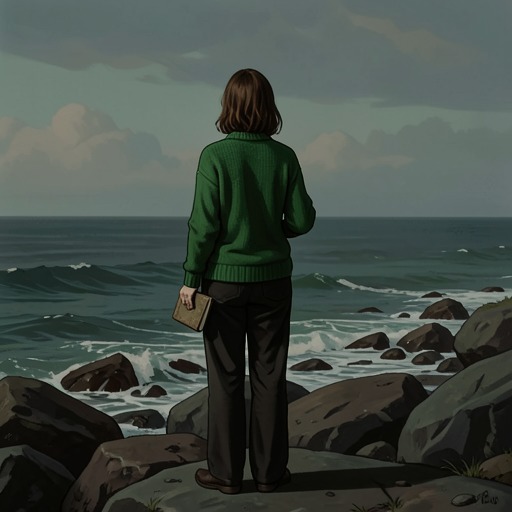
Laura describes Earth as suffering a fever, a condition that may itself act as a regulating force and allow the planet to recover. She names this living Earth Gaia, explaining that the name refers to Mother Earth and that the important shift is to regard the planet as alive. Her formulation gives Earth more than the role of scenery or a passive resource: the planet becomes the subject of a process of illness and healing.
The hypothesis takes on a stark consequence when Laura says that Gaia may destroy the microbes that have made her sick. Humanity is the threat in this comparison. People are damaging the conditions of life on Earth while also destroying their own habitat, and Laura imagines that Gaia will rid herself of them. The prospect is not that human society will solve the crisis, but that the planetary system may persist by removing the species responsible for the damage.
Laura invokes the extinction of the dinosaurs as an earlier instance of planetary recovery. She notes that the cause of their extinction is not certain, and relays a theory that their own biological processes may have contributed to it. The episode matters to her argument less as a settled scientific explanation than as a pattern: a mass extinction can be followed by renewal, so the destruction of human life need not mean the end of Earth.
Ecological evidence and human impact
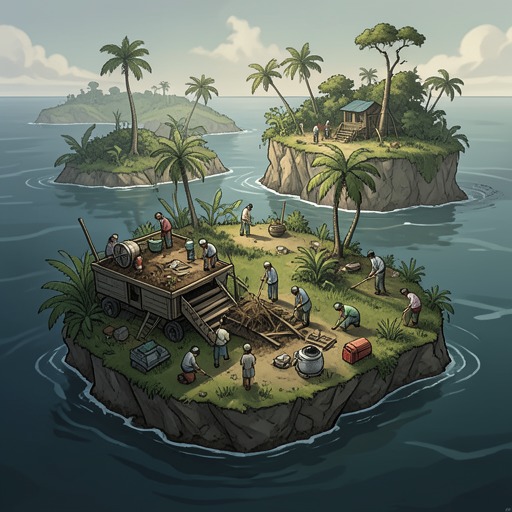
The ecological account surrounding Laura’s argument gives the planetary crisis a specific setting in Taveuni and the wider Pacific. Frank’s work concerns the effects of imported plant and animal species on local ecological balance. He describes accidental arrivals such as rats, mice, insects, and lizards, deliberate introductions such as opossums and mongooses, and domestic animals that escaped or were abandoned. These introductions were often intended to control other species or support agriculture, but they could disrupt the systems they were meant to manage.
The larger pattern is a chain of attempted corrections. In the Pacific islands, introduced rats and insects prompted further introductions, including toads and cats; those species in turn became pests, encouraging the arrival of predators that harmed native birds and reptiles. Each intervention could produce a new ecological problem rather than restore the older balance. Alongside introduced species, deforestation and the reckless exploitation of plantations eroded land and damaged traditional habitats. The result is a regional crisis in which species endangerment cannot be attributed to a single cause or reversed by a quick replacement.
Taveuni offers a contrasting but qualified example. The island has more than a hundred bird species, including the native Orange-breasted Pigeon, and its birdlife remains unusually rich in part because the Indian mongoose was never introduced there. Yet introduced magpies and toads have still displaced or pressured native life: the toads pushed original frogs toward the forests. The surviving abundance does not mean the island is untouched. It shows instead how specific introductions can alter relations among species, while the absence of one destructive predator can matter greatly to what remains.
The novel also presents a local response to the same conflict between immediate profit and long-term ecological survival. In Bouma, villagers considered an offer of money for logging forest land, then rejected it and supported turning the area into a national park. The protected forest covers five thousand hectares; local residents maintain trails and provide visitor facilities, making ecotourism a potential source of income that could last longer than the payment for logging. This decision gives environmental protection a human and economic context: preserving the forest is not simply an abstract appeal to nature, but a choice about who controls local resources and what forms of livelihood can endure.
Laura’s account of identity
Laura extends the Gaia idea from planetary survival to personal identity. She says that the present form in which she lives will die, but that she is also the living planet and has a deeper, more lasting identity within it. Her distinction turns death from a total end into a change of scale: an individual body is temporary, while the life shared with Earth continues in other forms.
She grounds this claim in the common ancestry of life. When Frank gives the conventional biological answer that all life on Earth descends from a single macromolecule, Laura draws a philosophical conclusion from that shared origin: Earth is one living organism, not merely by metaphor. She points toward a hibiscus and says that she is related to it; indeed, she describes her kinship with the plant as closer than the relation between two drops in the sea. Her argument makes the connection between organisms more intimate than ordinary visual or spatial proximity suggests.
Laura then sacralizes the origin she has described. If life descends from a single ancestral molecule, she says, that source would be inconceivable and could be called divine; Gaia, in turn, could be called a goddess. When Frank asks whether Gaia is Laura’s own self, she includes him and the hibiscus in the same identity. The claim therefore does not reserve divinity or planetary belonging for humanity. It makes the human, the plant, and Earth expressions of a shared life.
Scientific debate and retrospective purpose
The Gaia discussion belongs to the novel’s wider examination of whether biological evolution is driven only by unpredictable mutations and natural selection or might also involve intention and purpose. José challenges Frank, a biologist, to consider whether the sciences may overlook such questions. Frank initially responds with the standard scientific account and is wary of a teleological explanation, recalling that his biological training led him to reject ideas of evolution directed toward a goal.
The debate does not simply replace biological mechanisms with a claim of design. Frank acknowledges that features such as eyes, flight, and upright walking have evolved more than once, but he explains adaptation through inherited variation: individuals with a small advantage in the struggle for existence are more likely to pass on their genes. The disagreement concerns what such repeated developments mean. José argues that human consciousness may be the purpose of life’s process rather than an arbitrary trait among many, and describes nature as moving toward an increasingly comprehensive intellectual vision. The narrative places that purpose claim beside, rather than inside, Frank’s explanation of mutation and selection.
John develops a related idea through the language of a future goal. He argues that it would have been premature, three hundred million years ago, to call life absurd or purposeless merely because its purpose had not yet had time to flourish. Humanity may belong to the vanguard without having reached the destination; the direction of evolution might only become intelligible in a future hundreds, thousands, or millions of years away. On this account, what happens in the future can function as a cause of meaning in the present, even though Frank objects that causes ordinarily point backward in time and cannot belong to the future.
That dispute clarifies the conceptual difference between Gaia and a directed theory of evolution. Laura’s planetary organism is presented through ecological crisis, shared biological ancestry, and the possibility of self-regulation. The argument about evolution’s goal asks a further question: whether the emergence of consciousness is merely one contingent outcome of natural history or the end toward which that history was moving. The novel allows the ideas to resonate without making the ecological hypothesis itself proof that evolution has a predetermined destination.
Significance and limits
The concept’s force lies in the double scale it gives the reader. Taveuni’s introduced species, habitat loss, and threatened native life show ecological imbalance as a material consequence of human choices. Laura’s Gaia extends that local pattern to planetary life, imagining Earth as able to recover on a scale that does not privilege human survival. Bouma’s protected forest, meanwhile, offers a practical counterpoint: people can choose conservation and a livelihood linked to the living landscape rather than treating it solely as timber or commodity.
The text also leaves an important distinction visible between scientific account and metaphysical interpretation. Common ancestry supports the biological connectedness Laura emphasizes, but her further descriptions of Earth as a goddess and of all life as one deeper self are philosophical and spiritual extensions of that fact. Likewise, the possibility that a planet could recover after a mass extinction does not demonstrate that humanity’s disappearance is inevitable. The Gaia Hypothesis functions in the novel both as a way to apprehend ecological interdependence and as a challenge to human-centered ideas of permanence; its most severe implication is that Earth’s continued life and humanity’s continued life are not necessarily the same outcome.