Taras
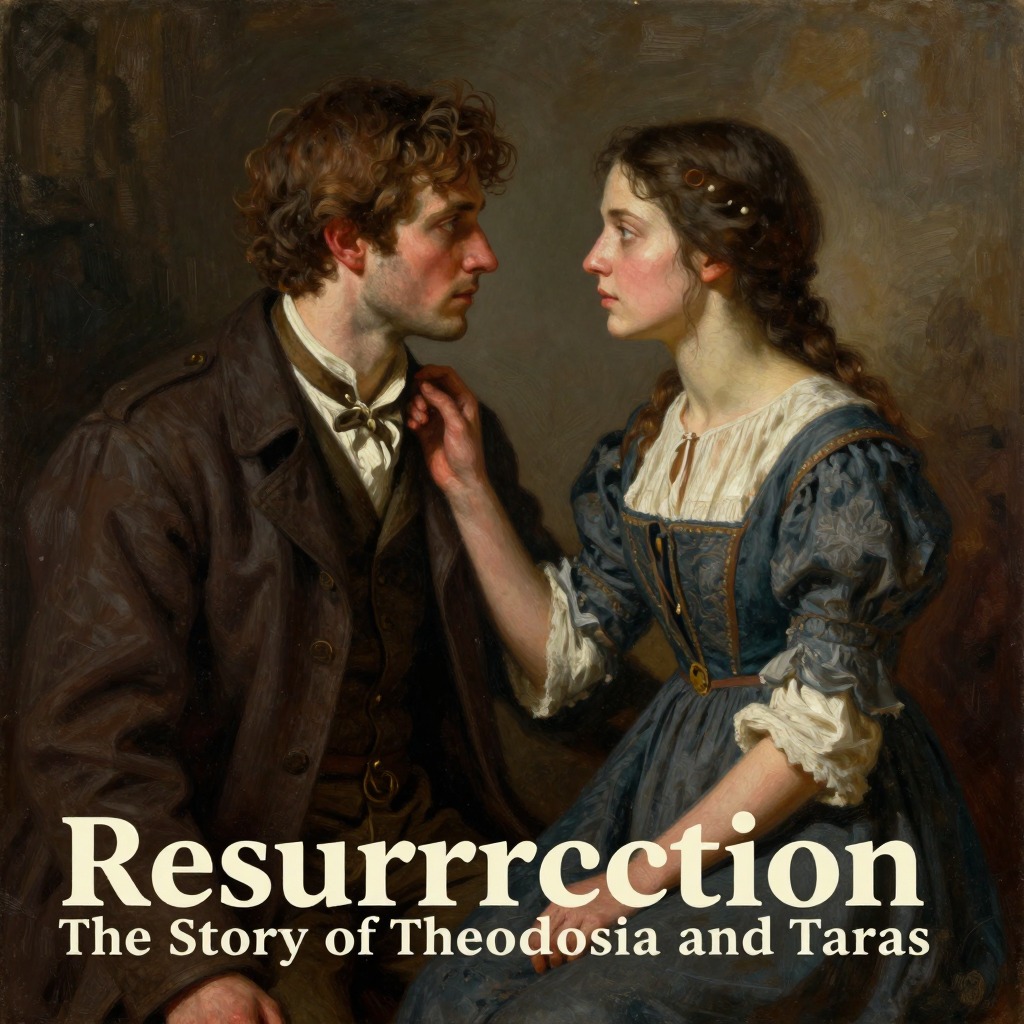
ResurrectionTaras is a peasant whose story of forgiveness and devotion unfolds as a quiet counterpoint to the novel's central themes of moral awakening and sacrificial love. He is the husband of Theodosia Birukoff, a young woman who, shortly after their forced marriage, attempted to poison him with arsenic-laced cake because she found him hateful. Rather than abandoning her to punishment, Taras chose to follow her into Siberian exile, a decision that transforms him from a wronged husband into a figure of extraordinary compassion and steadfastness.
Identity and Background
Taras is a peasant of simple origins, described as a man who, when sober, is nearly silent but who becomes pleasantly talkative after drinking, which happens rarely and only on special occasions. When he does speak, he does so well, very simply and truthfully, and with great kindliness that shines from his gentle blue eyes and the friendly smile that never leaves his lips. He is physically strong, capable of lifting a bag weighing more than five stone as if it were a feather, and he works the land with skill and endurance. His life is rooted in the rhythms of peasant labor: he mows, reaps, and carts sheaves, and he takes pride in his ability to work hard.
The Crime and the Trial
Theodosia's attempt on Taras's life occurred early in their marriage. She had been given in marriage without her consent at the age of sixteen, and her husband would give her no peace. She procured arsenic, kneaded it into a cake, and served it to Taras. He fell violently ill, vomiting and rolling with pain, but survived. Theodosia confessed everything to the magistrate—where she got the arsenic, how she made the cake, and her motive: "Because he's hateful to me. I prefer Siberia to a life with him." She was arrested and imprisoned. Taras's father, a just old man, urged mercy, saying, "The little woman is a mere child, and did not herself know what she was doing. We must have pity." But Theodosia's mother insisted on prosecution, and the case went forward.
The Journey of Forgiveness
After Theodosia's imprisonment, Taras's family managed to bail her out through a clerk who, for three roubles, produced the necessary papers. Taras himself went to fetch her from prison, driving a mare and cart. On the way home, they were silent until, nearing the house, Theodosia asked after his parents and then said, "Forgive me, Taras, for my folly. I did not myself know what I was doing." Taras replied, "Words won't mend matters. I have forgiven you long ago." From that moment, a profound change occurred. Theodosia threw herself into farm work with such eagerness that Taras had to stop her; she became kinder, clinging to him "as if we were one soul." Even his mother, who had been angry, admitted, "It's as if our Theodosia had been transformed; she's quite a different woman now!" When Taras later asked her how she could have thought of poisoning him, she answered, "Now you're in my heart."
Exile and Devotion
When Theodosia was sentenced to hard labor in Siberia, Taras voluntarily arranged to be arrested at his own desire in Nijni Novgorod so that he could travel with the gang and protect her from the molestations of other prisoners. He marched with the convicts, carrying her water for tea and enduring the same hardships. During the journey, he was beaten in a fight with another prisoner, Blind Fedka, leaving his face disfigured with dark bruises on his nose and under his eye, but he bore this with a smile. He traveled in the same third-class carriage as Nekhludoff, sitting opposite a gardener and telling his story with cordial friendliness. His presence provided Theodosia with constant protection and companionship, and he became a familiar figure among the political prisoners who admired his devotion.
Relationships and Significance
Taras's relationship with Theodosia is the novel's most explicit example of a marriage restored through forgiveness. His decision to follow her into exile mirrors Nekhludoff's own resolve to accompany Maslova, but Taras acts without the burden of guilt or the need for self-justification; he is motivated purely by love and a sense of duty. His story also contrasts with the cruelty of the prison system: while officials and guards treat prisoners as less than human, Taras demonstrates that even the most grievous wrong can be met with compassion. Nekhludoff, who hears Taras's story in full for the first time during the train journey, is deeply moved by it, and the two men share a bond of mutual respect. Taras's quiet heroism—his willingness to suffer for the woman who tried to kill him—underscores the novel's central argument that the only way to overcome evil is through love and forgiveness, not punishment.