Therapont Emelianovich Smelkoff
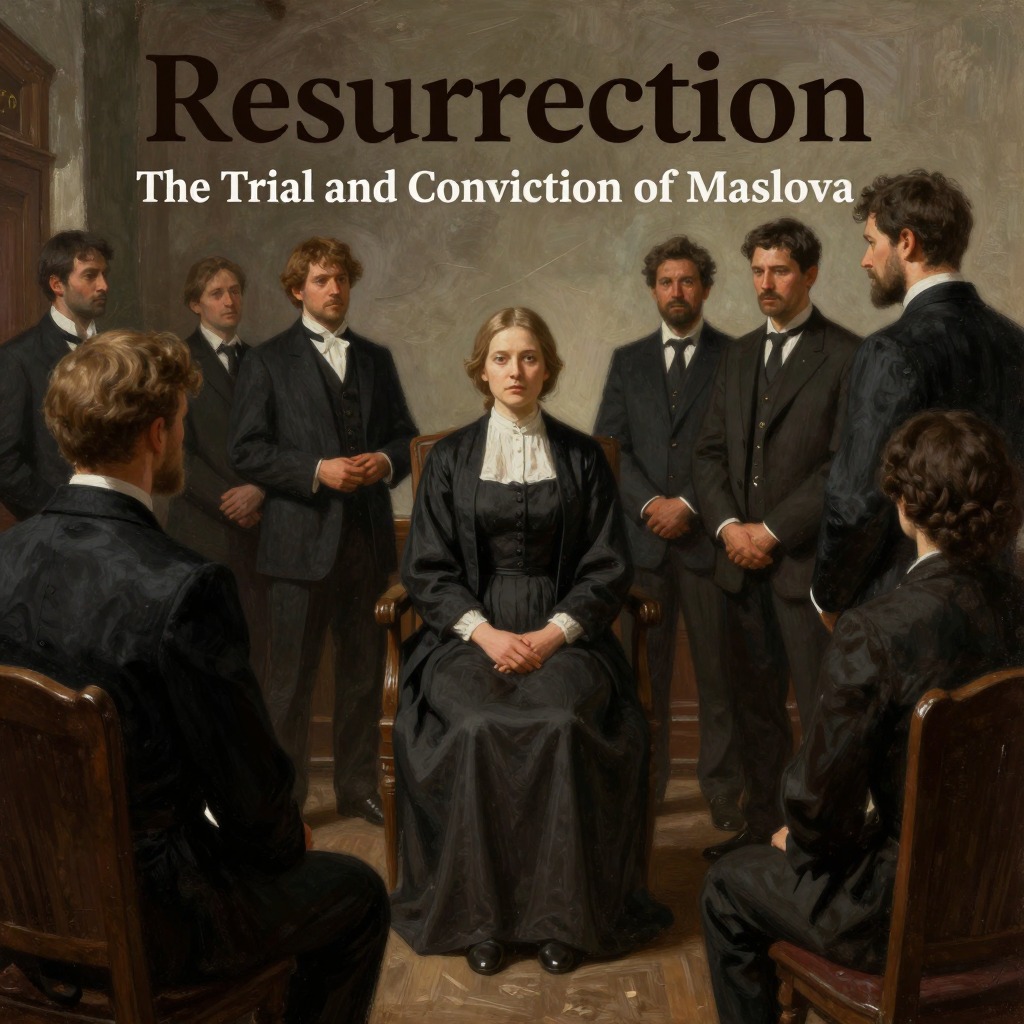
ResurrectionTherapont Emelianovich Smelkoff is a wealthy Siberian merchant of the Second Guild from Kourgan whose sudden death by poisoning in the Hotel Mauritania on 17 January 188- sets the central legal case of the novel in motion. Though he appears only through the testimony of others, his corpse, and the indictment, Smelkoff functions as a catalytic figure: his lavish spending, his trust in the prostitute Katerina Maslova, and his violent temper create the circumstances that lead to his death and to Maslova's wrongful conviction for murder and theft. His physical remains—described in grotesque, clinical detail during the trial—become a symbol of the degradation that links the merchant's carousing, the prison system, and Nekhludoff's own moral corruption.
Identity and Background
Smelkoff is identified in the indictment as a Second Guild merchant from Kourgan, a town in Siberia. He is described as a man of the "genuine Russian type" by the public prosecutor, who claims he perished because of his "generous, trusting nature" . The merchant Baklasheff, a fellow juryman, admiringly calls him a "real Siberian" who "knew what he was about" . The indictment states that shortly before his death, Smelkoff had withdrawn 3,800 roubles from the bank, but when an inventory of his property was made after his death, only 312 roubles and 16 copecks were found . The external medical examination records that Smelkoff was six feet five inches tall and looked about forty years old . The merchant Baklasheff, trying on Smelkoff's diamond ring, remarks that the merchant's finger was "like a cucumber" .
The Night of His Death
On the day and night preceding his death, Smelkoff spent his time with Maslova, first at the brothel run by Carolina Albertovna Kitaeva and then at the Hotel Mauritania . According to the indictment, Maslova was sent by Smelkoff from the brothel to the hotel to get money from his portmanteau, using a key he gave her. In the presence of the hotel servants Euphemia Botchkova and Simeon Kartinkin, she opened the portmanteau and took out forty roubles, though the servants saw packets of 100-rouble notes inside . When Smelkoff returned to the hotel with Maslova, she, acting on Kartinkin's advice, gave him a white powder dissolved in brandy, which she believed to be a sleeping draught . Maslova later testifies that Smelkoff was "already very drunk" when she arrived, that he beat her, and that he gave her the diamond ring himself when she threatened to leave . The postmortem examination and chemical analysis of his intestines proved the presence of poison in his organism, leading to the conclusion that his death was caused by poisoning . The internal examination found a great quantity of alcohol in his stomach, leading the doctor to suppose the poison had entered mixed with alcohol .
The Corpse as Evidence
The reading of the medical report during the trial provides a lengthy, clinical description of Smelkoff's decomposing body. The external examination notes that the body was of a swollen appearance, the flesh a greenish colour with dark spots, the skin raised in blisters and coming off in large pieces, the hair chestnut and easily separated from the skin, the eyeballs protruding from their sockets, and the cornea grown dim (E00561–E00570). The report continues with the internal examination, describing the condition of the skull, brain, stomach, bowels, and kidneys (E00575–E00577). Nekhludoff, listening to this reading, feels his "indefinite loathing" increase, and he connects the description of the corpse with Katusha's life and his own treatment of her, feeling "surrounded and wholly absorbed by things of the same nature" .
Narrative Role and Significance
Smelkoff is never a living character in the novel's present action; he exists only as a dead body, a name on an indictment, and a subject of testimony. Yet his death is the engine of the plot, the event that brings Maslova to trial and forces Nekhludoff to confront his past. The public prosecutor's speech characterizes Smelkoff as a "kind-hearted Sadko, the rich guest" who fell into the hands of "deeply degraded individuals" . The merchant Baklasheff's crude admiration for Smelkoff's lifestyle—"Real Siberian fashion! He knew what he was about, no fear!" —contrasts sharply with the horror of the autopsy report. Smelkoff's corpse, with its "serous liquid" oozing from nostrils and ears, becomes a grotesque emblem of the physical and moral decay that the novel's legal and social systems both produce and conceal. The merchant's death, and the way it is processed by the court, reveals the arbitrary and dehumanizing nature of the criminal justice system that Tolstoy condemns throughout the novel.