Mariette
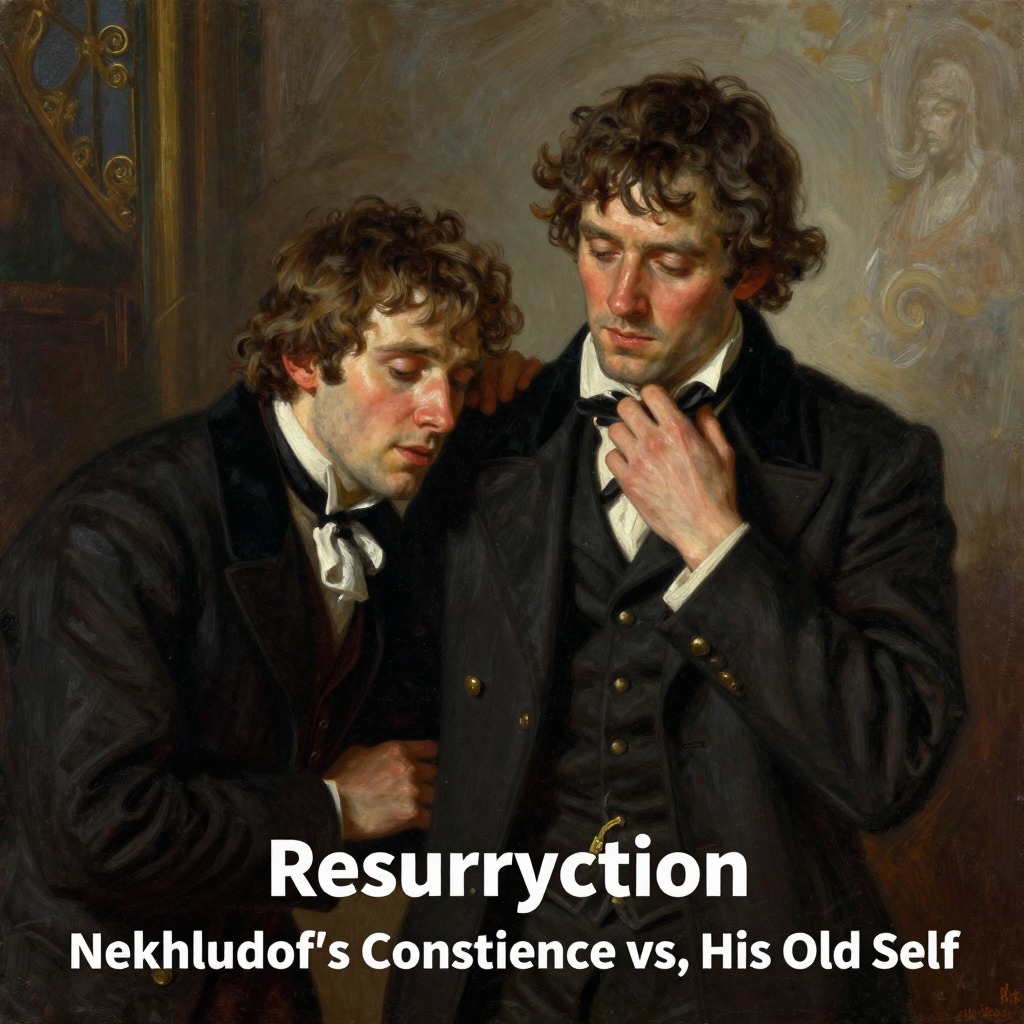
ResurrectionMariette is a central figure in the Petersburg section of Resurrection, representing the seductive allure and moral emptiness of the aristocratic world that Nekhludoff struggles to leave behind. The wife of General Tcherviansky, she moves with effortless grace through high society, wielding her beauty and connections as instruments of power. Her encounters with Nekhludoff reveal the tension between his awakening conscience and the pull of a life he has come to despise.
Identity and Social Position
Mariette is introduced as the wife of a general whose influence she can deploy for favors. Nekhludoff's aunt, Countess Katerina Ivanovna Tcharsky, describes her as "très gentille" and offers to write to her on Nekhludoff's behalf, noting that Mariette can persuade her husband to act. When Nekhludoff first calls on her, he finds her house guarded by a doorkeeper in "wonderfully clean livery" and footmen with "splendid whiskers well combed out," with a pair of English horses and an English-looking coachman waiting outside. She herself descends the stairs "with rapid steps not in keeping with all the grandeur," wearing a large hat with feathers, a black dress and cape, and new black gloves, her face covered by a veil. When she lifts the veil, she reveals "a very pretty face with bright eyes." She remembers Nekhludoff from their youth, telling him, "Why, I and my sisters have even been in love with you." Her manner is soft, pleasant, and effortlessly charming.
Role as Intermediary and Manipulator
Mariette's primary function in the narrative is as a conduit to power, using her husband's position to secure the release of prisoners. When Nekhludoff asks her to help Lydia Shoustova, a young woman imprisoned in the fortress, she writes him a note the next morning: "Pour vous faire plaisir, j'ai agi tout à fait contre mes principes et j'ai intercédé auprès de mon mari pour votre protégée. Il se trouve que cette personne peut être relaxée immédiatement." She invites him to visit her "désintéressement," a word that underscores the transactional nature of their relationship. Nekhludoff is horrified by the ease with which an innocent woman is freed after seven months of solitary confinement, and Mariette's casual complicity in this system disturbs him. She herself acknowledges the absurdity, saying, "When my husband told me she could be set free, it was this that struck me, 'What was she kept in prison for if she is innocent?'" Yet she continues to operate within this system, using her influence without challenging its injustice.
The Seduction and Its Moral Ambiguity
Mariette's interactions with Nekhludoff are charged with sexual tension and emotional manipulation. At the Countess's tea, she notices his serious, dissatisfied look and instantly changes her expression and attitude to please him, "reproducing in herself the very same state of mind that he was in." She tells him, "I understand your feelings, and I understand her," though she knows nothing of Maslova. She speaks of "the willingness to give one's life" for the suffering, and Nekhludoff, despite himself, is drawn in. Later, at the theatre, she invites him to her box, where she appears in a low-necked dress showing "her firm, shapely, slanting shoulders, with a little black mole where they joined her neck." She has nothing of substance to tell him; she merely wishes to display herself. Nekhludoff recognizes that "she was a liar, living with a husband who was making his career by means of the tears and lives of hundreds and hundreds of people, and that she was quite indifferent about it." He compares her to a prostitute on the Nevski, noting that the difference is only one of degree: the street woman is honest about her transaction, while Mariette "pretended that she was not thinking of this, but living in some high and refined state." He concludes that her kind of attraction is "the poison which, unnoticed, poisons everything it gets into."
Theatrical Encounter and Nekhludoff's Rejection
At the theatre, Mariette's husband, the General, sits with "a severe, inscrutable countenance," and the look he exchanges with his wife reveals "the master, the owner of a beautiful woman." When Nekhludoff mentions the suffering he has witnessed, Mariette's husband responds with "evident irony." Mariette herself makes no attempt to discuss anything serious, instead joking about the performance. Nekhludoff feels both attracted and repulsed. He leaves the theatre before the final act, and as he walks home along the Nevski, he sees a well-shaped woman on the pavement and realizes that the same "detestable power" is at work in both women. He recognizes that Mariette's smile, like the prostitute's, is an invitation to use her, but Mariette's is disguised as refinement. This recognition crystallizes his rejection of the aristocratic world: "Everything considered important and good was insignificant and repulsive, and that all the glamour and luxury hid the old, well-known crimes."
Thematic Significance
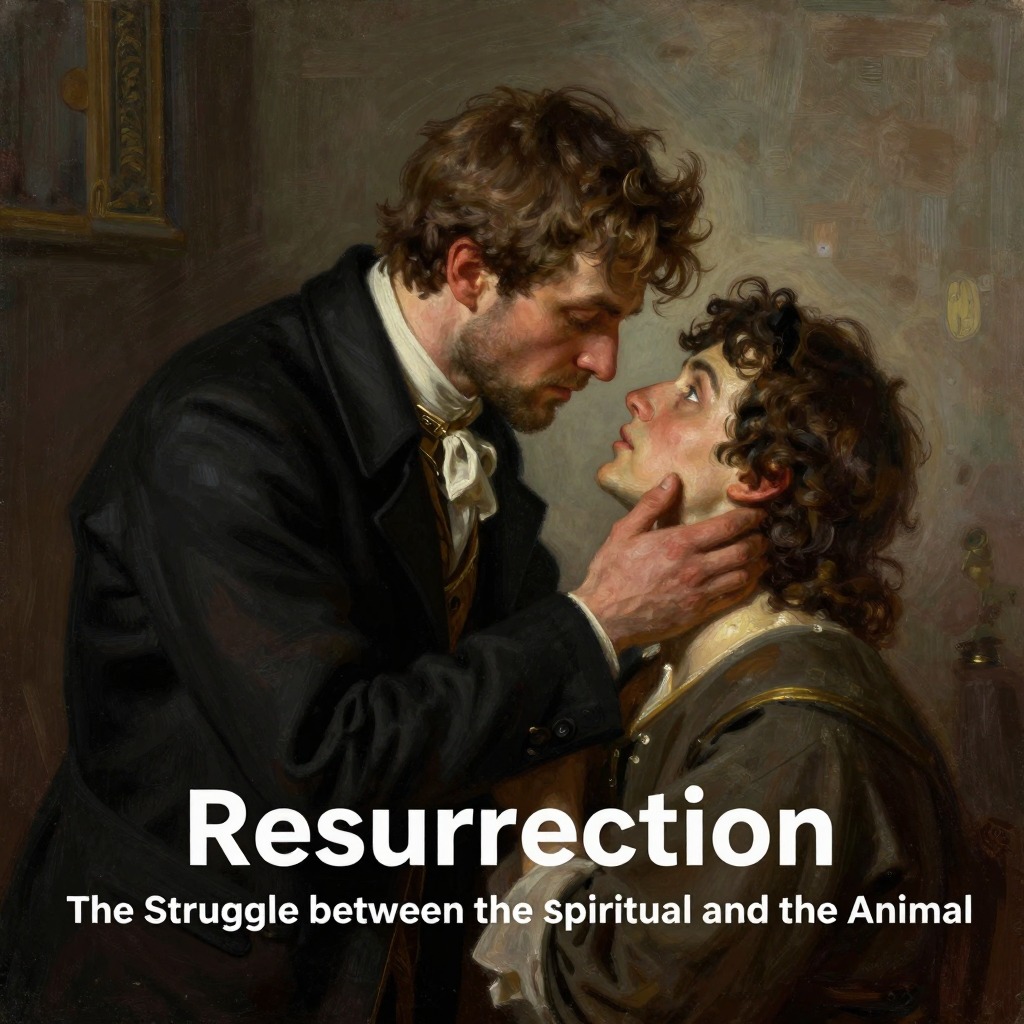
Mariette functions as a foil to both Maslova and Nekhludoff's moral awakening. Where Maslova is a victim of the system who ultimately finds redemption through suffering and love, Mariette is a willing participant in the same system, using her beauty and social position to maintain her comfort. She represents the "animalism" that Nekhludoff identifies as the root of social evil: the desire for pleasure and power that is masked by poetry, aesthetic feeling, and the trappings of high society. Her presence in the novel forces Nekhludoff to confront the fact that the corruption he seeks to escape is not confined to prisons and courts but permeates the drawing-rooms of Petersburg. His final refusal to be drawn into her orbit marks a decisive step in his spiritual journey, even as he acknowledges the power of her attraction.