Nepomnishy
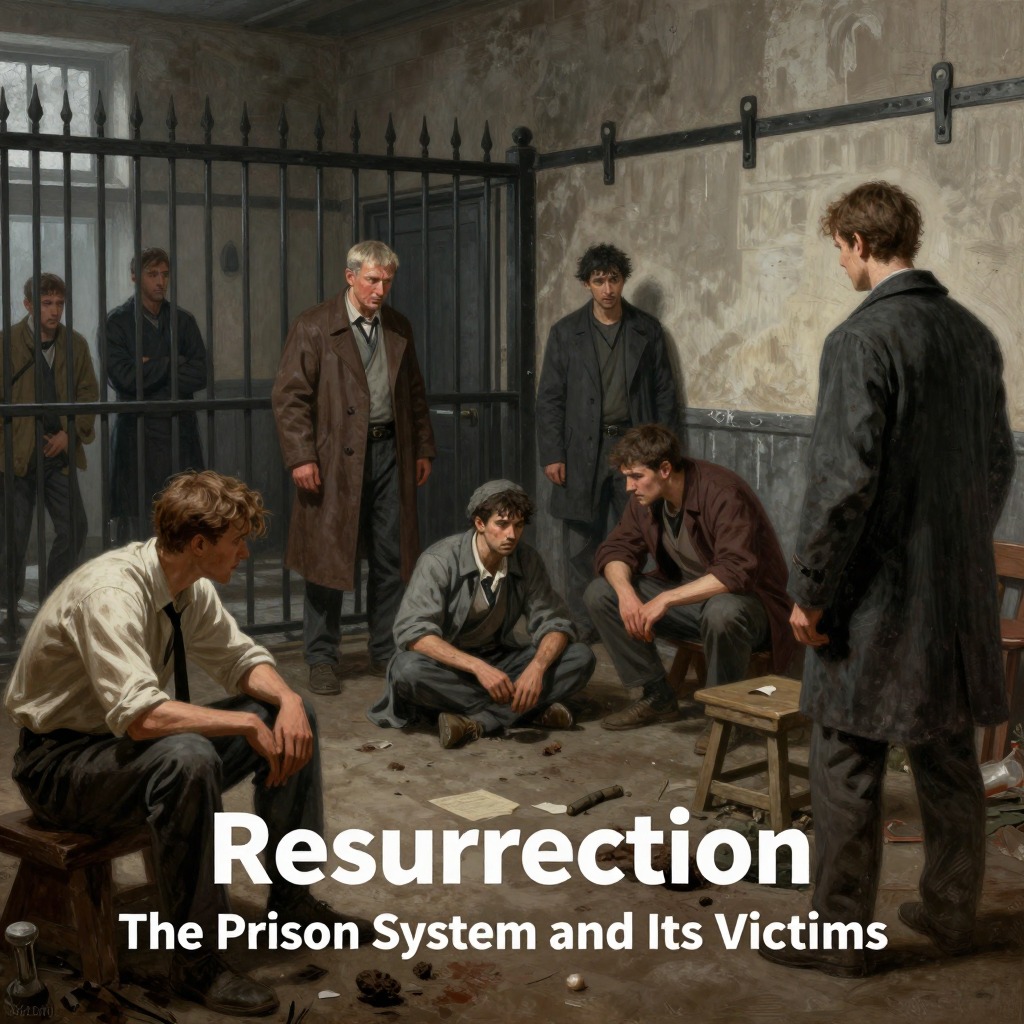
ResurrectionNepomnishy is a tramp and convict who appears in the prison narrative as one of the two chief offenders subjected to corporal punishment after a disturbance in the solitary cells. His name, which means "the one who does not remember" in Russian, marks him as a rootless, anonymous figure, a man without a past or family ties, typical of the lowest stratum of the criminal population. Alongside Vasiliev, a young clerk who had killed his mistress in a fit of jealousy, Nepomnishy is singled out for flogging after a rebellion that broke out when Vasiliev resisted being placed in a solitary cell. The prison authorities, having been informed that something like a rebellion had taken place, send back an order to flog the two chief offenders, each receiving thirty strokes with a birch rod. The flogging is appointed to take place in the women's interviewing-room, a detail that underscores the calculated humiliation of the punishment. The event is known throughout the prison since the evening before, and is discussed with animation in all the cells, including the women's ward where Maslova and her companions drink tea and talk about it. The women prisoners, including Korableva, Khoroshavka, Theodosia, and Maslova, sit together in their corner, flushed and animated by the vodka they have drunk, and discuss the impending flogging. Korableva remarks that Vasiliev "only stuck up for a chum, because it's not lawful to strike prisoners nowadays," and Theodosia expresses her horror at the prospect. The women listen to the sounds of voices and steps in the corridor above them, and Khoroshavka says, "There they are, hauling him along, the devils! They'll do him to death, they will. The jailers are so enraged with him because he never would give in to them." The flogging of Nepomnishy and Vasiliev is thus presented as a routine act of state violence, carried out with bureaucratic efficiency and without any pretense of justice or reform. The episode serves as a stark illustration of the prison system's brutality, where men are reduced to objects of punishment, their suffering treated as a matter of course by the authorities and as a topic of grim fascination by the other prisoners. Nepomnishy himself remains a shadowy figure, defined not by his individual character or history but by his role as a victim of the system, a nameless tramp whose body is marked by the state's power. His flogging, together with Vasiliev's, is one of the many acts of cruelty that Nekhludoff witnesses during his journey through the prison world, and it contributes to his growing conviction that the entire system of punishment is not only ineffective but morally corrupting. The incident also highlights the complicity of the prison staff, from the governor who orders the flogging to the jailers who carry it out, and the indifference of the higher authorities who permit such practices to continue. Nepomnishy's fate, like that of so many other convicts, is to be crushed by a machine that treats human beings as raw material for punishment, a process that Nekhludoff comes to see as the central evil of the society he is trying to understand and reform.