Menshova
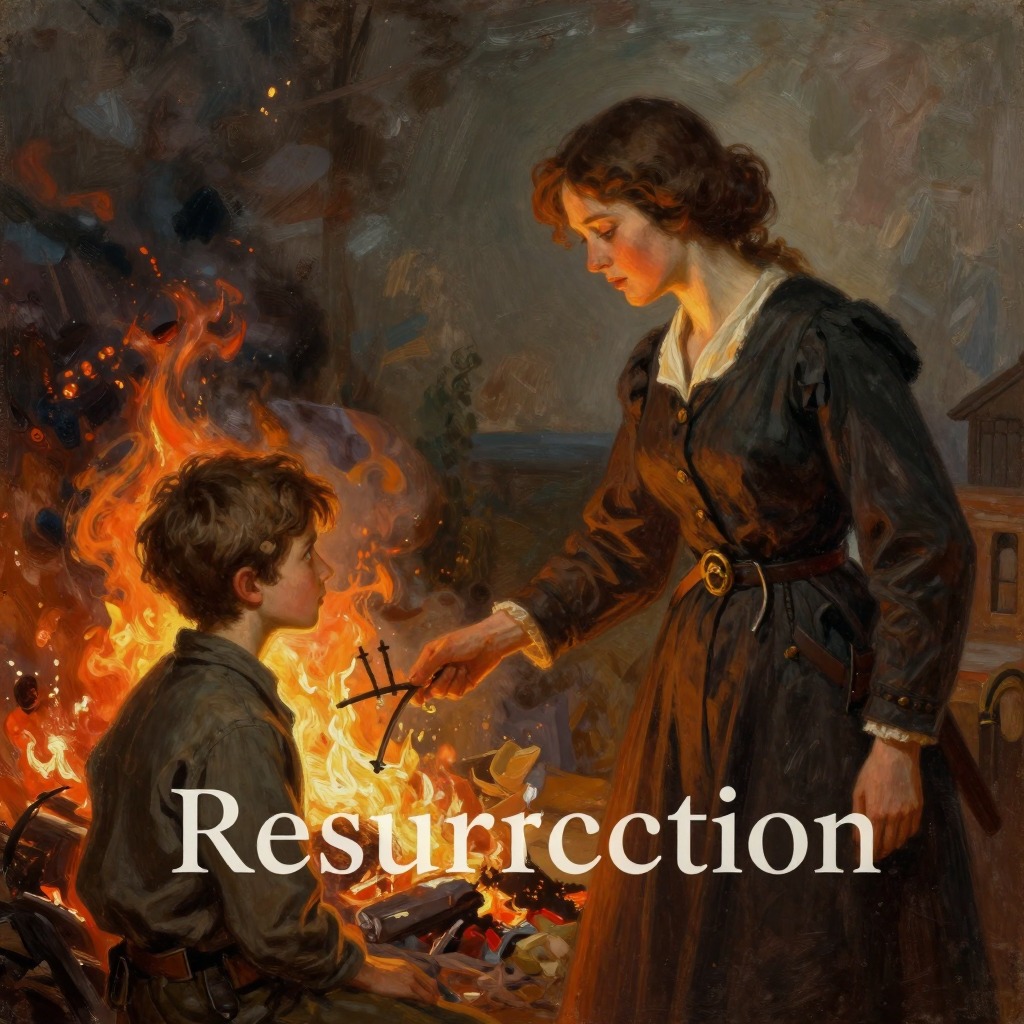
ResurrectionMenshova is an elderly peasant woman imprisoned with her son Mitri Menshoff on false charges of arson, whose case becomes a symbol of judicial injustice and a catalyst for Nekhludoff's moral awakening.
Identity and Background
Menshova is a peasant woman, described by Maslova as "such a fine old woman" and "such a splendid old woman" . She is imprisoned together with her son Mitri Menshoff, accused of setting fire to a public house. The true culprit, according to the evidence, is the public-house keeper himself, who had insured the property shortly before the fire and whose own workman witnessed the act . Menshova maintains her innocence throughout her imprisonment, insisting that she and her son "did not set fire to the house, but he himself, the fiend, did it" .
Imprisonment and Suffering
Menshova's imprisonment is marked by a profound sense of injustice and bewilderment. She is described as a "kindly, grey-haired old woman, hunchbacked and with a flat bosom" who bears her imprisonment "with perfect cheerfulness" but is chiefly concerned about her son and her husband, who she fears "would get into a terrible state with no one to wash for him" . Her son Mitri is a young man with "kind, round eyes" who tells Nekhludoff his story with a "good-natured expression" . The Menshoffs' case is one of the most egregious examples of judicial error in the novel: the public-house keeper had enticed Mitri's wife away, and when Mitri tried to reclaim her, he was beaten. The fire broke out the next day, and the Menshoffs were accused despite Mitri's alibi that he was visiting a friend at the time (E01558-E01560).
Role in the Narrative
Menshova's case serves as a crucial catalyst for Nekhludoff's moral awakening and his growing understanding of the systemic injustice of the legal system. Maslova, after her own unjust conviction, becomes an advocate for Menshova, repeatedly urging Nekhludoff to intervene. During their second prison interview, Maslova interrupts Nekhludoff's declaration of his intention to marry her to plead for Menshova: "There's something I want to say. We have here an old woman; such a fine one, d'you know, she just surprises every one; she is imprisoned for nothing, and her son, too, and everybody knows they are innocent, though they are accused of having set fire to a house" . Maslova's plea is so urgent that she asks Nekhludoff to "ask to see my son; he'll tell him all about it" .
Nekhludoff responds to this plea by visiting Mitri Menshoff in his cell, where he hears the full story of the false accusation (E01558-E01565). The encounter deeply affects Nekhludoff, who later reflects on "the sufferings of the evidently innocent Menshoff" as "terrible, and not so much his physical suffering as the perplexity, the distrust in the good and in God which he must feel, seeing the cruelty of the people who tormented him without any reason" . This case, along with others, solidifies Nekhludoff's conviction that the legal system is fundamentally unjust and that "most of those condemned by law are innocent" .
Thematic Significance
Menshova's case embodies the novel's central critique of the judicial system as an institution that punishes the innocent while protecting the guilty. The advocate Fanarin, after reviewing the case, declares it "perfectly revolting" and notes that "there is no evidence to prove the Menshoffs' guilt" . The case is a prime example of what Nekhludoff later identifies as the first category of convicts: "quite innocent people, condemned by judicial blunder" . Menshova's steadfast innocence and her quiet dignity in the face of injustice make her a powerful symbol of the suffering inflicted by a corrupt and indifferent legal apparatus. Her case also demonstrates the solidarity among the prisoners, as Maslova, despite her own desperate situation, takes up Menshova's cause and becomes her advocate within the prison walls.