Maria Ivanovna
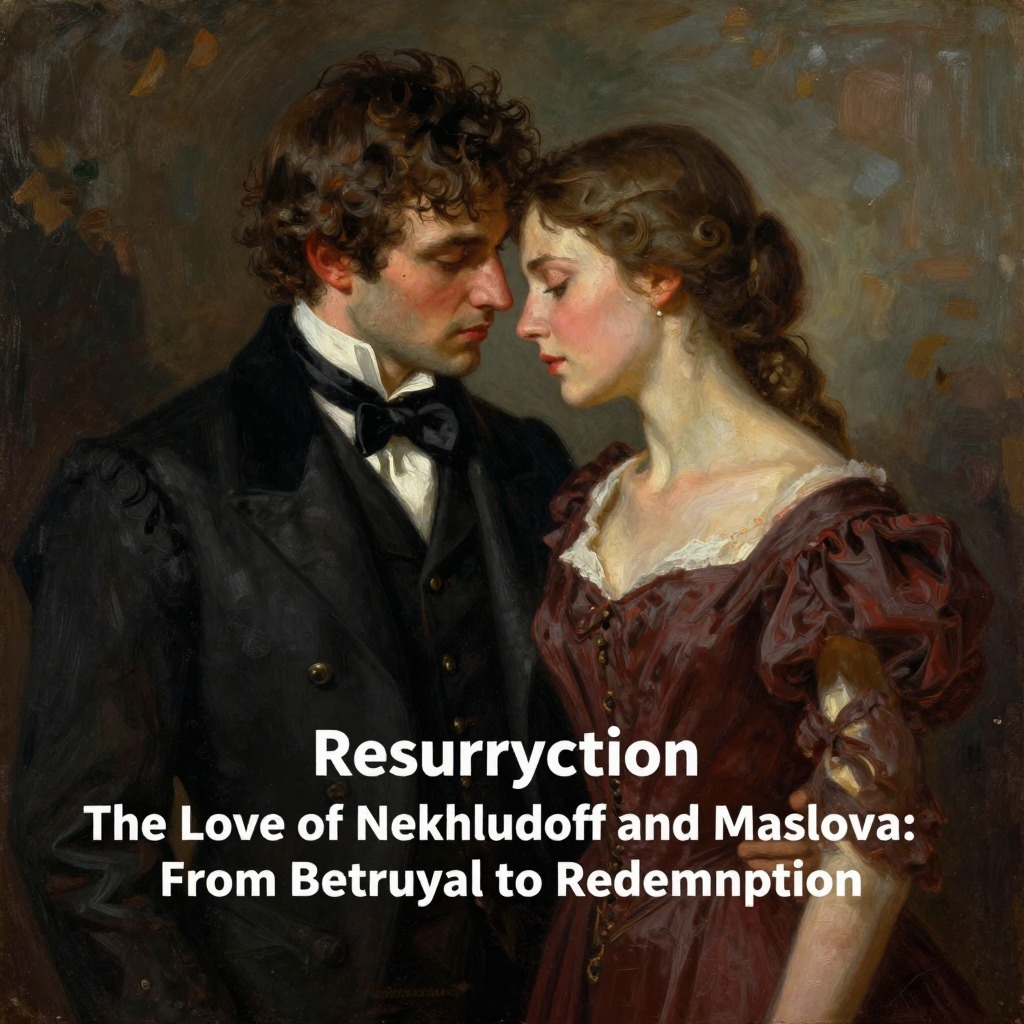
ResurrectionMaria Ivanovna is the elder of the two maiden sisters who raised Katerina Maslova, and she embodies the harsher, more exacting side of the household that shaped Maslova's early life. Where her younger sister Sophia Ivanovna dressed the girl in nice clothes and taught her to read and write, Maria Ivanovna thought the child should be brought up to work and trained her to be a good servant. She was exacting; she punished, and, when in a bad temper, even struck the little girl. Growing up under these two different influences, the girl turned out half servant, half young lady. Maria Ivanovna's severity, combined with Sophia Ivanovna's kindness, created the contradictory environment that defined Katusha's childhood and her ambiguous social position in the household.
Identity and Background
Maria Ivanovna was one of two maiden ladies who owned a dairy farm and employed Maslova's mother as a dairymaid. When Maslova's mother died, the sisters took the child from her grandmother, to whom she was nothing but a burden. The little black-eyed maiden grew to be extremely pretty, and so full of spirits that the ladies found her very entertaining. Maria Ivanovna, the elder, was rather hard. She was exacting; she punished, and, when in a bad temper, even struck the little girl. This harshness contrasted sharply with the kinder heart of her sister Sophia Ivanovna, who had stood godmother to the girl and offered to stand godmother to the baby, and who gave milk and a little money to the mother so that the baby should live.
Role in Maslova's Upbringing
Maria Ivanovna's approach to raising Katusha was fundamentally practical and disciplinary. She trained her to be a good servant, and the girl used to sew, tidy up the rooms, polish the metal cases of the icons and do other light work. The two sisters' differing philosophies created a divided upbringing: Sophia Ivanovna dressed the little girl in nice clothes and taught her to read and write, meaning to educate her like a lady, while Maria Ivanovna thought the child should be brought up to work. This dual influence produced a girl who was half servant, half young lady, a position that left her vulnerable when she later fell in love with their nephew, Dmitri Ivanovitch Nekhludoff.
Relationship with Nekhludoff
Maria Ivanovna was one of the aunts with whom Nekhludoff spent the summer when he first met Katusha. She was afraid Dmitri would form an intimacy with Katusha, but her fears were groundless, for Nekhludoff, himself hardly conscious of it, loved Katusha as the pure love, and therein lay his safety—his and hers. The more poetical Sophia Ivanovna feared that Dmitri, with his thoroughgoing, resolute character, having fallen in love with a girl, might make up his mind to marry her, without considering either her birth or her station. Maria Ivanovna's fears were more about a physical intimacy, while Sophia Ivanovna's were about a possible marriage. When Nekhludoff later returned to the estate, the peasants recognised him as "our ladies' nephew," referring to both sisters. The old photograph Nekhludoff later found in Panovo included both aunts, a student, and Katusha, a memento of the household that Maria Ivanovna helped to govern.
Narrative Significance
Maria Ivanovna represents the stern, class-conscious, and punitive aspect of the gentry that shaped Maslova's early life and contributed to her later vulnerability. Her harshness, combined with her sister's kindness, created the contradictory environment that left Katusha without a stable sense of her own identity or social place. When Maslova later fell pregnant and could no longer serve the ladies as she used to, they let her go, a decision that set her on the path to prostitution and eventual imprisonment. Maria Ivanovna's role in the story is thus that of a formative but unforgiving figure, whose treatment of the girl as a servant first and a human being second helped to prepare the ground for the tragedy that followed.