Theodosia Birukoff
ResurrectionTheodosia Birukoff is a young peasant woman whose story of forced marriage, attempted murder, and unexpected redemption forms one of the most poignant subplots in the novel. Married against her will at the age of sixteen, she tried to poison her husband because he would give her no peace. She was sentenced to hard labor in Siberia. Yet during the eight months she was out on bail before her trial, she not only reconciled with her husband but came to love him deeply, so that when her trial came they were heart and soul devoted to one another. Despite the efforts of her husband, father-in-law, and especially her mother-in-law, who had grown very fond of her, to secure her acquittal, she was condemned to hard labor in Siberia. Her journey with the convict gang becomes a testament to the resilience of love and the possibility of moral rebirth even within the brutal machinery of the Russian penal system.
Identity and Background
Theodosia is introduced as a quiet, pretty young girl with bright child's eyes and long fair plaits twisted round her head. She is described as white and rosy, with a gentle, loving nature. Her crime was committed immediately after her wedding, when she was only sixteen and had been given in marriage without her consent. Her husband, Taras, was a man she did not want, and she attempted to poison him with arsenic baked into a cake. The poisoning was discovered when Taras fell violently ill, vomiting and rolling in pain, and Theodosia confessed everything to the magistrate, stating plainly that she preferred Siberia to a life with him. This confession, made without hesitation, reveals both her desperation and her fundamental honesty.
Life in Prison and the Journey
Theodosia's cell in the prison is a large, crowded room where she occupies a place next to Maslova on the shelf bed. She is kind and attentive, taking it upon herself to wait on Maslova and showing concern for her well-being. When Maslova returns to the cell after her sentencing, Theodosia is the first to ask if she has eaten anything, and she keeps tea for her, wrapped in a rag. During the long march to Siberia, Theodosia walks among the women, dressed in a short cloak with her kerchief tied in peasant fashion, looking lovely and walking briskly. She is one of the few prisoners who maintains a cheerful disposition, and her presence brings a measure of warmth to the grim procession. When the gang stops at halting stations, she is often seen with Taras, who has followed her as a prisoner himself, and their mutual devotion is evident to all.
Relationship with Taras
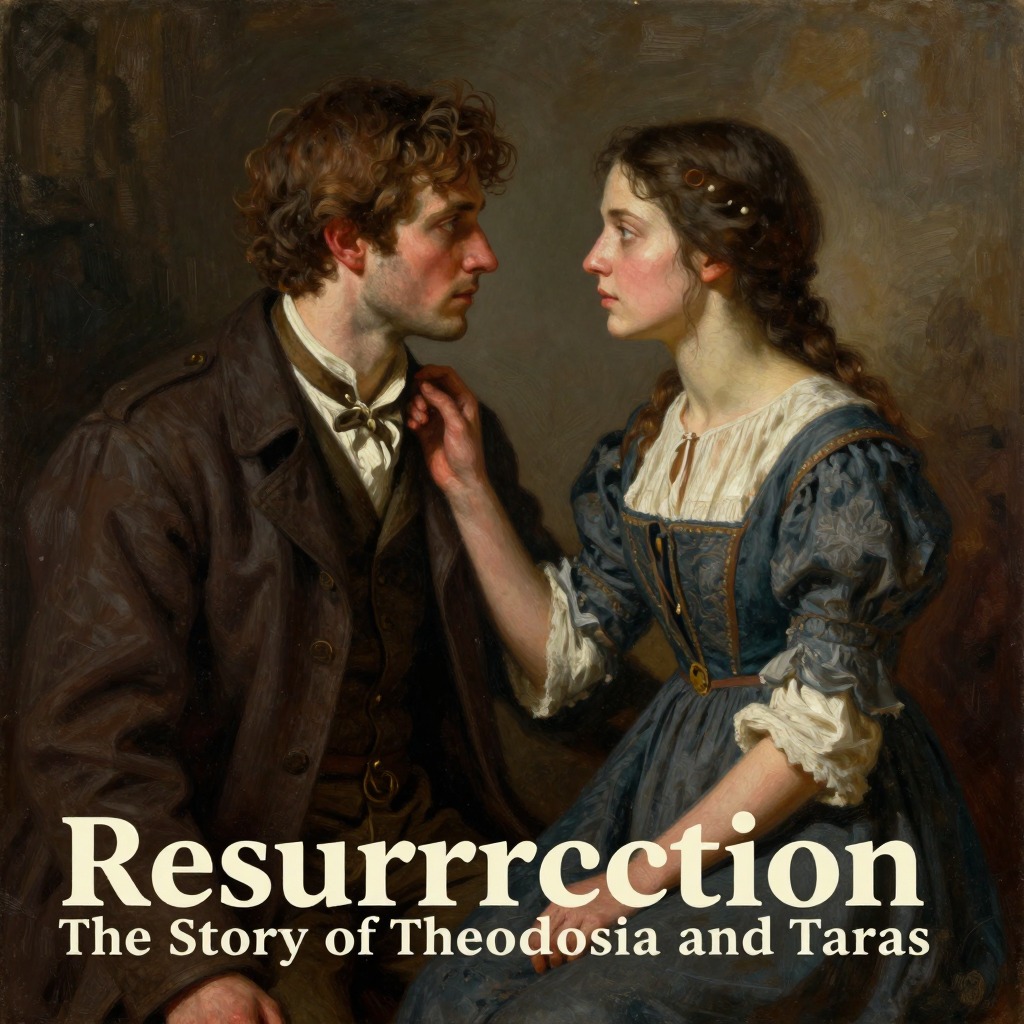
Theodosia's relationship with her husband, Taras, undergoes a complete transformation. After her arrest and release on bail, she returns to him and works alongside him in the fields with such eagerness that he has to stop her. She binds the sheaves, reaps the corn, and does more than her share, clinging to him as if they were one soul. Taras tells the story of her change with joyful surprise, recounting how she asked his forgiveness and how he forgave her long before. When she is sentenced to hard labor, Taras arranges to be arrested himself so he can accompany her and protect her from the molestations of other male prisoners. He travels with the gang as a prisoner, and during the journey he is seen carrying water for her tea and looking after her. Their love, born from the ashes of violence and hatred, becomes a model of forgiveness and devotion within the prison community.
Role Among the Prisoners
Theodosia is a source of comfort and kindness to her fellow prisoners, especially to Maslova. She is described as kind, merry, and ever-smiling, and she takes it upon herself to attend to Maslova's needs. When Maslova is distressed, Theodosia looks at her with loving concern, her clear blue eyes full of sympathy. She is also a practical help, keeping tea warm and sharing food. Her gentle nature and her obvious love for Taras make her a figure of hope and humanity in the midst of the degradation of prison life. She is one of the few prisoners who seems to have found peace and purpose, and her presence reminds others that love and redemption are possible even in the darkest circumstances.
Change and Ending
Theodosia's transformation from a desperate, abused girl who tried to kill her husband to a devoted wife who follows him into exile is complete. She tells Maslova that if one is not to live together, there is no use in marrying, and she is content to share her husband's fate. When Taras is beaten by another prisoner, she is distressed but remains steadfast. Her story, which Nekhludoff hears in detail from Taras on the train, becomes a testament to the power of forgiveness and the possibility of moral renewal. She is last seen walking with the gang, her face calm and determined, a living example of the novel's central theme that even the most broken lives can be restored through love and sacrifice.
Thematic Significance
Theodosia's story serves as a counterpoint to the more cynical narratives of the novel. While Maslova's journey is one of gradual awakening and Nekhludoff's is one of moral struggle, Theodosia's transformation is immediate and complete. She represents the possibility of redemption through love and the power of forgiveness to heal even the deepest wounds. Her relationship with Taras, which begins in violence and ends in devotion, mirrors the novel's central concern with the possibility of resurrection—the idea that even the most degraded human beings can be reborn through love and sacrifice. Her story also highlights the cruelty of a system that punishes a desperate child for a crime born of desperation, while offering no real justice or rehabilitation.