Founder's Home Burned Down and Sold
SatanThe burning and sale of the Founder's Home turn the D’Anjou family’s decline into a physical loss: the ancestral house where Loïc grew up is ruined, its land passes to Romuald Bolduc, and a proposed memorial is blocked. For Loïc, the transaction is not merely the disposal of property. It marks the disappearance of a place that might have held the family’s history in Touladi, and becomes part of his reckoning with grief, inheritance, and the fragility of historical traces.
Decline and Destruction
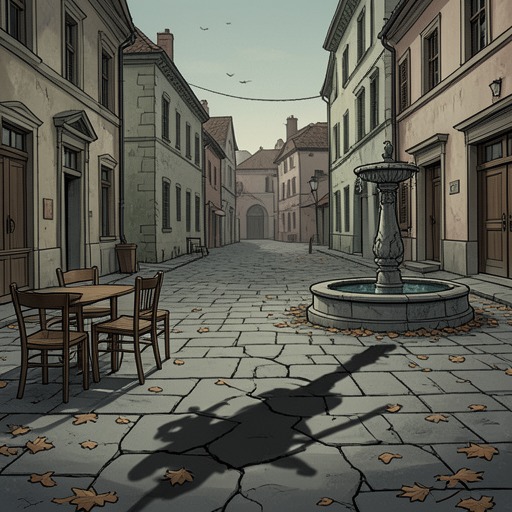
After Marie-Louise died and Laurette moved away, the Founder's Home stood empty and badly deteriorated. Romuald Bolduc wanted to buy it from the D’Anjou family, but they repeatedly refused. The old ancestral house was then ravaged from end to end by a fire. The D’Anjous suspected, almost to the point of certainty, that the blaze had been deliberately set and that Romuald was responsible. Their suspicion arose amid his systematic acquisition of houses and properties throughout the village, but his dominance in the small community left them without a practical way to gather evidence against him.
The Sale and the Failed Memorial
The ruined house and its land remained with the family for a time, but no other buyer came forward and the D’Anjous had no plans to rebuild in the near future. Loïc was left to sell the property to his wealthy uncle, Romuald, a task he undertook unwillingly and with deep revulsion. Pressure from the municipality helped force the sale; Romuald was the mayor, and the D’Anjous were selling a site whose possible public meaning he could also influence.
The family agreed to sell on the condition that the municipality erect a memorial stele to the village’s founder. The proposal was firmly opposed by Romuald and set aside shortly before his death. The outcome was therefore twofold: the family relinquished the land, and the hoped-for public marker of the Founder's place in the village was never built. The property changed hands without a monument to preserve the history the family had wanted the site to recall.
Loss and Historical Meaning
The sale followed the disappearance of Loïc’s adoptive family from Touladi. After Laurette’s death, the family line that had remained around him was gone; even the house was no longer there, and the Founder's portrait had been moved to Québec. Driving back toward Montréal in his rain-slicked car, Loïc grieved the loss of relatives, witnesses, and the landmarks of his childhood. The ruined home and the sale of its ground formed part of a wider disappearance, not an isolated property transaction.
Loïc comes to see the destruction of the house as the culmination of the family curse: the Founder's work, at least for his descendants, had lasted barely a century. The D’Anjou roots in Touladi had not had time to sink deeply. From that family history he turns to the vulnerability of small nations and to the precarious rooting of peoples in America, where houses and objects can vanish quickly and few monuments or remains endure to mark their passage through history. The blocked stele sharpens that reflection: what might have stood as a public trace is absent, leaving memory exposed to the same erosion as the family’s home.