1944 Touladi Storm and Tomb Uncovering
SatanThe 1944 Touladi Storm and Tomb Uncovering is a natural disaster that becomes a revelation: a storm, earthquake, and landslide tear open the village cemetery, exposing the remains of its founder and a cameo hidden among them. The event moves from signs that residents cannot explain to physical evidence they can touch, binding the village’s immediate terror to the D’Anjou family’s buried history.
Signs Before the Storm
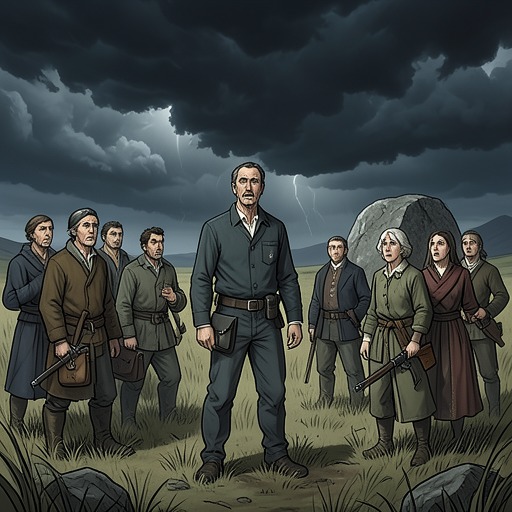
The episode takes place in Touladi on November 13, 1944. Before dawn, Noé Bolduc, an old bachelor accustomed to rising early, notices that his cat is unusually alert and agitated, as if sensing a threat. The atmosphere seems suspended; then a sinister shadow passes over the garden, followed almost immediately by a furious wind and hail striking the house and the village. The storm is introduced not simply as bad weather but as something that seems to gather beneath the darkness before breaking into the ordinary world.
The disturbance overwhelms homes and inhabitants. Beams creak, rafters groan down to their foundations, and dogs bark while frightened cats race through houses. People wake in terror; some fall to their knees and pray. Trees are wrenched up, branches and shop signs tear loose, and debris crashes into buildings and cars. The ground begins to shake beneath the wind. Noé wonders whether the war raging in Europe and Asia has reached the village, recalling reports of German submarines in the St. Lawrence and one recently seen as far upriver as Rimouski. His speculation gives the local disaster a wider, wartime frame, but the threat that has arrived is at once nearer and harder to identify.
The Village After the Wind
At first light, the wind stops abruptly. Soft snow begins to fall into an unusual, unsettling silence, which is broken by a scream heard across the village. The first residents brave enough to go outside find a landscape of smashed roofs, damaged cars, and broken windows. Animals lie disemboweled in the snow; most horrifically, the Labrie family’s large shepherd dog has been mangled. The cry is understood to have come from the dying or injured animal.
Tracks lead across the village: hoof-shaped, uniform, straight, and unlike any known animal’s prints. They end among the marks beside the dog’s bloodied body. Ti-Louis Labrie says he thought he saw something black when the dog cried out, but no one can establish what it was, and the tracks do not fit the suggestion that a bear was responsible. The witnesses respond to the gap between what they see and what they can explain with fear and religious gestures, making the possibility of a malign or supernatural cause part of the scene without confirming it as fact.
The damage has also reached the village’s religious landmarks. Across from the church, the statue of the archangel Michael, patron of Touladi and leader of the heavenly armies, has lost the trident with which he was shown striking down the devil. The broken weapon gives visible form to the storm’s disorder, while the later discovery at the cemetery brings the damage directly into the village’s relationship with the dead.
The Cemetery Opens
The earthquake triggers a landslide on the clay hill above the river, precisely where the cemetery stands. Several graves are carried away, dismantled, and opened; bones and decay are exposed to daylight. Lazare Moreau, the nervous little church beadle, has already been shaken by the storm and the tremor when the landslide draws him outside. Confronted with the cemetery overturned, he first thinks himself not fully awake. Then he sees a tall, clay-covered figure with empty eye sockets and recognizes it as Élie D’Anjou, the founder of the village.
Élie’s body stands out from the wreckage of a broken coffin, among fragments of wood, snow, and clay. The discovery transforms the cemetery from a scene of damage into a public encounter with the village’s past. Father Rousseau rushes out of the presbytery without time to put on his cassock, his suspenders hanging over his trousers. After making the sign of the cross repeatedly, he sends Lazare to warn the families, beginning with the D’Anjous and Guillaume D’Anjou. The vicar and the sisters of the Rosary congregation join him; a crowd gathers, while Father Rousseau tries to keep people away from the ruined graves because the hillside may collapse further.
Guillaume and the Cameo
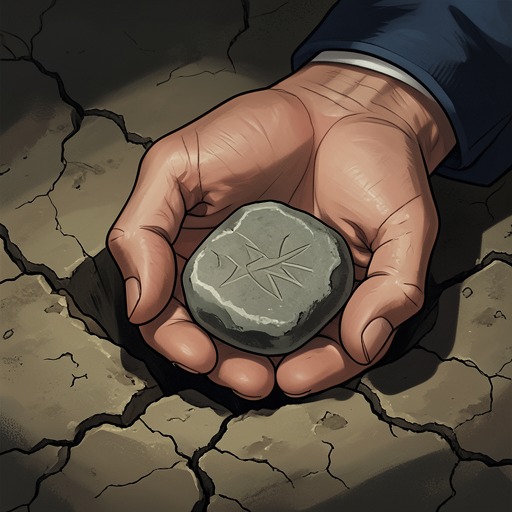
When Guillaume D’Anjou arrives, grave beneath his gray felt hat, the crowd parts for him. The moment is marked by a respectful silence as he approaches his grandfather’s remains. Amid the torn clothing, dust, bones, and coffin fragments, Guillaume notices an unusual gleam. After pausing, caught between fear, emotion, filial reverence, and religious solemnity, he reaches into the shreds of fabric and retrieves a mounted cameo.
He turns the jewel in his fingers and carefully rubs it, bringing out the contrast between pale alabaster and dark brown agate. His strong emotion is tied to recognition: an old family legend is becoming tangible in front of him. The cameo’s appearance among Élie’s remains is therefore more than another consequence of the landslide. It makes a hidden family story materially present at the same moment the founder himself is returned to view. A cry rises for the dead to be reburied and their secrets left untouched. The plea registers the unease of the assembled witnesses, but the storm has already exposed what burial had kept concealed.