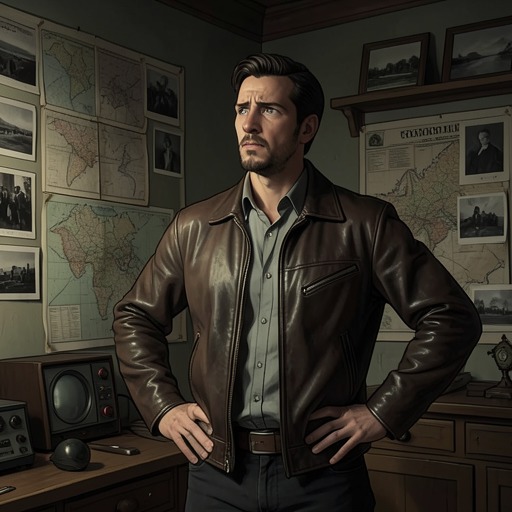
Loïc Resists an Evil Manifestation Through Prayer
SatanLoïc Resists an Evil Manifestation Through Prayer is a pivotal confrontation in which Loïc meets an overwhelming, seemingly satanic force in the borderland between dream and waking. The encounter joins a private bodily terror to his lifelong sense of the cameo’s malign influence: when he calls on Jésus-Christ, the force recedes, but its afterimage becomes a lens through which he considers evil, power, and ordinary human suffering.
The Vision and Its Approach
The episode unfolds amid visions of cultural destruction: a gigantic wall of flame consumes cathedrals and palaces, while statues, crucifixes, paintings, books, and works of art pour from their doors and windows into the fire. A faceless crowd tends the inferno, and a monstrous, multiplying creature moves before it. As Loïc slips between sleep and waking, distant thunder or rolling drums give way to terrible laughter and a clamor. From the towers of Notre-Dame de Paris, a gigantic shadow appears and a voice proclaims the descent of the Devil. Loïc does not recognize the words as a passage from the Book of Revelation; he instead associates them with Grébiche’s imprecations.
The vision then becomes an assault on his senses and body. Loïc feels carried through mist and immaterial drizzle as many voices and cascading laughter surround him. He cannot move or cry out. A cold breath presses into him, at once icy and burning, and seems to penetrate his flesh and reach his heart. The movement from distant, engulfing noise to bodily invasion makes the manifestation feel less like an image he can observe than a force acting upon him.
Recognition and Prayer
The sensation recalls something Loïc believes he experienced at birth, beside his dead mother: the kiss of death, which freezes life and hope. He understands the presence as an accursed imitation of an evil spirit, one that feeds on human despair. That recognition links the present terror to the foundational loss of his life, without making the supernatural source any less uncanny or difficult to name.
Gathering what strength remains, Loïc cries out in prayer to Jésus-Christ for mercy and help. The icy breath immediately melts away, along with the satanic atmosphere. The narrative gives the prayer a direct consequence within the scene: the force’s withdrawal follows Loïc’s appeal, rather than a gradual easing of the pressure. Yet the victory is not complete in the sense of erasing what happened. He continues to shiver, petrified and haunted by returning echoes of the manifestation.
Aftermath and Meaning
After the encounter, Loïc turns from immediate fear to dark reflections on the state of the world. He sees a parallel between the vision’s creatures perched above the crowd and the powerful who occupy positions of authority: both appear elevated over ordinary people, who labor under the demands of daily bread. Against material power and money, he sets love as a happiness that cannot be bought, while recognizing that it may be an unreturned gift. The reflection broadens the episode from a struggle against a frightening presence into a judgment on the structures and energies that make despair pervasive.
Loïc also understands that many people can function as stones of Satan: they radiate harmful influences, often unknowingly, and may even believe themselves good. This idea connects the vision to his long-standing sensitivity to the occult magnetism of the family’s cursed cameo. He has felt that influence since childhood, and more acutely since the September 11 Attacks; he experiences himself as linked to the cameo by a subtle, wireless network, a mineral web whose tentacular waves surround him. The prayer dispels the immediate manifestation, but it does not sever that connection. The scene therefore ends in uneasy survival: Loïc has resisted the presence, while the larger field of influence he associates with it remains.