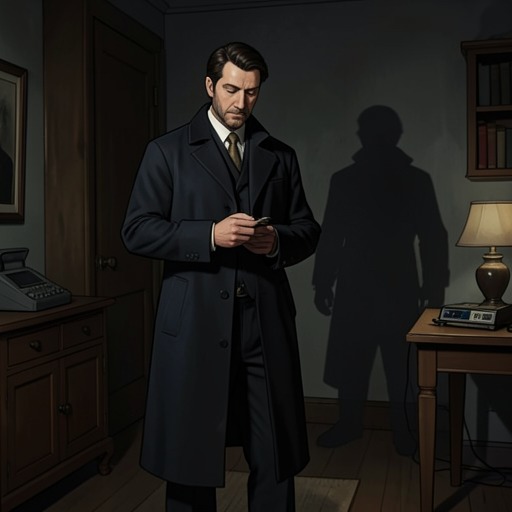
Aurelio Is Assassinated
SatanAurelio Is Assassinated is the killing of Aurelio in Havana on February 10, 2016, after he leaves the cathedral. The attack turns his private vision of renewed Christian faith into a brutal public death, and its aftermath gives Rodrigo Lerbier and Loïc reason to fear that the violence surrounding the cursed stone is reaching them as well.
Setting and Foreboding
Leaving the cathedral, Aurelio is absorbed in a dream of a fervent faith like that of the earliest Christian communities under Roman persecution. He imagines believers driven into new catacombs to practice their religion, and longs for a renewed commitment to Christ that would not pass through what he sees as the ossified rites of a pharisaical religious hierarchy. The vision is not presented as the cause of his murder; it forms the spiritual and historical atmosphere immediately preceding it.
As Aurelio enters the arcades, shadows move silently in the darkness. He senses imminent danger and reacts with an animal fear, turning back toward the illuminated main square. The shadows rise behind him like the wings of a bird of prey. A powerful arm seizes him from behind, and a thin blade cuts his carotid artery. He falls without a cry as blood spreads across the paving stones; the assassin escapes through the dark, winding streets behind the Baroque church.
Rodrigo's Search
Rodrigo Lerbier grows anxious when Aurelio does not return that evening. He knows Aurelio had gone to the Ash Wednesday service, and his foreboding is sharpened by the fact that the two men have lately felt watched and followed. Hearing police sirens in the distance, Rodrigo decides to go down toward the cathedral.
The streets near the church are unusually noisy and crowded. On the square, curious and alarmed onlookers gather while agents of the Securidad try to push them back. Rodrigo catches fragments of Spanish indicating that someone has been killed and had his throat cut. He presses through the crowd toward the arcaded gallery, where police cars and officers stand behind a security perimeter. The old stone paving looks shiny; then he sees that it is red with blood.
An officer confirms that the victim is a young man. Rodrigo invokes his standing as a religious diviner, although he no longer practices much, and says that he fears the dead man may be his friend. The police direct him to identify the victim at the hospital morgue. The scene thus leaves Rodrigo moving from anxious uncertainty toward the unbearable possibility of confirmation; the passage does not describe the identification itself.
News and Aftermath
Rodrigo later informs Loïc of the killing by email. Both suspect that the Satanist Sect is seeking vengeance, and Rodrigo is nearly certain of it. His fear is personal as well: he believes his own life may be in danger. Their recent sense of being watched takes on a more threatening meaning after Aurelio's murder.
Loïc had never met Aurelio, but understands his death as another addition to the lengthening list of people killed in the wake of the malevolent stone. He prays that Rodrigo, his distant cousin, will not meet the same fate. Rodrigo has already lost an eye in the trail of the cameo, so Loïc's concern is grounded in earlier harm as well as the immediate threat.
Narrative Significance
The scene binds religious longing to physical vulnerability without suggesting that Aurelio's imagined renewal of faith explains or prevents the attack. He leaves the cathedral envisioning persecuted believers and a faith beyond rigid hierarchy, then is killed in the darkness just beyond its illuminated square. The contrast makes the setting itself feel divided between sanctuary and exposure.
The murder also advances the story's chain of fear: Rodrigo's suspicion of the sect, the men's sense of surveillance, and Loïc's association of the death with the cursed stone converge, while the killer disappears without being identified. The event therefore confirms Aurelio's death and intensifies the danger surrounding Rodrigo and Loïc, but leaves the precise responsibility for the killing within the characters' suspicions.