Loïc's Adoption by Guillaume and Marie-Louise
SatanLoïc’s adoption by Guillaume and Marie-Louise D’Anjou began as an urgent act of care after his mother, Marie-Ange D’Anjou, died in childbirth. It gave the fragile newborn a home, but also placed him between two powerful Touladi families: the D’Anjous who raised him and the Bolducs to whom he remained connected by birth.
From emergency care to adoption
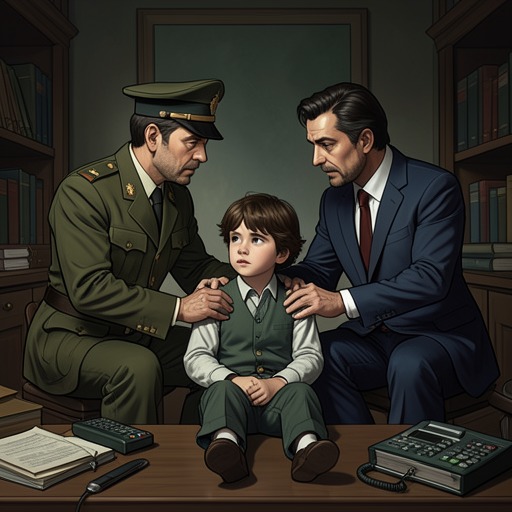
As relatives gathered in the bereaved household, they agreed that Guillaume and his daughter Laurette should take the newborn home, where he could receive better care. The child was in such poor condition that his survival seemed uncertain. When Laurette brought him to the Founder’s House, Guillaume called together his mother, his wife, and his three daughters. With tears in his voice, he urged them to care for Marie-Ange’s child.
The family brought the baby promptly to the church for baptism. Father Rousseau baptized him before Guillaume and Marie-Louise, who served as godparents. They decided to adopt him with Alcide’s consent, though he was still recovering from drunkenness; the Bolduc relatives were taking responsibility for the other two children. The arrangement thus joined a private family commitment to a wider distribution of care among the kin.
The need for that care was immediate. Loïc was bluish and limp, could take only a little milk, and remained for days and nights suspended between life and death. While Marie-Ange’s body lay exposed, the family’s great black shepherd howled persistently; the baby seemed to emerge from his torpor whenever he heard it. The narrative places the adoption amid mourning, the infant’s uncertain survival, and the efforts of those around him to keep him alive.
A contested place between families
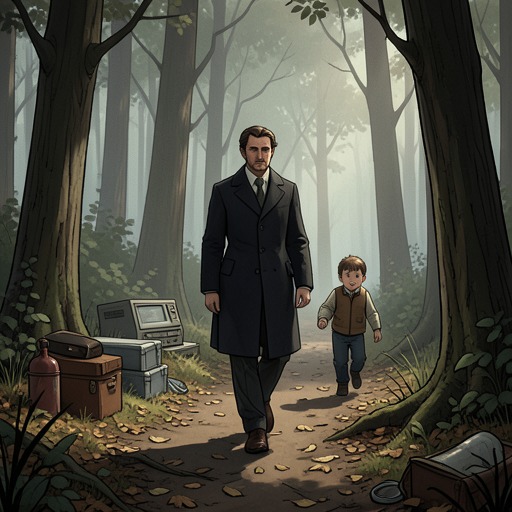
The adoption did not end the question of who would raise Loïc. In Touladi, a persistent rumor held that Alcide would reclaim his son. Loïc’s brothers and cousins spoke of the possibility as though it were certain, and tension grew between the D’Anjou and Bolduc families. The rumor returned whenever Alcide came back to the village, even for only a few days; for six years, Guillaume answered it with an unequivocal refusal.
Guillaume’s opposition rested on his judgment of Alcide’s capacity to care for the children. He remembered a man who could not keep his footing between drink and his hunting rifle, and who evaded responsibility by taking to his airplane or drinking. The conflict therefore concerned more than a biological father’s claim: it set the family’s competing accounts of responsibility against one another, with Loïc’s home and security at stake.
Adoption, loss, and inherited identity
The circumstances of Loïc’s birth included another grief that was disclosed only later. A doctor eventually told him that there had been another fetus in his mother’s womb, and that it was stillborn. He had withheld this information at the time, believing that the death of Marie-Ange was already sorrow enough. The revelation adds a lost sibling to the losses surrounding Loïc’s entry into the D’Anjou household, without changing the fact that Guillaume and Marie-Louise became his adoptive parents.
The family history also makes adoption recur across generations. Loïc later learns that Élie D’Anjou, the ancestor known as the Founder, had himself been adopted after being found as a baby. A record identified the child as Éloi, while an ambiguous entry helped produce the name Élie; the ancestor’s unknown origins had also remained a guarded family secret. Against that history, Loïc’s adoption is both a concrete bond of care and part of a larger story in which family belonging is made through adoption, names, and the telling—or withholding—of origins.