Leonard Pagett
ShrineLeonard Pagett is Molly Pagett’s husband and Alice Pagett’s father, a nonbeliever whose difficult domestic presence contrasts with the public hopes gathering around his daughter. Killed in a car crash as a fire spread through Banfield, he becomes both a personal loss for Alice and a disputed figure in the commercialization of her alleged miracles: after his death, Molly says he had wanted to profit from Alice’s fame.
Identity and Home Life
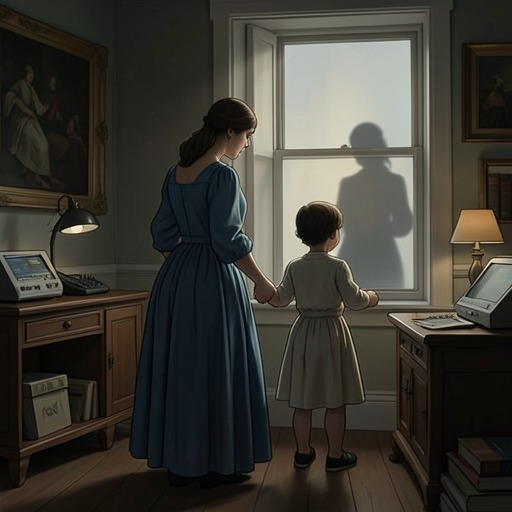
Leonard is also known as Len and is identified in a newspaper account as Leonard William Pagett. He lives with Molly and Alice in Banfield. The household’s daily routine is described largely through Molly’s perspective: she anticipates his return from work and measures her cigarette ration around it, while noting that her smoking sometimes increases when she is distressed by him. Her private judgment of her husband is severe, and the narrative presents their marriage as strained rather than affectionate.
Molly’s recollections also associate Leonard with the smell of alcohol, which she recognizes as familiar from her husband. This detail does not establish how often or how much he drank, but it helps explain her immediate recognition of the young man who reported that Alice had spoken to him. Leonard’s home life is thus defined less by a developed account of his own feelings than by the pressure his presence places on Molly and the anxieties she carries within the marriage.
Response to Alice and Religion
When Father Andrew Hagan arrived at the Pagetts’ home in the middle of the night to tell them that Alice was at the presbytery, Molly first insisted that their daughter was safely in bed. After discovering the bed empty, she followed the priest’s instructions and went with Leonard to the church. Leonard was an atheist who generally avoided churches, though he treated the occasional funeral as a social occasion; being called out on a cold night to a church plainly angered him. His irritation eased, however, when he saw how pale Alice looked. The episode places his impatience with religious settings beside a concrete response to his daughter’s condition, without making him a believer.
His nonbelief also shaped how he understood Alice’s public importance. After his death, Molly tells Monsignor Delgard that Leonard could not understand or appreciate what was happening to Alice because he did not believe in God. She then adds that he had thought he could make money from the phenomenon. The disclosure complicates the earlier picture of an atheist father: the conflict is not simply between his skepticism and other people’s faith, but also over whether Alice’s extraordinary experiences should be treated as sacred or as an opportunity for profit. The claim comes from Molly, who is grieving and speaks with marked distaste about her late husband; the account does not independently establish what arrangements Leonard made or how he intended to earn money.
The Crash and Death
Leonard re-enters the narrative’s public world when Gerry Fenn recognizes him at a pub and identifies him to Nancy Shelbeck as Alice’s father. Two men at the bar rise to greet Leonard, and a crowd of journalists follows as events move outside. The episode connects him to the press attention surrounding Alice, but it does not fully explain the men’s purpose or establish what Leonard had agreed to do.
Leonard is a passenger in the car involved in the collision that starts the Banfield fire. The vehicle is caught in the spreading blaze, and he dies before Alice arrives. Fenn, himself injured and trying to get clear of the danger, sees Leonard attempting to emerge from the burning car; the fuel tank then explodes. The scene makes Leonard’s death the human cost at the center of the fire, while firmly separating it from the later reports of Alice extinguishing the remaining flames. She does not arrive in time to save her father.
A subsequent radio report identifies Leonard’s death as the consequence of a collision involving a bus and a petrol tanker, with the fire fed by fuel escaping from the damaged tanker. It stresses the irony that Alice appeared and was said to stop the fire only after Leonard had been killed. Thus the event that increases attention to her supposed powers is inseparable from the loss those powers cannot reverse.
Funeral and Narrative Significance
Leonard is forty-seven when he dies. Because he was not a Roman Catholic, he is buried in a public graveyard just outside the village. His funeral is besieged by onlookers and pressmen, turning a family bereavement into another public spectacle. Molly is visibly distressed by both her husband’s death and the crowd, while Alice stands silently at the graveside. The report also notes that Alice had recently lost Father Andrew Hagan, to whom she had been close, making her father’s death a second major bereavement in a short span.
Leonard’s role in the story remains filtered through other people: Molly’s account of their troubled marriage, Fenn’s view of the fatal crash, and the media’s reports of the aftermath. Those accounts do not resolve the tension between Leonard as an atheist father and Leonard as a man whom Molly accuses of seeking money from Alice’s supposed miracles. Instead, his death sharpens it. Alice becomes more famous because of an event that kills her father, but the public meaning attached to her alleged power cannot restore the private relationship lost in the fire.