Opening, ancient past
Oathpact Abandonment
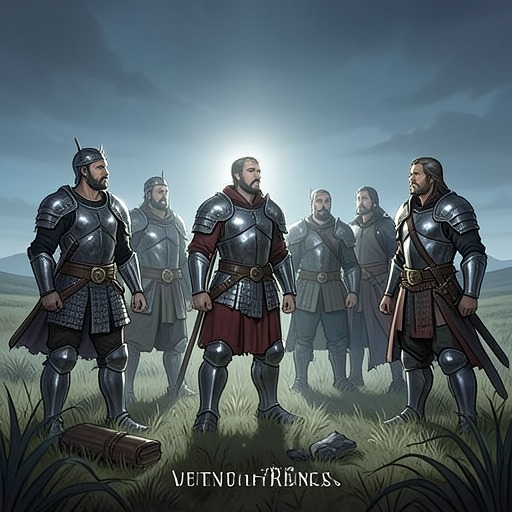
After a devastating [Desolation](entity:state-recall-state-desolation-8d1a62d0bdee), [Kalak](entity:character-recall-character-kalak-60a6504e0842) reaches the agreed meeting place and finds [Jezrien](entity:character-recall-character-jezrien-38378a060ce3) waiting beside eight abandoned Blades. Only [Talenel’Elin](entity:character-recall-character-talenel-elin-3ee19fb550d1) has died, yet the surviving [Heralds](entity:organization-recall-organization-heralds-c2e3e7749957) decide to end the Oathpact by leaving their weapons behind and making Talenel’Elin bear the torment alone. Their apparent victory is revealed as a lie built on betrayal, guilt, and exhaustion.
Five years before the main narrative
Gavilar’s Assassination
[Szeth-son-son-Vallano](entity:character-recall-character-szeth-son-son-valla-50ead4c680ba) infiltrates a treaty celebration in [Kholinar](entity:location-recall-location-kholinar-669d05be4088) wearing the [Parshendi](entity:character-recall-character-parshendi-d916cb190f2b)’s traditional white. Using Stormlight and the [Three Lashings](entity:concept-recall-concept-three-lashings-f536d8485d14), he overwhelms the royal guards and battles [Gavilar Kholin](entity:character-recall-character-gavilar-kholin-0cd6667adce0) in [Shardplate](entity:object-recall-object-shardplate-c8d76bdb7898). Gavilar dies after the balcony collapses, but leaves a final request that his brother discover the most important words a man can say.
Five years before the main narrative
Cenn’s Last Battle
Fifteen-year-old [Cenn](entity:character-recall-character-cenn-9d3a8bf0f3c2) joins a poorly organized Alethi border battle and is terrified by the chaos. [Kaladin Stormblessed](entity:character-recall-character-kaladin-stormblesse-cbf8535b0816)’s disciplined squad protects him, rescues him from six attackers, and treats him as worth saving. A [Shardbearer](entity:state-recall-state-shardbearer-51aae2a4f7ed) ultimately appears, and Cenn closes his eyes rather than face the impossible enemy.
Eight months before the main narrative
Kaladin’s Slavery
Kaladin, once a soldier and healer, is transported through the [Unclaimed Hills](entity:location-recall-location-unclaimed-hills-7892034459d6) as a branded slave. He has attempted escape repeatedly and now believes that caring only produces more failure. When a fellow slave develops the grinding coughs, Kaladin intervenes and prescribes water, but the slaver kills the man anyway to protect the rest of the caravan.
Early in the main narrative
Shallan Reaches Kharbranth
[Shallan Davar](entity:character-recall-character-shallan-davar-5db0b0734048) arrives in [Kharbranth](entity:location-recall-location-kharbranth-e61050480750) after months of pursuing [Jasnah Kholin](entity:character-recall-character-jasnah-kholin-07ba36ef5bff). The city overwhelms her with its bells, crowds, books, foreign peoples, and unfamiliar customs. Her private mission is darker than her scholarly ambitions: she must become Jasnah’s ward in order to steal the Soulcaster that might save her bankrupt family.
Early in the main narrative
Jasnah’s First Rejection
Jasnah tests Shallan’s education and finds serious gaps in her history and philosophy. Although Shallan’s wit and scientific foundation impress her, Jasnah refuses to accept her as a ward until she studies further. Shallan responds by writing a carefully argued plea, demonstrating both her hunger for learning and her willingness to manipulate the woman she intends to rob.
Early in the main narrative
Shallan Becomes Jasnah’s Ward
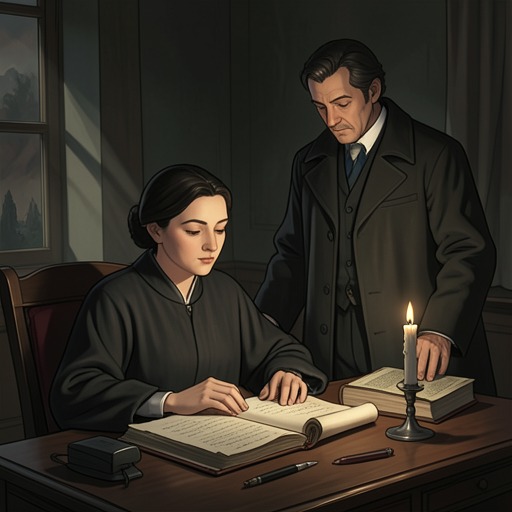
Jasnah reads Shallan’s letter, recognizes the value of self-taught knowledge, and admits that the young woman’s notebook reveals genuine scholarly curiosity. She accepts Shallan as a ward, instructing her to divide her time between education and research. Shallan appears to have won the first stage of her plan, while concealing that the real objective remains theft.
Eight months after Gavilar’s assassination
Kaladin Enters Bridge Four
Kaladin is sold into Sadeas’s army and assigned to Bridge Four, a notorious crew of expendable bridgemen. His first run exposes the system’s cruelty: unarmored men carry bridges directly into [Parshendi](entity:character-recall-character-parshendi-d916cb190f2b) arrow fire, and the bridge is treated as more valuable than the people beneath it. Kaladin survives the assault but realizes that Bridge Four is a death sentence.
During Kaladin’s first weeks in Bridge Four
Sylphrena Awakens
The windspren following Kaladin begins to display memory, intelligence, and a personal name: [Sylphrena](entity:character-recall-character-sylphrena-17894afa179b). She reveals that she was drawn to Kaladin because he protected inexperienced soldiers and gave them a family. Her growing individuality foreshadows the return of the [Nahel bond](entity:state-recall-state-nahel-bond-ab6afdfcc086) and forces Kaladin to confront whether his survival is curse, blessing, or responsibility.
After weeks in Bridge Four
Kaladin Takes Command
Following the deaths of nearly every survivor from his first bridge run, Kaladin confronts [Gaz](entity:character-recall-character-gaz-e4f2d661fe11) and claims authority over Bridge Four. He demands his wages, orders the men to learn one another’s names, and begins treating them as people rather than anonymous bodies. [Teft](entity:character-recall-character-teft-492b6c3769fb), Rock, and eventually the rest of the crew become the first foundation of his new command.
After the death of the young bridgeman
Kaladin Rejects Suicide
Overwhelmed by Bridge Four’s losses, Kaladin goes to the [Honor Chasm](entity:location-recall-location-honor-chasm-b31f2b98d2fe) intending to die. Syl returns with a blackbane leaf, reminding him that one more attempt cannot make his situation worse. Kaladin abandons the poison, attacks [Gaz](entity:character-recall-character-gaz-e4f2d661fe11) to establish new terms, and chooses responsibility for the bridgemen over the apparent freedom of death.
After Kaladin takes command
Bridge Four Training
Kaladin begins forcing the bridgemen to exercise, carry bridge planks, practice formations, and learn discipline. The men initially mock him, but his example gradually wins their attention. He supplements training with nightly fires, Rock’s stew, songs, and shared names, giving Bridge Four a culture that is more durable than fear.
During Kaladin’s early Bridge Four reforms
The First Rescue Efforts
After a disastrous bridge run, Kaladin uses stolen knobweed sap, improvised surgery, and pooled food to keep wounded bridgemen alive. Rock and [Teft](entity:character-recall-character-teft-492b6c3769fb) help him when the others refuse. Kaladin also begins selling antiseptic to an apothecary, turning the resource into food, bandages, and medicine for the crew while learning that Sadeas’s camp profits from their vulnerability.
Two months after Shallan becomes Jasnah’s ward
Shallan Studies Gavilar’s Murder
Jasnah assigns Shallan to investigate the death of [Gavilar Kholin](entity:character-recall-character-gavilar-kholin-0cd6667adce0) and the motives behind the [Parshendi](entity:character-recall-character-parshendi-d916cb190f2b) treaty. Shallan discovers contradictions in the historical accounts: Gavilar, previously uninterested in scholarship, became deeply fascinated by the Parshendi and their culture. The investigation begins drawing Shallan into the mystery Jasnah herself is pursuing.
Several months after Shallan arrives in Kharbranth
Jasnah’s Alleyway Attack
Jasnah deliberately leads Shallan through a dangerous street where footpads have murdered travelers. When the attackers surround them, Jasnah removes her glove and uses [Soulcasting](entity:concept-recall-concept-soulcasting-37d7b8bba04a) to transform them into fire, crystal, and smoke. She frames the scene as a philosophical lesson about legality, morality, self-defense, and the consequences of placing oneself in danger.
Immediately after Jasnah’s alleyway attack
Shallan Steals the Soulcaster
Shaken by Jasnah’s ruthless use of power, Shallan swaps Jasnah’s Soulcaster for a repaired but useless duplicate. The theft is driven not only by her family’s financial crisis but also by anger at Jasnah’s actions. Jasnah does not immediately expose her, leaving Shallan trapped between guilt, hope, and fear of discovery.
After the Soulcaster theft
Kabsal Courts Shallan
[Kabsal](entity:character-recall-character-kabsal-61e2d9cf5aa8) grows increasingly close to Shallan through jam, bread, arguments, and conversations about religion and scholarship. He claims concern for her soul and hints that he might leave the ardentia for her. Shallan is drawn to him despite knowing that their relationship has no obvious future, while Jasnah suspects that Kabsal is using Shallan to reach her.
Several weeks before the Tower battle
The Failed Side Carry
Kaladin experiments with carrying the bridge on its side as a shield. The tactic protects Bridge Four but disrupts the timing and coordination of the larger assault, causing other bridge crews to falter. Kaladin is beaten, yet he survives by threatening [Gaz](entity:character-recall-character-gaz-e4f2d661fe11) and Lamaril with the political consequences of killing him.
After the failed side-carry assault
Kaladin’s Highstorm Survival
Sadeas orders Kaladin tied to the outer wall of Bridge Four and left for the highstorm’s judgment. Kaladin clings to the roof and survives the storm despite severe injuries. The event transforms him into a living miracle for the bridgemen, while [Teft](entity:character-recall-character-teft-492b6c3769fb) secretly discovers that Kaladin can draw in Stormlight and heal.
After recovering from the highstorm
Kaladin Studies the Stormlight
Kaladin accepts that he is changing and begins testing his powers with [Teft](entity:character-recall-character-teft-492b6c3769fb). He can draw in Stormlight, heal wounds, bind objects together, and eventually influence arrows. Syl admits that she is an honorspren whose bond with Kaladin is restoring both of them. Kaladin remains afraid that the powers are a curse inherited from the fallen Radiants.
Before the Tower battle
The Shield Decoy Maneuver
Kaladin creates armor and shields from [Parshendi](entity:character-recall-character-parshendi-d916cb190f2b) carapace and trains selected bridgemen to act as decoys. During a bridge assault, he runs ahead and draws nearly all Parshendi arrow fire away from the bridges, using Stormlight to dodge and deflect the volleys. The method saves Bridge Four and revolutionizes Sadeas’s assault tactics, though it also makes Kaladin a primary target.
During the decoy campaign
Kaladin Saves Other Bridgemen
Kaladin refuses to limit his protection to Bridge Four and orders his men to recover wounded bridgemen from other crews. He treats them on the battlefield and carries them back despite Sadeas’s policy of abandoning anyone unable to walk. Bridge Four becomes a sanctuary, and its members begin to see their solidarity as a direct challenge to the army’s expendability doctrine.
Three weeks after stealing the Soulcaster
Shallan Awakens Soulcasting
Under escalating stress, Shallan begins drawing impossible symbol-headed beings and is pulled into [Shadesmar](entity:location-recall-location-shadesmar-6dc823f823c2). There, a sentient bead responds to her truth and accepts Stormlight in exchange for transformation. She returns to her room and accidentally changes a glass goblet into blood, proving that her ability comes from an emerging bond rather than from Jasnah’s fabrial.
During the Tower battle
The Second Ideal
When Bridge Four is about to be destroyed, Kaladin relives [Tien](entity:character-recall-character-tien-8d5ac3e753c5)’s death and rises despite exhaustion. Syl asks whether he knows the Words, and Kaladin swears, “I will protect those who cannot protect themselves.” The declaration releases a powerful surge of Stormlight, marking his acceptance of the Second Ideal and transforming him into a true [Radiant](entity:state-recall-state-radiant-e81a5698d1eb).
Near the ending
Battle of the Tower
Dalinar and Sadeas launch a massive joint assault on the [Tower plateau](entity:location-recall-location-tower-plateau-3e13451d93ef), hoping to trap and destroy the [Parshendi](entity:character-recall-character-parshendi-d916cb190f2b) army. Kaladin’s decoys and Bridge Four’s armored bridge crew protect the initial attack, while Dalinar and Adolin drive into the Parshendi lines. The battle appears to be the long-awaited turning point in the war, but the apparent alliance conceals Sadeas’s plan.
During the Battle of the Tower
Sadeas’s Betrayal
After Dalinar’s army has advanced deep onto the Tower, Sadeas withdraws with every bridge and abandons the Kholin forces. Dalinar and Adolin are left surrounded on three sides by [Parshendi](entity:character-recall-character-parshendi-d916cb190f2b), cut off from retreat and nearly destroyed. Sadeas reveals that he planned the betrayal to remove Dalinar as a political obstacle while preserving the appearance of honor.
Immediately after Sadeas’s betrayal
Bridge Four Returns
Kaladin and Bridge Four have an opportunity to flee, but Syl’s despair and the sight of Dalinar’s trapped army force Kaladin to choose responsibility over freedom. He turns the crew back toward the Tower, leads them through [Parshendi](entity:character-recall-character-parshendi-d916cb190f2b) fire, and gives Dalinar’s soldiers a path to the bridge. Their return makes the difference between total annihilation and a desperate retreat.
During the retreat from the Tower
Dalinar’s Rescue
Dalinar fights a [Parshendi](entity:character-recall-character-parshendi-d916cb190f2b) [Shardbearer](entity:state-recall-state-shardbearer-51aae2a4f7ed) while his remaining soldiers struggle toward the bridge. Kaladin arrives, wounds the enemy Shardbearer with a spear, and orders Dalinar to escape rather than finish the fallen foe. The Parshendi salute Dalinar’s retreat, revealing that their battlefield culture is more disciplined and honorable than Alethi propaganda suggests.
After returning from the Tower
Dalinar Trades Oathbringer
Dalinar refuses to leave the bridgemen in Sadeas’s possession. Instead, he places Oathbringer point-first into the ground and offers the priceless [Shardblade](entity:concept-recall-concept-shardblade-6d091f0baaad) in exchange for every bridgeman in Sadeas’s army. Sadeas accepts, and Dalinar gives the freed men his word that they will never again be slaves or bridge crews under his command.
Immediately after the trade
Dalinar Confronts Elhokar
Dalinar returns to Elhokar’s chambers and physically overpowers the king, revealing that Elhokar himself cut the saddle girth to create evidence of an assassination attempt. Dalinar forces him to understand that his paranoia endangered the kingdom and nearly destroyed the Kholin house. He then demands that Elhokar appoint him Highprince of War.
After Shallan’s hospitalization
Kabsal’s Poisoning
[Kabsal](entity:character-recall-character-kabsal-61e2d9cf5aa8) brings poisoned bread to Shallan and Jasnah, using the jam as an antidote and trying to pressure Shallan into eating it. Jasnah recognizes the danger, but the antidote is accidentally removed from the jam when she Soulcasts it. Kabsal dies from the poison, while Shallan survives because Jasnah transforms the toxins in her blood.
After Kabsal’s death
Shallan Reveals Her Truth
Shallan realizes that Jasnah’s Soulcaster is a decoy and that Jasnah possesses the ability to Soulcast without a fabrial. She returns to Jasnah, admits that she killed her father, and uses that truth to enter [Shadesmar](entity:location-recall-location-shadesmar-6dc823f823c2) again. Jasnah confirms that Shallan’s powers are connected to the spren of the [Knights Radiant](entity:organization-recall-organization-knights-radiant-c1cc27a9f8c7) and agrees to train her honestly.
After Shallan returns to Jasnah
The Voidbringer Revelation
Jasnah explains that the ancient [Voidbringers](entity:concept-recall-concept-voidbringers-c1ad0710f75c) were not destroyed; humanity enslaved them. The [Parshmen](entity:creature-recall-creature-parshmen-209718bfda3e) scattered throughout [Roshar](entity:location-recall-location-roshar-a325f4d21dd8) are the same people who became the [Parshendi](entity:character-recall-character-parshendi-d916cb190f2b), and something has caused one group to regain its former identity and power. The revelation turns the war from revenge into an imminent civilizational catastrophe.
Near the ending, during a highstorm
Dalinar’s Vision of Recreance
Dalinar witnesses the [Knights Radiant](entity:organization-recall-organization-knights-radiant-c1cc27a9f8c7) abandoning their [Shardblades](entity:object-recall-object-shardblades-ad6dc2d5090c) and [Shardplate](entity:object-recall-object-shardplate-c8d76bdb7898) at [Feverstone Keep](entity:location-recall-location-feverstone-keep-09bafc6486b5). The vision shows the weapons fading and then becoming objects of violent contest among ordinary soldiers. Dalinar learns that the Radiants’ fall was more tragic and complicated than the traditional story, but still does not understand why they abandoned their duty.
Immediately after the Recreance vision
Dalinar Learns the Visions Are Real
Navani compares Dalinar’s supposed gibberish during visions with ancient Dawnchant preserved by the [Vanrial](entity:organization-recall-organization-vanrial-c03f6e8d5aca). His words match a translation of an old song, proving that the visions contain knowledge he could not have learned normally. Dalinar is no longer able to dismiss them as madness, though he remains uncertain whether their source is trustworthy.
Near the ending, later highstorm
Dalinar’s Vision of the Almighty
Dalinar witnesses a future vision of [Kholinar](entity:location-recall-location-kholinar-669d05be4088) destroyed and hears the unseen speaker explain that the scenes are records and warnings rather than direct answers. The figure identifies himself as the Almighty, says [Odium](entity:character-recall-character-odium-a3c936536d05) has killed him, and commands Dalinar to lead, unite, and protect humanity. Dalinar accepts the task even without understanding how it can be accomplished.
After the Voidbringer revelation
The Ghostblood Connection
Jasnah identifies the [Ghostbloods](entity:organization-recall-organization-ghostbloods-93c6e1210df9) as the group behind [Kabsal](entity:character-recall-character-kabsal-61e2d9cf5aa8)’s assassination attempt. Shallan recognizes their three-diamond symbol from her father’s steward Luesh and from the men who demanded the family’s Soulcaster. Her father’s financial schemes are revealed as part of a much larger political and supernatural network.
After Dalinar buys the bridgemen
Kaladin’s New Command
Dalinar appoints Kaladin captain of an independent honor guard and gives him authority to train former bridgemen as soldiers. Kaladin negotiates control over their schedule, equipment, recruitment, and deployment, ensuring that the men will serve in protective and peacekeeping roles rather than immediately returning to bridge assaults. Bridge Four becomes the core of a new military identity.
After the Battle of the Tower
Dalinar’s Courtship
Dalinar and Navani acknowledge their long-suppressed love and begin courting despite the political and familial complications. Their relationship gives Dalinar emotional strength but also creates another vulnerability in a world already threatened by assassination and renewed Desolations. He decides that he will no longer let guilt and convention dictate every part of his life.
After Gavilar’s assassination, culminating near the ending
Szeth’s Assassination Campaign
Szeth is passed from master to master until [Taravangian](entity:character-recall-character-taravangian-7830f1eecfb4) secretly acquires his Oathstone. Under Taravangian’s orders, Szeth assassinates kings, highprinces, and other influential figures, creating panic throughout [Roshar](entity:location-recall-location-roshar-a325f4d21dd8). The campaign culminates in the assassination of King Hanavanar, after which Taravangian orders Szeth to kill Dalinar before he can unite the Alethi.
Near the ending
Dalinar’s Appointment
Dalinar resolves to remain highprince and accept the dangers of his visions. He plans to enforce the Codes across the warcamps, centralize control of the gemhearts, and turn the ten competing armies into a unified force. He also promises Elhokar that he will discover who is trying to kill him.
Near the ending
Tower Plateau Aftermath
The surviving Kholin forces return with only a fraction of their original army. Dalinar refuses to answer Sadeas’s betrayal with immediate civil war, choosing instead to preserve [Alethkar](entity:location-recall-location-alethkar-59972eb11c1a) while preparing a stronger political response. The bridgemen and Dalinar’s surviving soldiers become witnesses to a new conflict between the two highprinces.
Near the ending
Taravangian’s True Plan
Szeth discovers the hidden hospital beneath [Taravangian](entity:character-recall-character-taravangian-7830f1eecfb4)’s palace, where dying people are deliberately drained for their final words. Taravangian explains that the dying sometimes speak warnings about the coming catastrophe, and he justifies murder as the price of preserving the world. He names Dalinar as the next target because Dalinar’s unity campaign threatens his plans.
Final scene
Talenel Reaches Kholinar
A wild, exhausted man carrying an enormous [Shardblade](entity:concept-recall-concept-shardblade-6d091f0baaad) arrives at [Kholinar](entity:location-recall-location-kholinar-669d05be4088)’s gates. He identifies himself as [Talenel’Elin](entity:character-recall-character-talenel-elin-3ee19fb550d1), a Herald of the Almighty, and announces that the [Desolation](entity:state-recall-state-desolation-8d1a62d0bdee) has come and that he has failed. The book closes on the terrifying implication that the ancient cycle has returned and humanity is unprepared.