Iefke Stam
UpIefke Stam is introduced as a quiet, visibly apprehensive patient whose lateness becomes a point of tension in the ward’s daily routine. When she explains that fear can leave her unable to cross her own doorway, the scene reframes her absence: what looks like a failure to participate is, for her, a struggle to get out of her room at all.
Introduction and Presence on the Ward
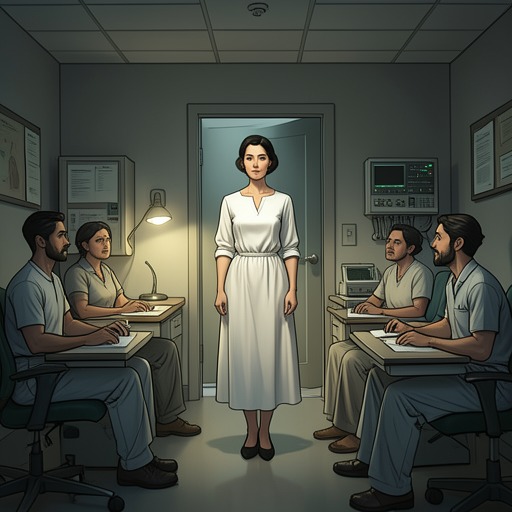
At a morning gathering, Leny asks whether anyone has seen Iefke, whom another patient says is always late and may have overslept again. Iefke then slips in, apologizes, and takes the seat farthest away, drawing her knees up protectively. Her entrance is hesitant and withdrawn; she does not explain herself until a later group meeting makes her lateness a direct subject of discussion.
The ward’s routine gives her repeated delay a public face. Patients are expected at the gathering, and the question of whether Iefke has arrived is raised in front of the group. But the early assumption that she has simply slept in proves incomplete. The contrast between how her absence appears to others and what she later describes is central to her small but revealing presence in the narrative.
Lateness and the Doorway
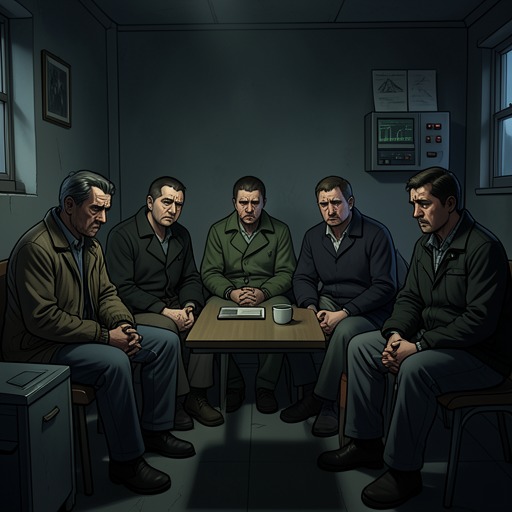
After Iefke arrives late to another gathering, Emma asks why she is always late. The room falls silent. Iefke looks startled and asks whether the others are bothered by it. When Linda tries to understand how she could have waited ten minutes, Iefke explains that she really does try and that things go better at home, but in the ward she becomes paralyzed. She can stand outside her room, hear the clock ticking and other people heading to therapy in the corridor, and still be unable to open the door or go out.
Iefke identifies fear as the reason: she is frightened of the door, of the unknown, and of what people might say or think. The physical threshold is also a social one. From outside, the delay can look like a choice; from Iefke’s account, it is a period of waiting in which she hears the group move on without being able to make herself join it. Her explanation makes clear that the ward’s shared schedule does not feel equally accessible to everyone in it.
Relationships and Significance
The exchange is uncomfortable for the group as well as for Iefke. Emma’s question abruptly stops the surrounding conversation, and Iefke’s surprised response shows that she has not assumed her lateness is causing others difficulty. Linda’s follow-up turns the question toward the specific interval Iefke describes: ten minutes spent waiting by the door. The group’s attention shifts from judging a pattern to hearing what that pattern costs her.
Iefke is not shown overcoming this fear or resolving her difficulty with attendance. Instead, the account gives her lateness a more precise meaning without claiming that understanding alone changes it. Her brief story exposes the gap between an observable behavior and the private distress behind it, while her admission that she manages better at home suggests that the difficulty is particularly acute in the ward setting.