Leny
UpLeny is a PAAZ staff member whose presence gives the ward’s daily routines a clear authority. At day opening, she embodies the rules: attendance matters, repeated breaches are addressed, and patients’ concerns are formally recorded. Yet her firmness is not simply punitive; she also acknowledges distress and leaves room for follow-up with a doctor.
Identity and Presence
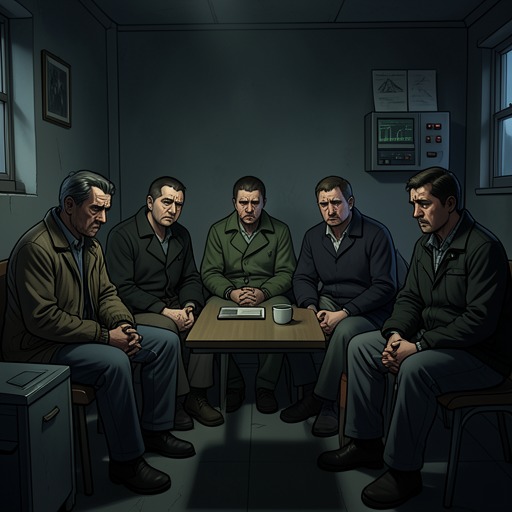
On a Monday morning, Leny leads day opening with Celine. The patients’ chairs are arranged in a disorderly circle in the television corner, where the meeting gives them a brief interval in which the nursing staff, rather than the patients, are responsible for keeping things going. The routine is familiar enough to make its return unwelcome to Emma, but Leny treats it as part of the ward’s working order.
Emma describes Leny as small and gray-haired, with an intelligent smile, stern glasses, and iron discipline. Her brief wink at Emma offers a flash of warmth within that imposing bearing. The two qualities coexist: Leny can signal personal recognition, then turn her strict attention back to a silent group when the meeting stalls.
Rules and Ward Management
Leny’s authority becomes especially visible when she brings up a rule that has already been discussed several times: patients are not to cut hair on the PAAZ. Her announcement is matter-of-fact, but the room’s glances toward Michiel make clear that the reminder has a particular context. Michiel turns a cigarette packet on his leg and shrugs when Leny’s attention settles on him. Leny then moves on through her notes rather than prolonging the confrontation, keeping the meeting focused on its agenda.
Her management also follows the formal routines of the ward. When a patient is upset, Leny acknowledges that the experience was unpleasant and offers to discuss it again with the doctor that afternoon, if the patient wishes. At the end of the day opening, she closes her notebook, asks the circle whether the meeting can conclude, and, after the group remains silent, records the end of the discussion. She then turns to the remaining appointment slips for the doctors. Her work is made up of these small acts of coordination as well as the enforcement of rules.
Authority and Acknowledgment
Emma’s account presents Leny as a person for whom the meeting’s rules are not optional: where there is a day opening, patients are expected to be there. When silence follows a question to the group, Emma anticipates a storm, an indication of how strongly Leny’s discipline shapes the atmosphere even before she speaks again. But Leny’s response to a patient’s complaint is measured rather than explosive: she recognizes the upset and proposes another conversation with the doctor.
That combination makes Leny a figure of institutional authority who is also present in the everyday work of listening and recording. She maintains the ward’s procedures, redirects the group when discussion runs thin, and closes the meeting without pretending that silence amounts to meaningful agreement. Her small wink to Emma sits alongside her stern handling of the rules, giving her role a human detail without diminishing its firmness.