Pieter Voorn
UpPieter Voorn leads a recovery module on the PAAZ as a trained peer specialist whose understanding of psychiatric care is grounded in both personal experience and formal preparation. He defines recovery not as a return to a pre-illness self, but as finding a way to live with problems that may remain; in practice, that distinction shapes his conversations about diagnosis, work, disclosure, and stigma.
Identity and Background
Pieter Voorn introduces himself to the group as an experiential specialist and the facilitator of a module on working toward recovery. He explains that, in psychiatric care, the term refers not simply to anyone with a psychiatric history but to people who have completed training in discussing their experiences and using them to help others. His own background includes psychosis vulnerability and several hospital admissions. He now wants to help patients find their individual paths and determine what does and does not work for them.
His approach is notably practical. Naming people and things helps him stay grounded in the present, he explains, but he does not present that method as a universal prescription. Each person has their own ways of managing. His closing observation that nobody in the room has ever seen a normal person gently unsettles the assumption that recovery means becoming normal again.
Recovery Rather Than Cure
When Pieter asks what recovery means, Emma initially describes it as returning to the starting point, or being cured. Pieter redirects the discussion: cure is a medical term that may promise more than psychiatry can deliver, since many psychiatric conditions involve enduring vulnerabilities and challenges. Recovery, in his account, concerns how a person wants to live with their problems—not simply whether they become better or return to an earlier state.
He makes that distinction concrete by asking whether someone understands themself as ill, as living despite illness, or as living with it. The questions do not supply Emma with an easy answer, but they change the terms of the discussion. Instead of treating the old self as the only acceptable destination, Pieter presents recovery as a continuing negotiation with a condition that may not disappear.
Work, Disclosure, and Stigma
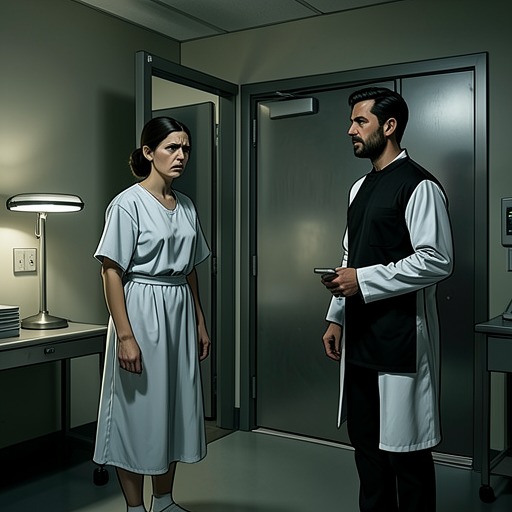
In a group discussion about work, Pieter invites Emma to share experiences. For Emma, employment and shame are closely connected. During her first admission, a four-week holiday became a stay on the PAAZ after only a week. Her employer had to explain her absence to colleagues while no one could say whether she would return in a week, a month, or at all. The employer described her as being at home with burnout, a decision Emma understood as an effort to protect her privacy; the admission ultimately lasted five months.
Pieter responds that psychiatric admissions are often concealed and that people may avoid visiting, whereas a person in a general hospital might receive a card or flowers. In his view, concealment can isolate a patient through fear, convenience, or discomfort. Emma pushes back: her employer had discussed the explanation with her, and she had wanted to avoid burdening colleagues when the length of her absence was unknown. Pieter clarifies that stigma lies not only in a person’s intention but also in the effects of their behavior; people may stigmatize unconsciously by avoiding a difficult subject or discussing it without the person concerned. He suggests that the alternative is to discuss with the patient what they want.
The group’s other experiences make the discussion less uniform than a simple rule about disclosure. Linda has not told her workplace she is hospitalized. Michiel has informed his whole circle of friends by text, though Pieter is unsure how to interpret that openness alongside Michiel’s ownership of a hair salon and involvement in drug dealing. Iefke says that talking about her problems at work has caused difficulties. Pieter uses these differences to introduce self-stigma: the belief that being ill makes someone a burden can lead people to exclude themselves, including when looking for work. The conversation does not resolve Emma’s disagreement with his framing, but it makes the consequences of secrecy and disclosure available for the group to examine.
Limits and Narrative Role
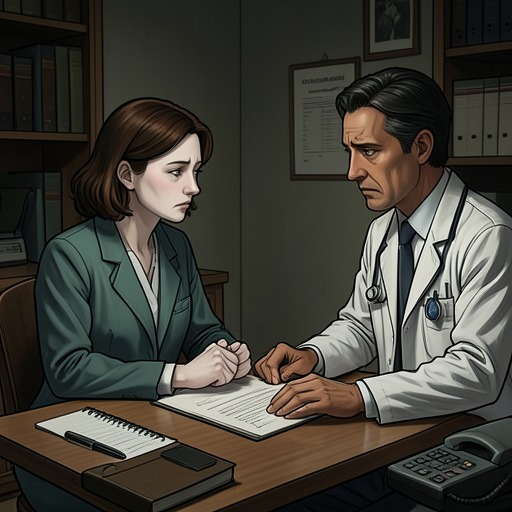
Pieter’s teaching meets Emma at a moment when psychiatric explanations do not always match her experience. Elsewhere, she describes a period when an overwhelming certainty that she had to die seemed, to her, like a clear and practical idea rather than a suicide plan. She recalls emotional numbness when told that Doctor Visser’s husband had died, and struggles to explain to a psychiatrist the sensation of a mental fog lifting. These accounts illuminate the challenge behind Pieter’s emphasis on listening to individual experience: the patient’s interpretation may differ radically from the clinical one, even when the consequences are grave.
The recovery session itself also sits amid institutional and personal friction. Emma resents having her puzzle moved aside when a Friday session is rescheduled to Monday because of a conference, and doubts that the person who made the change understands how people with Asperger syndrome recover. The passage does not establish that Pieter personally made the scheduling decision, but the disruption complicates the module’s stated attention to individual needs. His role is therefore neither that of a simple answer-giver nor a detached lecturer. Through his account of lived experience and his exchanges with Emma, he opens a vocabulary for living with psychiatric vulnerability, while the group’s objections and mismatches show how difficult it is to make that vocabulary fit every person.