Bas
UpBas is a nurse on the PAAZ whose buoyant, slightly awkward manner does not prevent him from recognizing when Emma’s casual reassurances conceal danger. His care appears in ordinary gestures—bringing medication, checking blood pressure, joining a group walk—but it also depends on asking difficult questions and staying attentive to what patients cannot readily say. Through Bas, the novel shows nursing as both intimate, continuous work and a form of care constrained by an understaffed ward.
Identity and Introduction
Emma recognizes Bas immediately when he approaches her on the open ward, taking off a rain-soaked jacket. His face seems fuller and his smile broader than she remembers, but his name badge is hardly needed. She regards him as one of the nurses whose uncomplicated, clumsy optimism she can forgive even during her worst depressions. That familiarity does not make his presence effortless: Emma smiles while anticipating another round of questions, and braces herself for the emotions and explanations they might bring.
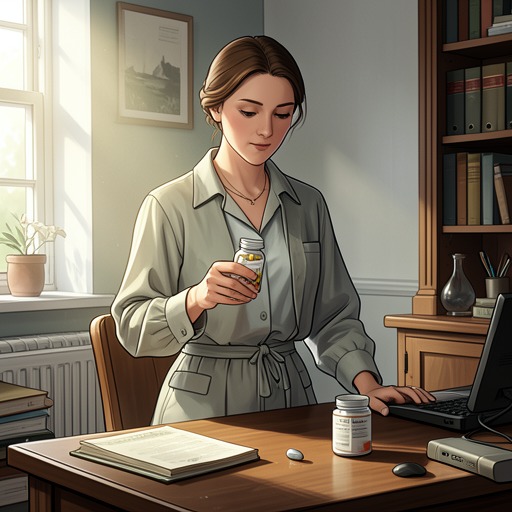
Bas has only just come in for his shift and says he first had to collect the final medication from the pharmacy. He apologizes for not visiting sooner, sets a white paper bag on the windowsill, shakes out his wet coat, and asks what has happened and how Emma is doing. The scene begins with routine concern, but the bag changes its meaning as Emma fixes her attention on it: the pills awaken her thought of another chance to carry out her suicide plan.
Attention to Risk
Emma tells Bas that she is fine, then offers a joking account of her admission as a brief PAAZ break. Beneath that breezy version lies the fact that she had saved up her medication—two hundred pills—and intended to take them all at once. Bas does not laugh at the joke. Instead, he asks whether she can lie, connecting the concealed stockpile to the practical problem of trust: if she hid the pills, he asks, how can anyone know whether her report of feeling well is reliable, or whether she might try again on the ward?
His question turns Emma’s private strategy of concealment into a shared safety concern. She watches him leave, still wanting the medication and thinking of rules that make her feel she must manage the plan alone. She also knows the bag is not her medication and that she should not burden anyone else. The conflict is not resolved by a sudden declaration or a speech. Emma calls Bas back before she can reconsider, holds out the bag, and avoids his gaze. She imagines that he feels as exposed and embarrassed as she does; he is as red-faced as she feels. He takes the medication, and an awkward thank-you and quick retreat end the exchange. The pills are gone because Emma has chosen to hand them over, with Bas’s direct question helping bring the danger into the open.
Everyday Care and Clinical Monitoring
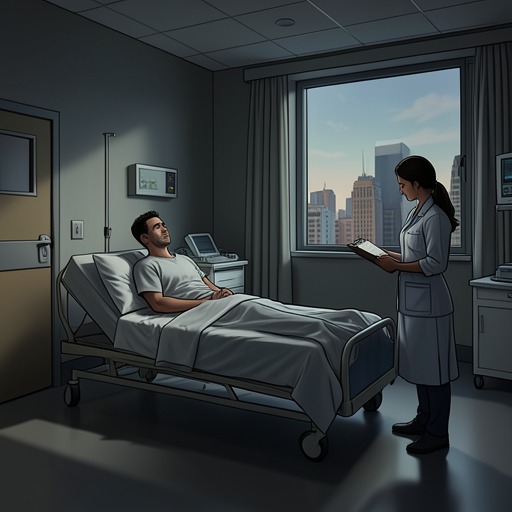
Bas’s work also takes the form of ordinary observation. After Emma returns from the hospital chapel in a state of physical and mental distress, he comes to measure her blood pressure, as arranged with the doctor. Finding her on the floor between her bed and wardrobe, he immediately asks whether she has fallen or hurt herself. Emma is struggling to breathe, think, and move, and cannot easily explain what has happened. Bas’s alarm registers the visible crisis even while she cannot yet give it a clear account.
During another episode of medical follow-up, Bas opens Emma’s door after Rajid has called to say that she has been examined and should go for a check at Spoedeisende Hulp. Emma corrects the destination, and Bas agrees to take her. A crash sounds from elsewhere on the ward; he explains that it is unsettled and someone has just been placed in seclusion, then asks whether they can leave in an hour. The scene places her need for assessment beside the competing demands on the ward, without suggesting that her concern is unimportant.
The same limits shape a Saturday after Emma’s adverse reaction to Tegretol. Most patients from her ward are away on weekend leave, but Emma remains because Rajid considers it safer to monitor her heart rate and blood pressure while the side effects subside. Sandra finds her sitting with the mood forms, unable to work on the text she had meant to write. Bas is part of the nursing presence responsible for the continuing attention that this kind of monitoring requires; the care is not a single dramatic intervention but an ongoing obligation while Emma waits through the weekend.
Nursing, Staffing, and the Ward
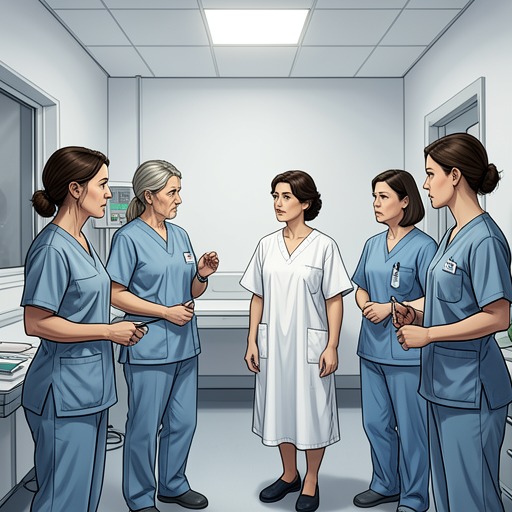
Bas is also visible in the social life of the PAAZ. On a group walk, Beatrice complains about the outing, while Bas seems to be enjoying himself at the front of the group. Even on an activity that Emma finds arduous in her depression, his energy gives him a place among the patients and staff rather than reducing him to a clinical function.
That everyday presence matters in a ward undergoing organizational strain. Sandra explains that the merger of two clinics has meant fewer nursing staff: contracts were not renewed, dismissals followed, and temporary hiring between locations was used to save money. At times only two or three staff members must run an entire PAAZ, while the closed ward alone could use four. Sandra suggests that patients on the open ward can manage without much help. Emma objects that a psychiatric patient’s apparent self-sufficiency can hide isolation: therapy takes only a few hours a day, and a therapist may be seen for only an hour each week, whereas nurses used to spend time with patients throughout the day. The care Bas represents is therefore not interchangeable with scheduled therapy. His presence, questions, monitoring, and participation in ordinary ward life embody the value of sustained attention, even as staffing pressures threaten it.
Narrative Role
Bas’s scenes turn on the gap between appearing well and being safe. Emma’s first answer is automatic; her joke disguises the fact that she has planned an overdose, and the paper bag makes the hidden risk physically present. Bas does not simply accept reassurance, but his blunt question does not itself remove the medication: Emma has to call him back and surrender it. The exchange preserves both the difficulty of asking for help and the importance of another person noticing when a familiar answer is not enough.
His character is defined less by a singular rescue than by recurrence: arriving with medication, checking a patient’s blood pressure, responding to a frightening physical state, and taking part in the shared routines of the ward. Against the bureaucracy of delayed appointments and the reductions in nursing staff, these encounters make visible what Emma identifies as the nurses’ particular contribution: time spent with patients. Bas’s awkward optimism is not presented as a cure for her illness. It is one human form of attention within a system whose limits make that attention all the more consequential.