Sandra
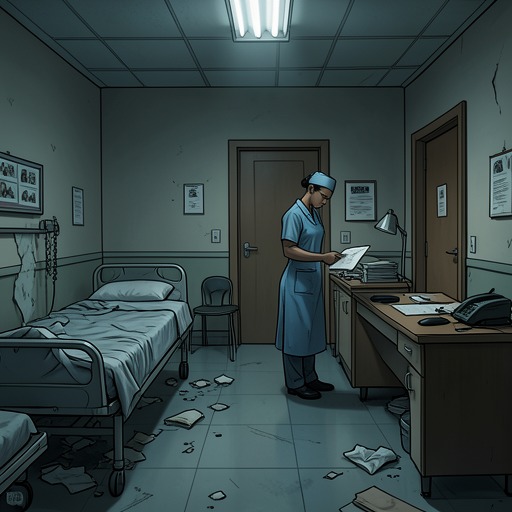
UpSandra is a PAAZ nurse whose relationship with Emma shifts from caregiver and patient to a familiar connection renewed during Emma’s return to psychiatric care. Her significance lies in the contrast between formal treatment and the everyday presence of nursing staff: she enforces ward boundaries, helps make ordinary activities possible, and listens as Emma argues that patients need more than a timetable and occasional therapy.
Identity and Earlier Connection
Two years before their later encounters, Sandra was Emma’s nurse for five months, when Emma was a patient on the ward. The distinction between then and now is sharply marked when they meet again outside the admission area. Emma has come for an appointment with Dokter Visser while her psychologist, Lars, is on holiday. Sandra, surprised and pleased to see her, asks how she is and what brings her there. Emma reassures her that she is only visiting for an appointment. When Sandra mentions that Lars is away, Emma says she needs to see Dokter Visser instead.
Sandra is also heading downstairs, toward the admission ward. Emma replies that she is content as long as she does not have to go downstairs herself. Sandra laughs, squeezes her arm, and goes through the heavy stairwell door. Their brief exchange leaves the difference between their positions visible: Sandra is still staff, but Emma is no longer the patient she once cared for. Emma takes particular pleasure in recognizing herself as herself rather than as the person who had been hospitalized.
Ward Boundaries and Daily Routine
When Emma is readmitted, Sandra’s work with her becomes practical and immediate. Emma feels deprived of ordinary freedoms: she has no room schedule, no appointment with the doctor, and no walk arranged. Frustrated by what she experiences as humiliating restrictions and disorder, she takes the schedule from the board and leaves the lounge, calling back that she will return it. Sandra sees her wearing her coat and scarf and asks what she can do for her. Emma says they are scheduled to go walking, and Sandra acknowledges the request.
The encounter illustrates how the ward’s routines structure even small acts of movement. On another occasion, Sandra has been searching for Emma and finds her after she has gone to the secretariat without permission. Red-faced, Sandra asks where she has been and reminds her that she has no leave to leave the department; Emma explains that she had asked to go for five minutes, but Sandra makes clear that without leave even that short trip is not allowed. Sandra’s role is not simply to respond to Emma’s requests: she must also uphold restrictions intended to keep a patient within the limits set for her. The care is therefore both supportive and supervisory, a combination Emma experiences as frustrating but that defines the conditions of her admission.
Puzzling and the Use of Shared Space
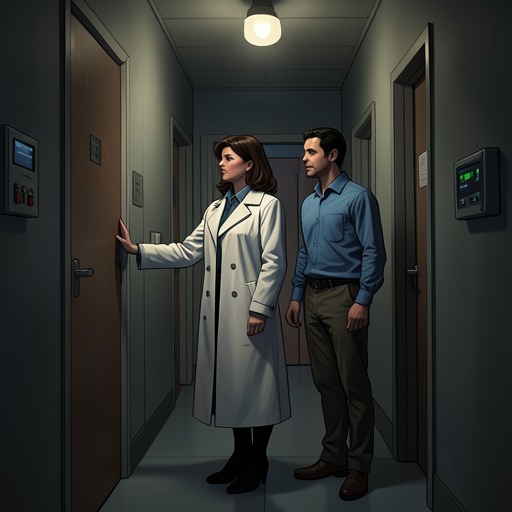
Sandra also encourages Emma to take part in an ordinary ward activity. When she notices that Emma has left many marks blank on her forms, she suggests that it may be time to try puzzling. Emma initially finds the suggestion almost comically dispiriting, then recognizes that she is back in a psychiatric ward and that puzzling is among the available activities. Sandra opens a door with a flourish and presents the room as the games room, apparently proud that patients now have a dedicated place for puzzles and games.
The room itself is much smaller than Emma expects: a windowless space large enough for one desk and two shelving units. It exists because the former recreation room was divided when the PAAZ was split; a wall cut the large room in half, with one doorway leading to an additional therapy room and the other to the games room. Sandra’s pride in this compact provision meets Emma’s wry awareness of its limits. Still, Sandra tells her to take a puzzle back to the Ward lounge, where Emma opens the box and recognizes the jungle puzzle her sister had given her and which she had left behind during her earlier admission. Its return makes the suggested activity more than a way to fill time: it brings Emma face to face with the fact that she has come back to a place she once believed she no longer needed.
Listening Beyond the Schedule
Over tea in the Ward lounge, Sandra asks Emma whether she was startled by the possibility that her doctors were considering a new diagnosis. Emma cannot readily explain how she feels about it. Sandra does not press her for an answer; she waits, then tells her that the PAAZ can be a place to practice new behavior and try things out. She notes that Lars will be back on Tuesday and suggests that Emma might discuss the diagnosis with him. Her response treats the ward not only as a place of confinement or crisis but as a setting where difficult questions can be approached gradually.
Emma also challenges Sandra over what nursing staff contribute when patients appear to manage on their own. Sandra observes that patients seem able to entertain themselves and asks whether they really want nurses constantly reminding them that they are ill, when they want to become well and independent. Emma answers that psychiatric patients may manage for a time with a television, a book, or a puzzle, but that apparent independence can conceal isolation. Therapists may be available for only a few hours a day, and a patient may see a therapist for at most an hour in a week; nurses, by contrast, are present with patients throughout the day. Emma argues that this sustained attention is the staff’s distinctive value. Sandra’s question makes room for that answer, while the exchange exposes a tension between encouraging independence and recognizing the need for company and care.
Narrative Role
Sandra’s appearances connect Emma’s earlier hospitalization to her return without reducing their relationship to a simple repetition. At their first renewed meeting, Emma can stand above the admission ward and identify herself as no longer the patient Sandra once knew. During the subsequent admission, however, Sandra’s reminders about leave, her attention to the walking schedule, and her presence over tea show how quickly that former institutional role becomes relevant again.
The episodes also give concrete form to the difference between scheduled clinical treatment and care embedded in the day. Sandra cannot remove the ward’s restrictions or resolve Emma’s uncertainty about diagnosis, and the evidence does not make her a substitute for a therapist or psychiatrist. Her work instead appears in small, consequential acts: noticing what Emma needs, explaining a boundary, suggesting a puzzle, and staying in conversation when Emma questions whether patients are being left alone too much. Through Sandra, the narrative presents nursing as both a system of supervision and a human relationship whose value depends on attention that continues between formal appointments.