Amelie
UpAmelie is a young woman admitted to the PAAZ for a time-out rather than drug treatment, after reportedly remaining clean for two years. Her brief appearance becomes consequential when she returns intoxicated following a relapse and is sent home; the ward learns that her child will be taken from her. Because the circumstances are disputed, her story is not simply a case of one patient causing another’s relapse: it exposes the tension between responsibility, influence, and the limits of care in a place meant to help people stay safe.
Identity and admission
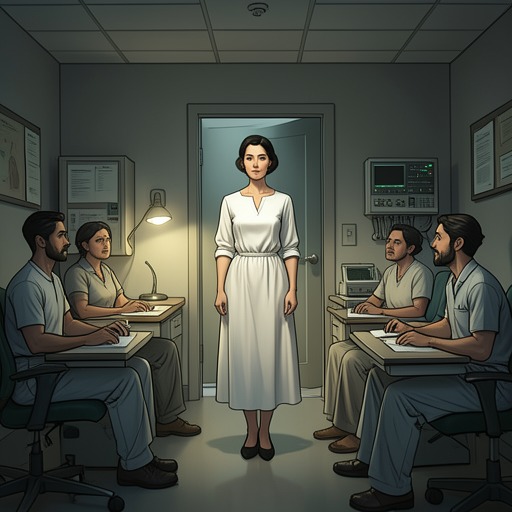
Amelie is introduced indirectly, through the recollection of Emma and the conversation among patients in the garden. Emma remembers her as a neat, young woman sitting opposite her during a recovery session. That composed first impression offers little indication of what will follow, and Amelie herself does not narrate her history in the scene. The information comes instead from Linda, who says that Amelie had told her she had been clean for two years and had come to the ward only for a time-out, not for a drug-related problem.
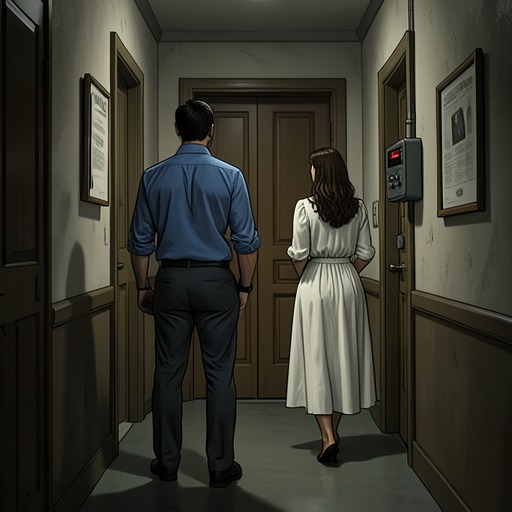
This account makes the relapse especially stark: Amelie was not, as Linda understood it, admitted because she was already using again. The ward was supposed to provide a break in which she could avoid returning to drugs. The next day, however, she comes back apparently very high or stoned. Linda says Amelie had used the previous evening. The difference between the reason for her admission and the state in which she returns gives the episode its abrupt reversal, while the precise circumstances of her use remain only partly known to the people discussing it.
Relapse and disputed responsibility
Iefke reacts with fury and immediately connects Amelie’s relapse to Michiel. She says that he spent two hours talking with Amelie about drugs the day before and argues that the conversation helped bring about the relapse. Emma initially misunderstands Iefke, thinking the complaint concerns a dog; when the subject becomes clear, she recalls seeing Michiel and Amelie together in the garden’s small seating area. The remembered scene now carries a different weight: what had seemed an ordinary conversation becomes, in retrospect, something Emma does not know how to interpret.
The accusation is not established as fact. Linda points out that no one knows for certain what happened and that Amelie could have used drugs elsewhere. She also emphasizes that Michiel did not use drugs and that Amelie made her own choice. Iefke, by contrast, focuses on the responsibility of the setting: the relapse happened while Amelie was at the PAAZ, where she had come to avoid just such a return to drug use. She is also angry that staff walked past while Michiel and Amelie talked, without intervening. The disagreement therefore concerns more than whether Michiel’s conversation influenced Amelie. It concerns whether the ward noticed a risk, whether it should have acted, and how much responsibility can fairly be assigned to an individual patient.
Consequences for Amelie and her child
The consequences become more severe when Iefke explains that Amelie’s child is being taken from her. She says that Amelie had previously stopped using after receiving a final warning, and that her child was the reason she had remained clean for two years. In Iefke’s account, the relapse now means Amelie is sent away from the PAAZ and loses custody of her child. She directs this accusation at Michiel, saying that his two-hour conversation has helped make the child a casualty of the relapse.
That charge is part of an angry confrontation, not an independent account of the decision or its full circumstances. Still, the scene clearly presents the removal of Amelie’s child as an immediate consequence of her return to drug use. Iefke’s language sharpens the stakes by making Michiel face the harm she believes followed from his actions; Linda, meanwhile, tries to keep the discussion from collapsing into blame. For Amelie, the episode joins relapse to separation: returning to drugs threatens not only her recovery but her relationship with her child and her place on the ward.
Narrative role and limits of the portrait
Amelie remains largely offstage while other patients interpret what has happened to her. The reader receives her history in fragments—two years clean, a time-out admission, a conversation about drugs, a relapse, and the impending loss of her child—rather than through a direct account of her feelings or decisions. That restricted view matters: Iefke’s anger and Linda’s caution reveal the ward’s competing explanations, but neither fully supplies Amelie’s perspective.
Her episode also unsettles Emma’s assumptions about Michiel. Emma had understood him as someone who kept drug dealers away from the PAAZ and remembered his gentleness in another moment; now she sees that he may have spent hours discussing drug use with Amelie. The contrast does not resolve whether he caused the relapse. Instead, Amelie’s absence from the argument leaves that question open while making the material consequences unmistakable: she returns intoxicated, is to be discharged, and faces separation from her child.