Lars
UpLars is Emma’s first psychologist and a central figure in her treatment over more than two years. He once helped her through her first PAAZ admission and continued seeing her as she moved through day treatment, diagnostic assessments, and regular appointments. His relationship with Emma is both sustaining and fallible: when she is readmitted, his alarm and skepticism about her new diagnosis deepen a rupture, but he later acknowledges his mistakes and supports her decision to try life beyond therapy.
Identity and therapeutic role
Lars is a psychologist working within a psychiatric service, a position that draws a wry distinction between his role and the psychiatrists around him. Emma remembers him as the first psychologist she ever saw and as someone who helped draw her back from the edge of death during her first admission. Their work continued for over two years, including day treatment, diagnostic processes, and appointments every two weeks. His place in her history is therefore not incidental: he has witnessed an earlier crisis and a period of sustained care, even though he has not been told everything she experiences.
Lars is associated with the order, cleanliness, and regularity he advocates in treatment schedules. That expectation becomes pointed when he takes a three-week vacation, interrupting the very routine he emphasizes. When Emma returns to the hospital, he is still away, and she seeks an appointment with Doctor Visser instead. His absence also shapes the ward’s daily life: the treatment group is no longer operating, and Dimitri explains that it will not return in the new building, where departures will leave unfilled places until the group is discontinued. The institutional future of the group is uncertain, and Dimitri wonders how long Lars himself will remain in the service.
Readmission and the rupture
Emma’s readmission confronts Lars with a situation he did not expect. She recalls waiting outside the therapists’ rooms on the day she would otherwise have returned to work, feeling that being hospitalized again meant she had failed. She is especially troubled because she has been admitted for experiences she never disclosed to him, and she anticipates having to tell him about the admission after his return from vacation. For her, the meeting carries the weight of their earlier work: this is the psychologist who once helped her through a life-threatening crisis, yet he does not know the symptoms now driving her distress.
When they meet, Lars asks why she has allowed herself to be admitted again. He recalls that when he left, Emma was depressed and thinking about death, and that additional appointments with him and Doctor Visser seemed to have the situation under control. Now he has returned from vacation to learn that she is hospitalized. His startled response, and his difficulty accepting the bipolar diagnosis, make Emma feel that he is questioning both her judgment and the reality of her illness. She later decides she is not yet sure whether to continue with him, but agrees to meet again before making up her mind.
The disagreement is not simply about a diagnostic label. Lars says he is less concerned with diagnoses, which he regards as more the psychiatrists’ domain, than with what a person is struggling with at a given time. He adds that he has not recognized manic-depressive illness in Emma. She objects that he cannot see what she has not disclosed: the symptoms are in her mind, and she has concealed them partly because she feared his reaction. She is willing to explore the diagnosis if doing so could lead to better treatment, but experiences his skepticism as undoing that possibility.
Listening, disclosure, and apology
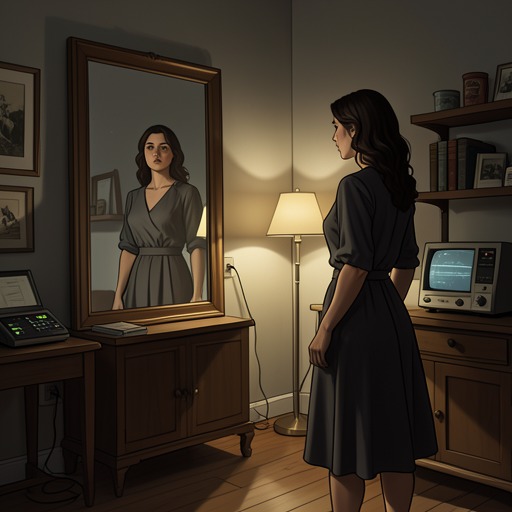
The conversation eventually makes room for Emma to explain what she means by hallucinations and delusions. She describes the distress not merely as seeing a snake instead of a branch, or encountering something that is not there, but as the repeated shock of discovering that the world seems to have changed while she was away. She compares the experience to a television guide that has suddenly moved when no one else has been in the room: the fear, stress, anger, and uncertainty lie in the disorienting change, as much as in the object itself. Lars initially distinguishes losing a television guide from having a hallucination, but allows that the comparison may capture how the experience feels to her and agrees that they should discuss it.
This exchange marks a shift from debating whether Emma’s account is valid to considering the experience she is trying to communicate. Lars apologizes for how he spoke earlier. He says he had not realized how his words would sound, and that his intention was to convey concern, not to abandon her. He explains that he was deeply shocked to hear she had been admitted again, but recognizes that his shock was his own and not something he should have made her carry. Emma accepts the apology, while remaining uncertain about why he reacted so strongly to the diagnosis. Her relief that the confrontation really happened, and that she was not simply imagining its force, coexists with doubt about what the episode means for their relationship.
Responsibility and separation
In a later conversation, Lars revisits the conflict and says he had thought they were having a good discussion: he asked questions, Emma answered, and he did not understand that she was so distressed. He distinguishes disagreeing intellectually from communicating emotional discomfort, arguing that he could not know she was becoming upset if she did not make that feeling explicit. His account continues to acknowledge that he was at fault, but also places emphasis on Emma’s way of responding. The exchange leaves visible a difference between them: Emma believes she had already explained that something was wrong, while Lars says he understood her response as an intellectual argument rather than an expression of hurt.
When Emma tells him she is leaving, Lars reflects on how she has changed since her first admission. At the beginning, she said almost nothing and seemed to need the therapists to carry her; now she states what she wants, including what she no longer wants. He supports her choice to stop therapy or step away from psychiatry if that is what she decides, while admitting that he will miss their conversations. Emma does not claim certainty that she is ready to manage alone. Instead, she says that she can only find out by trying, and that learning may continue in the outside world. Lars calls this sensible and apologizes again for his emotional reaction and for how the earlier conversation unfolded.
Lars’s arc is not a simple story of a therapist either failing or rescuing Emma. He is an important source of continuity from her first admission, but he is also caught by surprise when a new part of her experience comes into view. His hesitation over the diagnosis and his focus on how Emma communicates distress expose limits in their understanding of one another; his willingness to listen, apologize, and recognize her growing agency makes a different ending possible. Their separation is therefore not presented as proof that Emma has no more to learn, but as her decision to test whether she can continue that learning beyond their established therapeutic relationship.