Antonio Uribe
2666Antonio Uribe enters the narrative not through a scene of violence but through a name spoken by Klaus Haas at a press conference in prison. Haas identifies him as a killer of women in Santa Teresa and the surrounding area, then situates him within a powerful cross-border family network. The accusation makes visible a social world in which money, transport, drug trafficking, and relationships with local police overlap, while the journalists and officials who might pursue the claim face denial, evasion, and risk.
Identity and Introduction
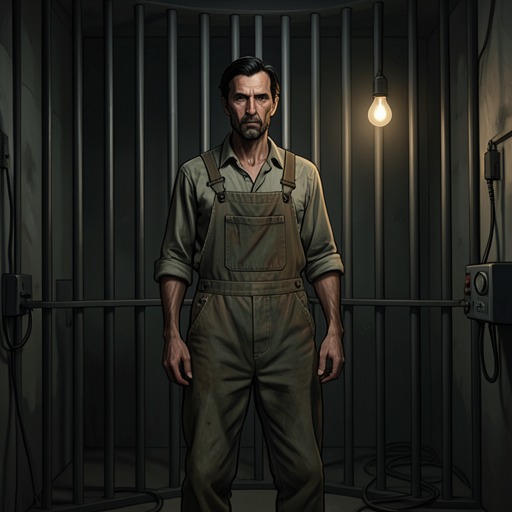
Haas says that he met Antonio only once, at a club or a bar where the music was loud. Antonio was sitting with people connected to Haas’s own group of friends and clients, alongside his cousin Daniel Uribe. Haas recalls that both young men were polite, spoke English, and dressed like ranchers without seeming to be ranchers. They were tall and physically strong, attentive to their appearance, and dressed in clean, branded clothes, including polished cowboy boots. Haas’s recollection is limited: he says they spoke about ordinary topics, shared a drink with the others, and then disappeared from his sight outside the club. It was the last time he saw them.
The setting of that encounter matters. Haas does not describe Antonio as an isolated stranger but as someone moving among companions and acquaintances, in a social environment where business, nightlife, and personal connections mingle. Yet the memory supplies no direct evidence of a crime: Haas’s identification is a claim made later, and his account of the meeting remains brief and circumstantial.
Family, Money, and Cross-Border Reach
At the prison press conference, Haas identifies Antonio as the son of Pedro Uribe, a major freight operator with more than one hundred trucks carrying goods from maquiladoras in Hermosillo and Santa Teresa. Those trucks cross the United States border every half hour or hour, making the family’s business a regular, visible part of the region’s formal commercial traffic. Pedro Uribe also owns property in Phoenix and Tucson. Haas says Antonio has joint Mexican and American citizenship, lives in Santa Teresa, and has another home in Phoenix.
The extended family’s reach continues through Antonio’s cousin Daniel. Haas identifies Daniel’s father as Joaquin Uribe, who owns hotels in Sonora and Sinaloa as well as a chain of coffee shops in Santa Teresa. The two young men are the eldest children in their respective families: Antonio has two sisters and a brother, while Daniel is an only child. Antonio once worked in his father’s Hermosillo offices but, according to Haas, had not worked for some time. This contrast between family wealth and Antonio’s lack of an apparent job helps define his position in the account: he belongs to a commercially powerful household, yet his life is not presented as ordinary employment or business management.
Alleged Criminal Connections
Haas places Antonio and Daniel within a network of wealthy heirs, narcotics traffickers, and police. He says both are protégés of Fabio Izquierdo, a trafficker who works for Estanislao Campuzano, and that Campuzano is said to be Antonio’s godfather. Their companions include other millionaires’ children, Santa Teresa police officers, and traffickers. Haas portrays them as spending freely wherever they go, a detail that connects their social confidence to the resources surrounding them.
The accusation is categorical in Haas’s account: he names Antonio and Daniel as the serial killers of Santa Teresa. He expands the alleged scope beyond the city to women found in the surrounding area. But the narrative distinguishes the force of the allegation from proof. Haas’s one meeting with Antonio establishes recognition and social proximity, not a documented act of murder; the evidence presented here gives no trial or final adjudication confirming his claim.
Public Accusation and Resistance
Haas’s naming of Antonio follows a press conference in which he says that he has met the man once. Reporters initially respond with uncertainty, but the Uribe surname prompts them to recall a powerful family associated with freight transport. Haas identifies Pedro Uribe as Antonio’s father and then supplies details about the family’s businesses, homes, and connections. The account thereby shifts from a suspect’s name to a broader map of economic and political influence.
The ensuing press coverage shows how difficult that map is to investigate. Six newspapers have correspondents at the penitentiary, and five reporters seek police comment before publication. Police and major national papers expressly reject the credibility of Haas’s account. Uribe family members tell reporters that Antonio and Daniel are traveling, no longer live in Mexico, or have moved to Mexico City to study. A reporter who tries to reach Joaquin Uribe cannot secure an interview because he is repeatedly unavailable. The contrast between the detailed accusation and the evasive or contradictory responses leaves the public claim exposed to both denial and uncertainty.
The story also shows the personal and institutional pressures around reporting. One correspondent at the press conference does not call police for an official response, risking a lawsuit from the Uribe family and state agencies. Another reporter later sees him dining with a muscular man she thinks resembles a police officer; when she returns, the reporter is alone. The episode does not establish that the man threatened or silenced him, but it places investigative journalism within an atmosphere where connections and potential consequences are difficult to read.
Narrative Significance and Unresolved Status
Antonio’s narrative presence is built from fragments: a brief encounter recalled by Haas, a family business that crosses the border continuously, reported ties to traffickers and police, and a public accusation met by institutional denial. The border is not merely a dividing line in this account. It is also a route for goods, a setting for shared citizenship and property, and a jurisdictional landscape in which the Uribes can be associated with both Santa Teresa and Arizona. That reach sharpens the contrast between the scale of the alleged crimes and the obstacles to establishing responsibility.
The surrounding city intensifies that contrast. Santa Teresa is described as expanding rapidly, with industrial parks and maquiladora warehouses encircled by poor neighborhoods and a strained urban infrastructure. Its commercial energy coexists with poverty, violence, and the recurrent disappearance and killing of women. In this setting, Antonio’s reported wealth and network do not resolve the mystery; they make the unanswered question of accountability more consequential. The evidence supplied leaves the accusation against him publicly aired but unverified, with no confirmed outcome for his case.