American Legion
1919The American Legion is presented as a force in the campaign against organized labor in Centralia, Washington, where its members took part in the 1918 destruction of a Industrial Workers of the World hall. The episode places the Legion within a broader conflict in which patriotic language accompanied attacks on unionists and their meeting places.
Position in the Anti-Union Campaign
The account describes timber owners, sawmill operators, and shingle manufacturers organizing against labor radicals. It names the Employers Association and the Legion of Loyal Loggers as bodies formed in that campaign, then separately describes former soldiers being encouraged to raid Industrial Workers of the World halls, assault organizers, and destroy radical literature. The American Legion is not identified as either of those organizations; its distinct appearance comes in the account of the Centralia raid.
The Centralia Hall Raid
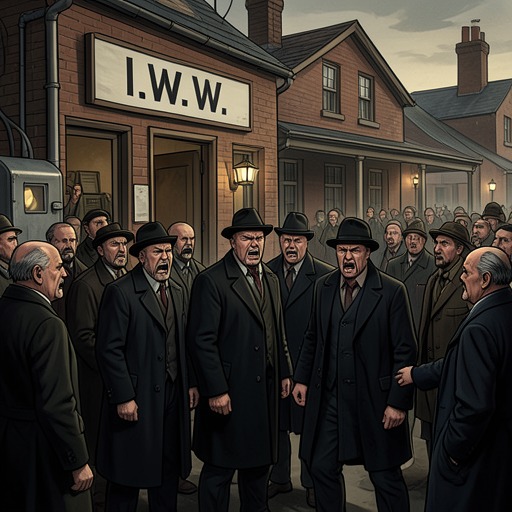
On Memorial Day 1918, members of the American Legion in Centralia, led by a group from the Chamber of Commerce, wrecked the Industrial Workers of the World hall. They beat people inside, jailed some, and put others in a truck that was driven beyond the county line. The attackers burned papers and pamphlets, while the hall’s fittings were auctioned off for the American Red Cross. The episode links organized anti-union action with both physical intimidation and the destruction of the union’s printed materials and meeting place.
Aftermath and Narrative Significance
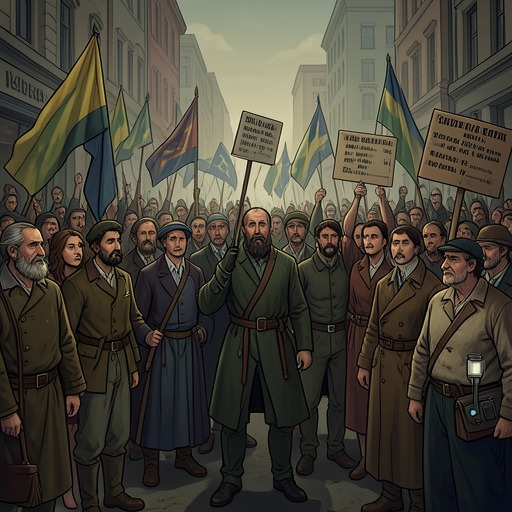
The loggers rented another hall, and the union continued to grow. That continuation makes the raid a failed attempt to end the organizing effort, even as it marks the severity of the opposition. The narrative’s juxtaposition of patriotic identity with an assault on a labor hall gives the American Legion’s role a pointed significance: the language of civic loyalty exists alongside the coercion used to suppress workers’ association.