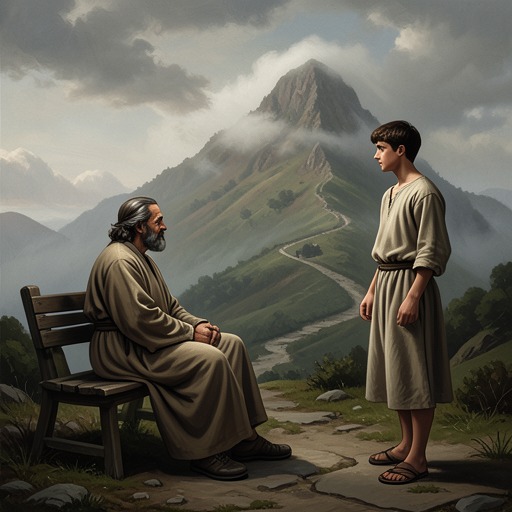
Chang Ju
AnalectsChang Ju is a farmer who appears in a brief encounter with Confucius and Zilu. Asked about the ford while working in a field with Chieh-ni, he recognizes Confucius and answers that the teacher already knows where to cross. The exchange makes Chang Ju’s practical question a pointed rebuke, placing his withdrawal from public affairs beside Confucius’s determination to work among people.
Identity and Introduction
The text introduces Chang Ju through an action rather than a biography: he is working in the field alongside Chieh-ni when Confucius passes. Confucius sends Zilu to ask for the ford, and Chang Ju first asks who is holding the carriage reins. Zilu identifies him as Kong Qiu; Chang Ju checks whether this is Kong Qiu of Lu, and Zilu confirms it. The scene gives no further account of Chang Ju’s origins or later life.
The Ford Encounter
Chang Ju’s response, that Confucius already knows the ford, answers the question indirectly. It points beyond the route Zilu seeks: Confucius, in Chang Ju’s view, has already chosen his course by continuing to pursue a public way through a disordered world. Chang Ju does not leave his work to guide the travelers; the encounter remains rooted in the contrast between the passing carriage and the farmers at their labor.
Contrast with Confucius and Narrative Role
The episode places Chang Ju beside Chieh-ni, who answers Zilu separately and argues that disorder is widespread, asking who can change it. Chieh-ni urges Zilu to follow those who have withdrawn from the world and continues covering seed without stopping. Chang Ju’s own contribution is shorter, but its pointed implication belongs to the same scene of withdrawal: the travelers seek a ford, while the farmers question the larger undertaking that brings them there.
After Zilu reports their remarks, Confucius sighs that people cannot be abandoned in favor of birds and beasts; if he does not associate with mankind, he asks, with whom can he associate? He adds that if right principles prevailed throughout the empire, there would be no need for him to change its state. Chang Ju’s encounter thus helps frame the disagreement without resolving it: the farmer’s reply directs attention away from assistance on the road and toward the political purpose of the journey, while Confucius answers by reaffirming his obligation to remain among people.