Gongxi Hua
AnalectsGongxi Hua is presented as a capable disciple suited to ceremonial and diplomatic service, but the episodes about him make ability only one measure of learning. Confucius recognizes his public competence; Gongxi Hua, in turn, acknowledges that the disciples cannot match their teacher’s tireless effort to become virtuous and to teach.
Identity and Public Aptitude
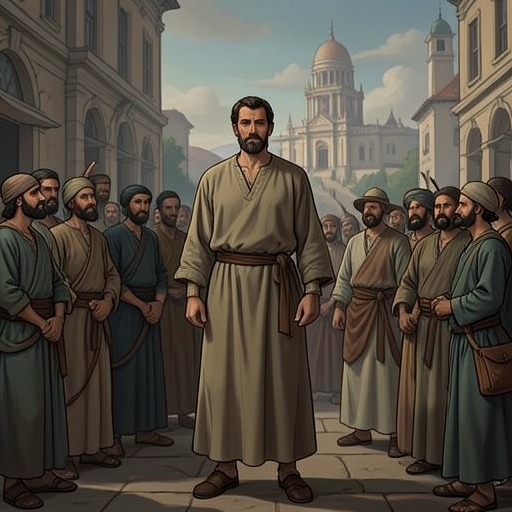
When Meng Wubo asks whether several disciples possess perfect virtue, Confucius distinguishes their practical capacities from a judgment about their inner moral attainment. Gongxi Hua, addressed by his personal name Chi, is described as someone who could stand formally before the court, wearing his sash, and speak with visiting guests. Confucius names this as a specific aptitude, not proof that Gongxi Hua has achieved perfect virtue. The distinction keeps professional usefulness separate from the demanding ethical standard in the question.
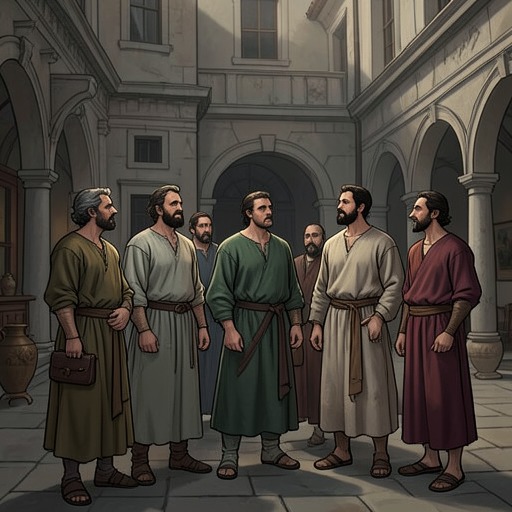
That formal role appears again when the disciples describe what they would do in public life. Asked about his own ambition, Gongxi Hua modestly says he does not claim competence but wishes to learn. He imagines assisting at ancestral-temple ceremonies or diplomatic gatherings, dressed in formal court attire and acting as a junior ritual assistant. The answer is narrower than Zilu’s plan to administer a threatened state or Ran You’s to make a territory prosperous: Gongxi Hua places himself in a supporting role within established ceremonies. The contrast suggests a student attentive to the forms and ranks that make public service possible.
Learning Under Judgment
In the conversation about the students’ aspirations, Confucius smiles at Zilu’s confident response, then explains that Zilu’s words lacked deference in a discussion of governing a state through ritual. Gongxi Hua’s answer is not singled out for correction; the Master instead asks whether the ceremonial occasions Gongxi Hua named could belong to anything other than a feudal court. By asking who else could take the larger role if Gongxi Hua served as a junior assistant, Confucius confirms the importance of the work rather than dismissing its modest presentation.
The book offers a more direct measure of Gongxi Hua’s relation to Confucius in a separate exchange. The Master says he would not dare claim to be a sage or perfectly virtuous; what he can say is that he strives without weariness and teaches others without fatigue. Gongxi Hua responds that this is precisely what the disciples cannot imitate. His remark recognizes an asymmetry: instruction can be received, but the sustained labor behind the teacher’s example remains difficult to reproduce.
Competence, Virtue, and Service
Across these episodes, Gongxi Hua’s profile rests on a careful separation of roles. He has a recognizable aptitude for speaking with guests and serving at solemn public occasions, and he is willing to describe himself as a learner rather than to claim mastery. Yet the discussion of perfect virtue does not let occupational promise stand in for moral completion. The text thus frames his promise as real but bounded: he can be entrusted with particular forms of service, while the larger work of ethical cultivation remains ongoing.
His presence also helps show how the disciples’ aspirations are assessed as more than personal ambitions. Their answers are tested against the scale of their proposed responsibilities, the propriety of their manner, and the ritual order involved. Gongxi Hua’s carefully qualified wish to learn and assist places him within that examination, while his admission about the disciples’ limits gives the portrait its clearest measure of humility.