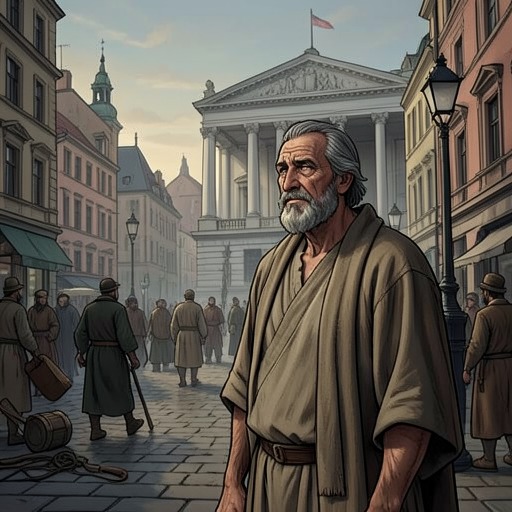
Gongshan Furao
AnalectsGongshan Furao is a rebel leader holding Bi whose invitation prompts Confucius to consider entering a politically compromised setting in the hope of putting his governing ideals to work. The episode gives little account of Gongshan beyond his rebellion and summons; its emphasis falls instead on the political possibility Confucius sees in being called, and on Zilu’s resistance to that possibility.
Identity and Political Position
Gongshan Furao appears as the person holding Bi in rebellion. The text does not supply a fuller biography, explain the origins of the revolt, or describe his policies. His importance in the episode is established by the contrast between his rebellious position and the invitation he sends to Confucius: an offer associated with disorder may still create an opening for political action.
The Invitation and Zilu’s Objection
Gongshan Furao summons Confucius to visit him, and Confucius is inclined to go. Zilu is displeased and challenges the decision, arguing that Confucius need not go to Gongshan. His objection registers the apparent contradiction in accepting a call from a rebel: the invitation’s source makes the proposed visit politically suspect before its possible purpose has been tested.
Confucius’s Political Calculation
Confucius answers that Gongshan’s summons must have some reason behind it. He then imagines what employment by the inviter might make possible: he could establish an Eastern Zhou. The remark shifts the episode from the question of whether a rebel deserves a visit to whether political authority, even when reached through a compromised opening, could be used to restore a model of orderly governance. It records a willingness to consider the opportunity, not an account of a completed visit or appointment.
Narrative Significance and Limits
The episode’s sharp turn is from Zilu’s categorical resistance to Confucius’s conditional hope. Gongshan’s rebellion remains the defining fact about him, while the imagined Eastern Zhou supplies the encounter’s larger political horizon. The text does not say that Confucius went to Bi, that Gongshan’s invitation led to service, or that the proposed political project was realized; Gongshan’s narrative role rests on the possibility his summons briefly opens.