Mark Rothko
BluebeardMark Rothko appears in the novel as a fellow Abstract Expressionist whose reputation outlasts the narrator’s own and whose death sharpens the book’s contrast between artistic renown, commercial value, and personal vulnerability. Through Rabo Karabekian’s recollections, Rothko is both a celebrated painter and a member of a circle shadowed by loss.
Identity and Artistic Standing
Rothko belongs to the group of Abstract Expressionist painters whom Rabo remembers as his peers, alongside Jackson Pollock and Terry Kitchen. Rabo reflects that these artists, unlike himself, came to be acknowledged among the most brilliant painters produced by the United States and the wider world. The comparison gives Rothko a distinct place in Rabo’s self-assessment: Rothko’s lasting recognition underscores the gap between Rabo’s career and the esteem granted to his contemporaries.
The novel’s account of abstract art is deliberately framed as personal and fictional rather than as a responsible history of the movement. Within that frame, Rothko’s standing is established through the narrator’s retrospective judgment and through the market attention given to his work, not through an independent account of his artistic development.
Paintings, Ownership, and the Art Market
Rabo says that the abstract paintings in his collection were his property long before he married Edith. He values the collection at least as highly as the real estate, stocks, and bonds Edith left him, including her one-quarter share in the Cincinnati Bengals. This comparison places Rothko’s work within the financial world of the novel while allowing Rabo to reject the idea that he acquired his wealth by marrying for money.
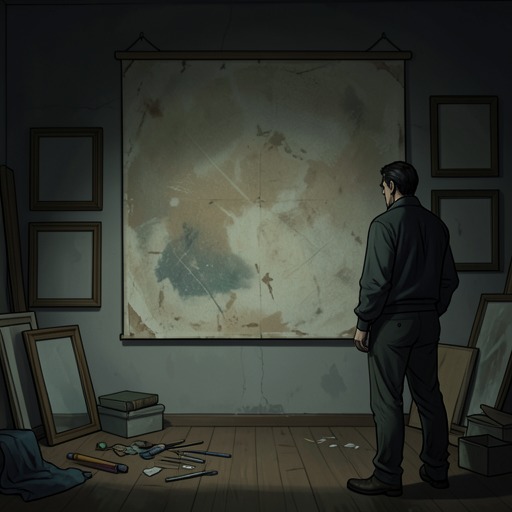
During Circe Berman’s five weeks in residence, visitors from as far away as Switzerland and Japan come to regard the paintings in the collection with near-reverence. Rabo also recalls selling a Rothko directly from the wall to a representative of the Getty Museum for one and a half million dollars. Circe sees the sale differently: she dismisses the painting as worthless and urges Rabo to get rid of the others. The scene sets public prestige and extraordinary exchange value against her refusal to treat the paintings as meaningful.
That tension belongs to the novel’s broader skepticism about the seriousness conferred on art by wealth. Rothko’s painting is at once an object in a private collection, an acquisition for a major museum, and a costly commodity. The transaction demonstrates how market price can magnify an artwork’s status without settling the question of what it means.
Death and Retrospective Significance
Rabo reports that Rothko died by suicide in 1970. He places the death beside the earlier losses of Pollock and Kitchen, recalling that the three of them had been heavy drinkers known as the Three Musketeers at the Cedar Tavern in New York City. Asked how many of the trio remain alive, Rabo answers that only he does. The recollection turns a remembered nickname into a measure of survival and makes Rothko’s death part of the narrator’s account of a vanished artistic circle.
Rabo draws a bleak conclusion from the deaths he recalls: some people, including himself and Marilee, are much harder to satisfy than others. This is the narrator’s interpretation, not a documented explanation of Rothko’s motives. The novel supplies no further account of Rothko’s private life or of the circumstances surrounding his death; his significance here rests on his artistic stature, his place in Rabo’s former circle, and the stark fact of his absence.
Narrative Role
Rothko serves as a point of contrast in Rabo’s story. His recognition marks the success that Rabo believes his contemporaries achieved, while his death makes that success no guarantee of survival or satisfaction. The contrast is especially sharp because the same novel that attaches a million-and-a-half-dollar sale to a Rothko also questions whether reverence and price can provide an answer to the visitor’s recurring question about what the paintings mean.
Rothko is therefore present less as a fully narrated character than as a name with several kinds of weight: artistic distinction, financial value, friendship within a remembered circle, and mortality. Those strands converge in Rabo’s retrospective voice, which measures the art world through both its public valuations and the people who did not live to see its judgments settle.