Vartan Mamigonian
BluebeardVartan Mamigonian is the Armenian survivor whose fraud redirects Rabo Karabekian’s parents from their intended life in Paris to San Ignacio, California. A Cairo boot manufacturer who had himself survived an earlier massacre, he turns the trust shared by refugees into an opportunity: with fabricated evidence, he sells the couple a story of a thriving Armenian settlement and a future for Rabo’s father as its teacher. His influence outlasts the transaction. In the family’s memory, his name becomes shorthand for the peril of trusting a survivor before learning what that person did to stay alive.
Identity and Historical Background
Mamigonian appears in Rabo’s account as an Armenian shoe manufacturer in Cairo and a survivor of an earlier massacre. He is distinct from the Vartan Mamigonian remembered as a great Armenian national hero who led a losing army against the Persians in the fifth century. Rabo explicitly distinguishes the two: the figure who matters to his family is the Cairo businessman, not the ancient commander.
The businessman’s own experience of massacre gives him access to his intended victims’ confidence. Rabo’s parents had escaped the slaughter of Armenians in the Ottoman Empire, which the narrator describes as killing about one million people. They fled through Persia and then made their way to Egypt; there, in Cairo, they encountered Mamigonian. Their common Armenian identity and experience of persecution made his advice appear credible, even though it would lead them away from the future they had planned.
The Cairo Fraud
Mamigonian had grown rich manufacturing military boots for both the British and German armies, soon to be enemies in World War I. He initially offered Rabo’s parents low-paid, dirty work. They told him about the jewels Rabo’s mother had gathered during her escape, and about their plans to marry and join the large, cultivated Armenian community in Paris. Rather than protect their interests, Mamigonian used what they disclosed to construct a scheme.
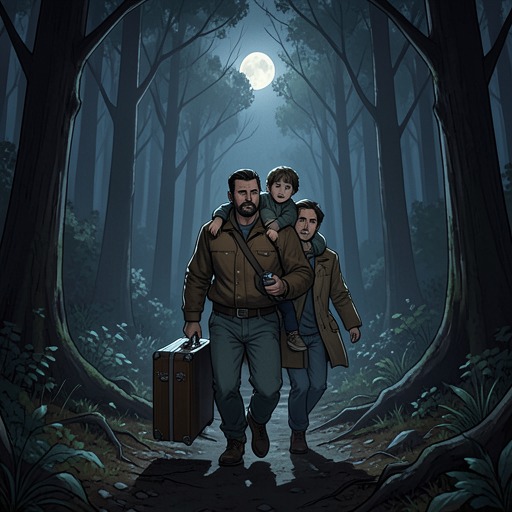
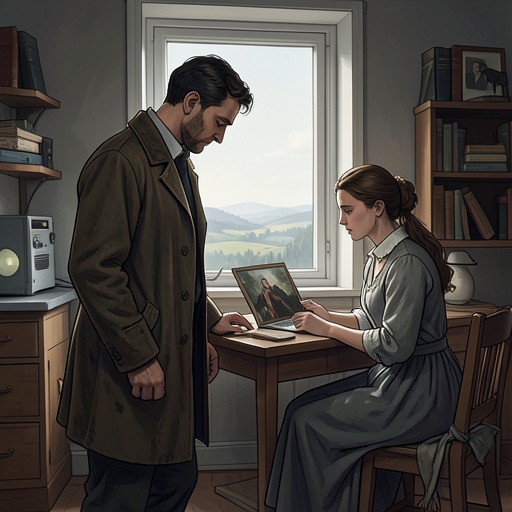
He claimed to have a brother in San Ignacio, a quiet farming town in California, and forged letters supposedly sent by that brother. The letters described the brother as newly wealthy, asserted that many Armenians in the town were prospering, and advertised a need for a teacher fluent in Armenian and familiar with its literature. The supposed community would provide Rabo’s father with a teaching position and offer him a house and twenty acres of fruit trees at a fraction of their value. A photograph of the house and a deed accompanied the pitch. The brother did not exist; the letters and promised settlement were part of Mamigonian’s invention.
The deception succeeded where a more open appeal might not have. Mamigonian presented himself as an adviser and protector, ostensibly concerned about finding a secure place for the family’s jewels in a city known for thieves. The jewels were already in a bank, but his performance of concern helped sustain the trust he needed. The account does not specify every step by which the property and the family’s plans changed hands; it establishes that his fabricated opportunity diverted the couple from Paris and brought them to San Ignacio.
What the Family Inherits
Mamigonian’s scheme becomes a lasting reference point in the Karabekian household. Rabo’s father warns his son, “Never trust a survivor,” until one knows what that survivor did to stay alive. The warning grows out of the Cairo encounter: shared suffering may invite solidarity, but it does not guarantee honesty. In Rabo’s family story, the survivor’s identity is neither proof of virtue nor a reason to dismiss his actions; it is the condition that made the betrayal especially persuasive.
Years later, after Rabo’s father has lost his business and become a tenant in a building he once owned, he reads Marilee’s letters to his son and compares their writer to Mamigonian. He sees the change in the letters: early references to what Dan Gregory says and wants have disappeared, and he concludes that the writer is trying to gain standing by borrowing Gregory’s reputation. Calling her “the new Vartan Mamigonian,” he applies the old family lesson to a different promise. The comparison shows how the name has become a measure of deception, carried forward from the parents’ migration into Rabo’s own life.
A Second Generation and an Unclosed Debt
Mamigonian’s reach resurfaces near the end of Rabo’s account through his son, Leo Mamigonian. After Marilee’s death, ownership of her palazzo passes to her late husband’s nearest male relative, who sells it to Leo, an Egyptian man of mystery believed to be an arms dealer. Leo also buys the palazzo’s contents, which means he may own Marilee’s collection of Abstract Expressionist paintings. The narrative presents this discovery as an unsettling recurrence: the family name associated with Rabo’s displacement appears again in connection with the loss of a friend’s home and art collection.
Rabo identifies Leo as the son of the man who diverted his parents from Paris to San Ignacio and says that his father’s actions cost him an eye, among other things. That declaration makes the family fraud part of a much longer personal grievance, though the account does not explain the precise chain linking the original deception to the later loss of Rabo’s eye. Rabo’s question about whether he could ever forgive Vartan remains deliberately open. Mamigonian’s narrative importance lies in that unresolved inheritance: he is at once the agent of a concrete historical turn in the family’s life and the name through which its descendants recognize the recurring danger of false promises.